




Your Countertop Is the New Sous Chef
The single biggest game-changer in modern weeknight cooking is the rise of smart countertop appliances. Air fryers and multi-cookers like the Instant Pot have revolutionized the kitchen by drastically reducing active cooking time. An air fryer circulates
hot air to cook and crisp food in a fraction of the time an oven would take, and it requires little to no preheating. This means salmon fillets, chicken, and vegetables can be perfectly cooked in 15-20 minutes with minimal effort. Similarly, multi-cookers use pressure to cook everything from grains to tough cuts of meat in a surprisingly short amount of time, often in a single pot which simplifies cleanup. These gadgets aren't just novelties; they are powerful tools that handle the cooking process while you are free to do other things.
Rethinking 'From Scratch' with Smart Prep
The definition of cooking 'from scratch' is evolving. Today, it doesn't have to mean spending 20 minutes just on chopping vegetables. Supermarkets and grocery services have responded to consumer demand for convenience with an ever-expanding array of pre-prepped ingredients. You can find pre-chopped onions, spiralized zucchini, marinated proteins, and peeled garlic. Using these shortcuts isn't cheating; it's a strategic move that outsources the most time-consuming parts of cooking. Combining these prepared items with a simple homemade sauce or fresh herbs allows you to assemble a flavourful, wholesome meal quickly. This redefines 'homemade' as a meal assembled and cooked in your kitchen, even if you didn't personally chop every single ingredient.
The Rise of 'Component Cooking'
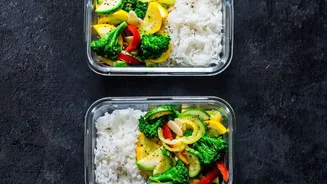
One of the most effective strategies for fast weeknight meals is 'component cooking', a more flexible cousin of traditional meal prep. Instead of preparing five identical meals for the week, you prepare individual ingredients—or components—that can be mixed and matched. For example, on a Sunday, you might roast a large tray of vegetables, cook a batch of quinoa or rice, and grill some chicken. During the week, these components can be quickly assembled in different ways: as a grain bowl on Monday, inside a wrap on Tuesday, and on top of a salad on Wednesday. This approach prevents flavour fatigue and allows for spontaneous, creative meals that come together in less than 10 minutes because the core elements are already cooked.
Lessons Learned from Meal Kits
Meal kit delivery services have surged in popularity, and while not a solution for everyone, they have taught home cooks valuable lessons. One of the key benefits is that they provide pre-portioned ingredients for a specific recipe, eliminating both food waste and the mental load of planning. Even if you don't subscribe to a service, you can apply the same logic. By planning a few meals and buying only the ingredients you need, you streamline your cooking process. Furthermore, these kits have demonstrated that complex-tasting dishes are often the result of a good sauce or spice blend, which can be prepared in minutes. They have helped demystify cooking for many, building confidence and proving that a delicious meal doesn't require hours of labour.
A Shift in Culinary Mindset
Ultimately, the 30-minute healthy meal is achievable because our mindset around cooking is changing. Speed and convenience are no longer seen as compromises on quality or health. Instead, efficiency is viewed as a skill. The modern home cook is learning to leverage technology, embrace smart shortcuts, and plan strategically. It's about working smarter, not harder. This shift acknowledges the realities of a busy life while still prioritising the nourishment and satisfaction that comes from a home-cooked meal. By combining these different approaches, that once-elusive goal of getting a healthy, delicious dinner on the table during a busy week is more attainable than ever before.