




A New Level of Ambition
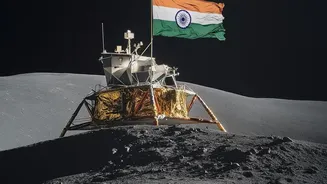
Chandrayaan-4 represents a significant escalation in India's space exploration goals. Its primary objective is to perform a soft landing on the Moon, collect soil and rock samples, and return them to Earth for scientific study. If successful, India will
become only the fourth country in history to accomplish this complex feat, joining the ranks of the United States, the former Soviet Union, and China. This mission moves beyond simply demonstrating a landing, as Chandrayaan-3 did, to proving end-to-end capabilities for a complete round-trip journey, a critical step for future deep-space and human spaceflight ambitions.
The Two-Launch, Five-Module Strategy
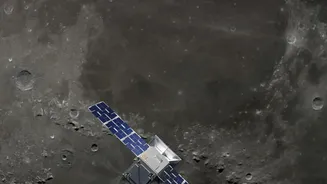
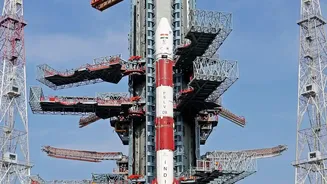
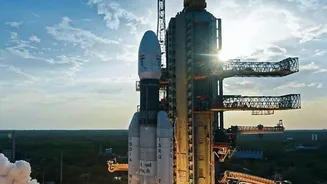
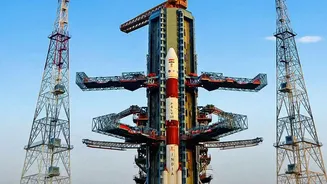
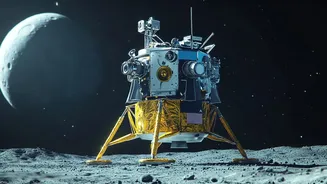
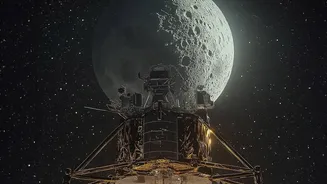
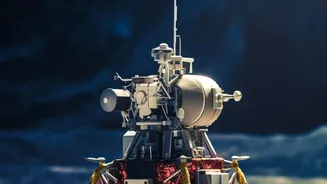
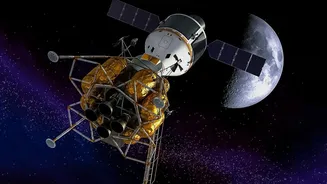
The mission's complexity is reflected in its architecture, which is a major step up from its predecessors. Due to the significant weight of the required hardware, Chandrayaan-4 will be launched using two of India's most powerful rockets, the LVM3. These rockets will carry a total of five distinct modules into space. The modules include a Descender for landing, an Ascender to lift off from the lunar surface, a Propulsion Module to travel to the Moon, a Transfer Module to carry the samples in lunar orbit, and a Re-entry Module to bring the precious cargo safely through Earth's atmosphere. This multi-launch, multi-module approach is a first for ISRO and requires intricate manoeuvres, including docking two separate spacecraft stacks in Earth's orbit before they begin their journey to the Moon.
The Intricate Dance of Sample Return
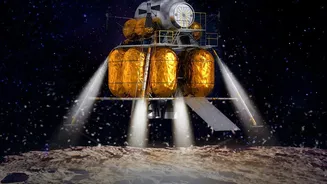
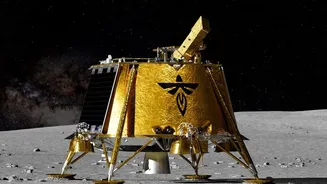
Bringing lunar soil home is an incredibly choreographed process. After landing, a robotic arm on the Descender Module will collect surface samples, while a drilling mechanism will gather sub-surface material. These samples, expected to weigh around 3 kilograms, will be sealed in containers inside the Ascender Module. The Ascender will then launch from the Moon, using the Descender as a launchpad, and rendezvous with the Transfer and Re-entry modules waiting in lunar orbit. Here, another critical step occurs: the automated transfer of the sample container from the Ascender to the Re-entry Module. Once the transfer is complete, the Transfer Module will propel the Re-entry Module back towards Earth for its final, fiery descent and landing.
Why We Need to Bring the Moon to Us
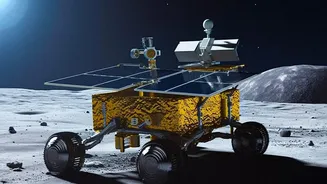
While rovers and landers can perform amazing science on the lunar surface, the instruments they carry are limited by size and power. Returning samples to Earth allows scientists to use the full power of terrestrial laboratories for analysis. Researchers can use sophisticated equipment to study the composition, age, and mineralogy of the lunar soil in far greater detail. The targeted landing site is near the Moon's south pole, a geologically diverse and scientifically fascinating region that may hold water ice in its permanently shadowed craters. Analyzing these samples could unlock secrets about the origin of the Moon, the history of the solar system, and the availability of resources for future human exploration.
The Road to Launch
ISRO is targeting a launch for the Chandrayaan-4 mission around 2028. The design and conceptualisation phases are largely complete, and the agency is now focused on developing and testing the critical new technologies required. A key precursor mission, called the Space Docking Experiment (SPADEX), will be launched to test the autonomous rendezvous and docking capabilities that are essential for Chandrayaan-4's success. The approval of the mission by the Indian government, with a projected completion timeline of about three years from the go-ahead, signals a firm commitment to pushing the frontiers of India's space program.