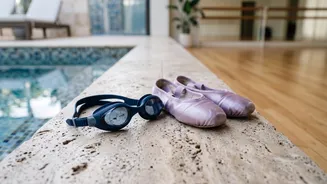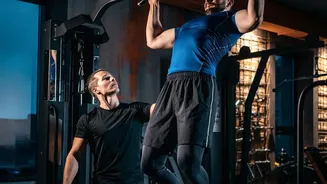




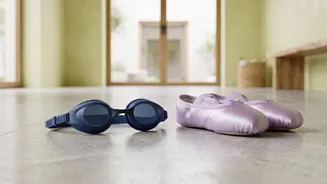

Choosing between the rhythmic joy of dancing and the fluid grace of swimming can be tough. Both are fantastic full-body workouts, but they engage your muscles in unique ways. Let's break down how each activity strengthens and tones your body.
The Fluid Strength of Swimming
Swimming
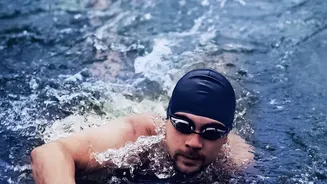
is often hailed as the ultimate low-impact, full-body workout, and for good reason. The water's resistance forces your entire body to work, while its buoyancy supports your weight, making it exceptionally kind to your joints. When you swim, you're engaging a vast array of muscles simultaneously. Your core, including your abdominals and lower back, works constantly to keep you stable and streamlined in the water. Your upper body gets a significant workout, with your shoulders, deltoids, and upper back muscles powering your arm strokes. The pulling motion of strokes like freestyle and butterfly engages your latissimus dorsi (lats), pectorals, biceps, and triceps. Meanwhile, your lower body provides propulsion. Your glutes, hamstrings, and quadriceps are activated with every kick, building strength and endurance. This all-encompassing engagement makes swimming a highly efficient way to build muscle and improve cardiovascular fitness.
The Rhythmic Power of Dancing
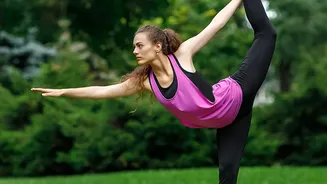
Dancing is a high-energy activity that builds strength, coordination, and balance in a way that feels more like a celebration than a workout. While all forms of dance use muscles throughout the body, it is particularly effective for strengthening the lower body and core. The legs are the primary movers, with the quadriceps and hamstrings powering jumps, extensions, and bends. Your gluteal muscles are crucial for generating power in explosive movements and providing stability. The calf muscles are constantly engaged, especially in styles that involve rising onto the balls of the feet or quick footwork. Your core is the anchor for every move, providing the stability needed for turns, leaps, and intricate sequences. Even the upper body plays a key role, with the back, shoulders, and arms contributing to posture, balance, and expressive movements. From the controlled extensions of ballet to the dynamic power of hip-hop, dancing challenges your muscles in varied and complex ways.
A Head-to-Head Muscle Comparison
So, how do they stack up directly? Swimming provides a more uniform, full-body resistance workout. Strokes like freestyle and butterfly ensure that your upper body, core, and lower body are all working hard throughout the session. The water creates consistent resistance against every muscle, which is excellent for building overall strength and endurance. Dancing, on the other hand, can be more variable. While it is a whole-body activity, many styles are more dominant in the lower body and core. The engagement is often more about explosive power, agility, and muscular control rather than sustained resistance. For example, a ballet class will intensely focus on leg strength and core stability, while certain street dance styles might place a greater emphasis on dynamic, powerful movements from the glutes and quads. Swimming systematically strengthens your back and shoulders, whereas dancing builds unparalleled balance and coordination through the core and legs.
Beyond the Burn: Other Key Benefits
The choice isn't just about muscles. For those with joint pain or who are recovering from injury, swimming is the clear winner due to its low-impact nature. The water supports your body, reducing stress on knees, hips, and your spine. Both activities are exceptional for cardiovascular health, strengthening your heart and improving circulation. However, some high-intensity dance styles can burn more calories per hour than a moderate swim. Mentally, the benefits differ too. Dancing is often a social activity that can boost your mood and create a sense of community. The focus required to learn choreography also improves cognitive function. Swimming, in contrast, is often a more meditative, solitary exercise, which can be a great way to clear your head and reduce stress.