


Florence, Italy: Renaissance Art on Foot
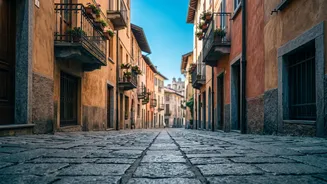
Florence feels designed for solo wandering. The entire historic centre, a UNESCO World Heritage site, is compact enough to cross in about 20 minutes, meaning its world-class treasures are all within easy reach. You can start your day at the magnificent
Duomo, meander to the Ponte Vecchio bridge, and then lose yourself in the Uffizi Gallery, all without needing to navigate complex transport. The Oltrarno district, on the south bank of the Arno River, offers a slightly more bohemian vibe with artisan workshops and quiet piazzas, perfect for an afternoon of aimless exploration. For solo travellers, this walkability translates to safety and simplicity; the streets are well-lit and continuously populated, making an evening stroll back from a trattoria feel comfortable and secure. Dining alone is a common and respected practice, allowing you to savour a bowl of pasta at a counter seat without feeling out of place.
Lisbon, Portugal: Hills, History, and Charm
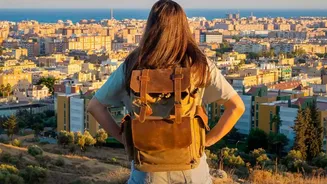
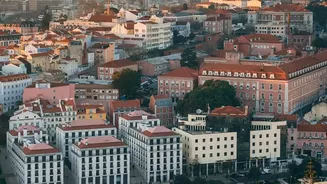
Lisbon is a fantastic choice for solo travellers, combining a vibrant atmosphere with a compact, navigable centre. While famous for its seven hills, the historic core's key neighbourhoods—like Baixa, Chiado, and Alfama—are situated close together. Baixa, the city's downtown, is relatively flat and serves as a practical base for first-time visitors, putting landmarks like Rossio Square and the Santa Justa Lift within a short walk. From there, you can wander into the charmingly steep, narrow lanes of Alfama, the city's oldest district, to hear Fado music drifting from small restaurants. The city's walkability encourages simple pleasures: pausing at a 'miradouro' (viewpoint) for breathtaking views, grabbing a warm 'pastel de nata', and admiring the tiled facades that define Lisbon's aesthetic. Ranked as one of the world's safer cities, its welcoming vibe makes it easy to explore with confidence.
Prague, Czech Republic: A Fairytale Old Town
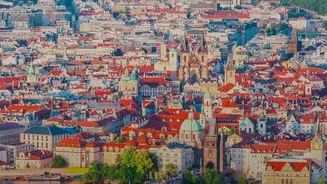
Prague's 'Golden City' centre is a dream for those who love to explore on foot. The entire historic core is so compact you can walk from the Old Town Square, across the iconic 14th-century Charles Bridge, and up to the gates of Prague Castle in under 30 minutes. This makes it exceptionally easy to see the main sights—the Astronomical Clock, the spires of St. Vitus Cathedral, and the pastel-coloured lanes of Malá Strana—at your own pace. Prague consistently ranks as one of Europe's safest capitals, a quality especially valued by solo travellers. The city's main tourist areas are well-lit and generally safe to walk at night, though standard city awareness is always wise in crowded spots. Beyond the main attractions, walkable residential neighbourhoods like Vinohrady offer a more local feel with beautiful Art Nouveau buildings and a thriving café culture perfect for a quiet afternoon.
Ljubljana, Slovenia: The Green and Gentle Capital
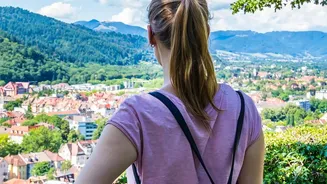
Perhaps Europe's most relaxed and approachable capital, Ljubljana is a hidden gem for solo travellers. Its greatest asset is a completely car-free city centre, where the banks of the Ljubljanica River are lined with cafés and willow trees. You can walk from one end of the old town to the other in less than half an hour, discovering gems like the Triple Bridge and the bustling Central Market, designed by famed architect Jože Plečnik. Slovenia is consistently rated one of the safest countries in Europe, and Ljubljana's low crime rate and welcoming atmosphere mean that walking alone at night feels remarkably secure. The city's small size doesn't mean it's boring; a short funicular ride or walk up a hill takes you to Ljubljana Castle for panoramic views, while the alternative culture hub of Metelkova offers a vibrant explosion of street art. Its gentle pace and charm make it an exceptionally easy and rewarding solo trip.