






The Rise of Plant-Based Milks
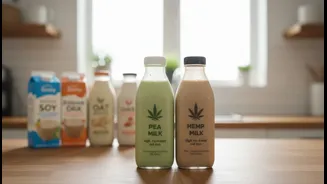
The demand for dairy-free alternatives in India is rapidly expanding, driven by factors like lactose intolerance, health and wellness trends, and the increasing adoption of vegan diets. While soy and almond milk have historically dominated the market,
consumers are increasingly curious about newer options that offer different benefits. This growing interest has paved the way for milks made from sources like peas and hemp seeds, which are not only allergen-friendly but also packed with nutrients that can sometimes be lacking in other plant-based choices.
Spotlight on Pea Milk
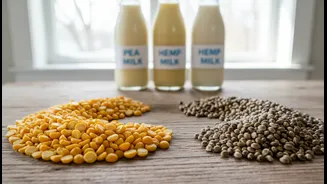
Contrary to what you might imagine, pea milk isn't made from the green peas you find in your sabzi. It's derived from yellow field peas. To create the milk, the peas are milled into a flour, and the protein is separated from the starch and fibre. This protein is then blended with water and other ingredients, often including sunflower oil for creaminess and fortification with vitamins. The result is a surprisingly neutral-tasting, creamy beverage that is a powerful source of protein, boasting around 8 grams per cup, which is comparable to cow's milk and soy milk.
Pea Milk's Mineral Power
One of the standout features of pea milk is its mineral content. It's an excellent source of iron, a crucial mineral for producing hemoglobin, which carries oxygen in the blood. Iron deficiency is a common nutritional issue, and plant-based sources are vital for those on vegetarian or vegan diets. Besides iron, pea milk is often fortified with high levels of calcium for bone health and provides a good amount of potassium and phosphorus. In some studies, pea-based milks have shown the highest mean amounts of phosphorus, selenium, and zinc compared to other plant milks.
Getting to Know Hemp Milk
Hemp milk is created by blending shelled hemp seeds—also known as hemp hearts—with water. It has a slightly nutty, earthy flavour and a creamy texture. One of its main nutritional claims to fame is its healthy fat profile; it's rich in both omega-3 and omega-6 essential fatty acids, which are important for heart and brain health. Like pea milk, it's a great option for those with soy or nut allergies. While it contains less protein than pea milk, with around 3 to 5 grams per cup, it brings a different set of nutritional strengths to the table.
Hemp Milk's Mineral Contribution
Hemp seeds are naturally rich in several key minerals, which are then passed into the milk. It is a particularly good source of magnesium, which is vital for hundreds of bodily functions, including muscle and nerve function. It also provides significant amounts of phosphorus, iron, and zinc. While the protein content is lower than that of pea milk, hemp is still considered a complete protein, meaning it contains all nine essential amino acids.
Making an Informed Choice
When choosing between pea and hemp milk, consider your personal dietary needs. If high protein is your priority, pea milk is one of the best plant-based options available, rivaling dairy and soy. If you're looking to boost your intake of healthy fats, particularly omega-3s, hemp milk is an excellent choice. Both offer a valuable mineral boost, especially for those looking for iron and magnesium. As with any processed food, it's wise to check the label. Opt for unsweetened varieties to avoid added sugars, and look for brands fortified with calcium and vitamin D to maximize nutritional benefits.