



Managing the Data Deluge
Every day, India's constellation of remote sensing, weather, and communication satellites beams down a torrent of data. Sifting through this manually is an impossible task. This is where AI first made its mark. Machine learning algorithms now automate
the analysis of vast datasets from Earth observation missions. These systems can identify patterns and changes with incredible speed and accuracy, delivering crucial insights for everything from predicting crop yields and tracking urban expansion to monitoring forest cover and forecasting disasters. By automating this large-scale data processing, ISRO not only enhances the value of its satellite infrastructure but also frees up human experts to focus on more complex analysis and decision-making.
Enhancing Launch and Mission Operations
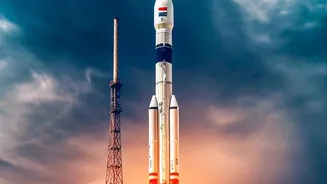
Getting a rocket off the ground is a monumental task involving thousands of variables. AI is being developed and implemented to make this process safer and more efficient. It can be used in the design of mission trajectories and for monitoring the health of launch vehicles and satellites by analysing telemetry data in real time. These systems can predict potential anomalies or equipment failures before they become critical, which is vital for both uncrewed and crewed missions. For satellites already in orbit, AI algorithms help with automated health checks and performance assessments, ensuring the longevity and reliability of these expensive assets. This shift towards predictive maintenance and intelligent monitoring represents a significant leap in operational efficiency for the organisation.
Pioneering Autonomous Navigation
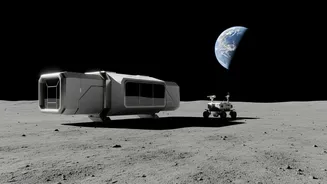
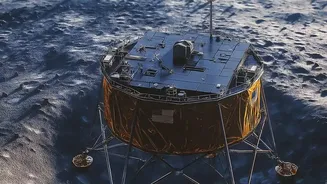
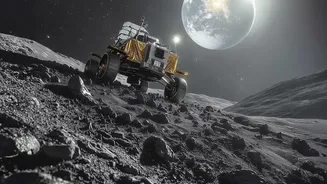
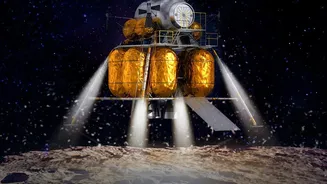
The next frontier for AI in India's space program lies in autonomy. For missions to the Moon and beyond, the communication delay between Earth and the spacecraft makes real-time human control impossible. The success of Chandrayaan-3's soft landing was a powerful demonstration of this, where AI-powered sensors and algorithms helped the Vikram lander identify a safe and hazard-free landing site on its own. The Pragyan rover also used AI-assisted navigation to explore the lunar surface. Looking ahead, this capability is crucial. For missions like Gaganyaan, India's first human spaceflight program, AI will play a role in everything from crew safety systems to monitoring the crew module.
The Rise of Space Robotics
Autonomous systems are not just about navigation; they are also about action. ISRO is actively developing its capabilities in space robotics, a field where AI is fundamental. The humanoid robot, Vyommitra, is designed to fly on uncrewed Gaganyaan missions to simulate human functions and test the life support systems, ensuring the capsule is safe for astronauts. Beyond that, ISRO has successfully tested its first robotic arm in space, a critical technology for future missions, including in-orbit servicing of satellites and the construction of the planned Bharatiya Antariksh Station (Indian Space Station). To foster innovation in this area, ISRO also hosts the Robotics Challenge (IRoC-U), encouraging students to develop autonomous robots for tasks like planetary exploration in GPS-denied environments, directly feeding into future mission requirements.