






The Unseen Dangers in Your Duster
Your kitchen cloth might look clean, but it's an ideal breeding ground for bacteria. Damp, warm, and often containing food particles, a single cloth used for multiple purposes can transfer harmful germs like E. coli and Salmonella from a contaminated
surface, like one used for raw meat, to a clean one, like a dinner plate or countertop. This cross-contamination is a leading, yet preventable, cause of foodborne illness in homes. Studies have found that a significant percentage of household kitchen cloths show growth of bacteria that can cause food poisoning. The risk increases when cloths are used for multiple jobs—wiping hands, cleaning spills, and drying dishes—without being properly cleaned between uses.
A System for Safety: Colour-Coding Your Cloths
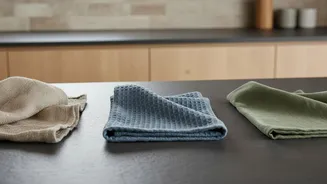
The most effective way to prevent cross-contamination is to assign different cloths to specific tasks. A simple colour-coding system is easy to implement. For instance, you could use a green cloth for wiping down surfaces like counters and tables, a blue one exclusively for drying clean dishes, a yellow one for hands, and a red cloth for high-risk areas. The red cloth should be reserved for cleaning up spills from raw meat, poultry, or fish. This designated cloth should be placed in the wash immediately after use to prevent the spread of potent pathogens. Some experts even recommend using single-use paper towels for these high-risk tasks to completely eliminate the risk. This separation ensures that bacteria from a dirty floor spill never makes its way to the utensils you eat with.
Choosing the Right Material
The type of cloth you use also matters. Microfiber towels are an excellent choice for many kitchen tasks. Their split fibers are highly effective at trapping dirt and bacteria, rather than just pushing them around. They are also highly absorbent and dry faster than traditional cotton cloths, which is a key advantage since bacteria thrive in moisture. Cotton cloths are still a good, durable option, especially for drying dishes, but they must be allowed to dry completely between uses. Whatever material you choose, avoid using sponges for cleaning surfaces. Sponges are notoriously porous and can harbour vast amounts of bacteria, making them difficult to properly sanitise.
The Essential Cleaning and Drying Routine
Merely separating your cloths is not enough; they must be cleaned and sanitised regularly. The general recommendation is to change out your kitchen towels every day or two, especially if they are heavily used. All cloths that have come into contact with raw meat juices must be laundered immediately. For a proper clean, wash the cloths in a washing machine on a hot water cycle. Using hot water is crucial for killing bacteria. Afterwards, dry them completely on a high heat setting in the dryer. Damp towels are a breeding ground for germs, so ensuring they are bone-dry before being stored or used again is non-negotiable. Between uses, hang cloths where they can air dry fully, away from the humid sink area.
Knowing When to Say Goodbye
Even the most durable kitchen cloths have a limited lifespan. Over time, they can become frayed, thin, or permanently stained, making them harder to clean effectively. A cloth that develops a persistent musty smell even after washing is a clear sign that it's time for a replacement. This odour is often caused by bacteria or mildew that has become deeply embedded in the fibres. Don't hesitate to demote old, worn-out kitchen cloths to household rags for cleaning floors or other non-kitchen tasks, and refresh your kitchen stock with new ones. Regular replacement is a small price to pay for the health and safety of your household.