







What is 800 MHz Spectrum?
Think of spectrum as the invisible highways that carry data through the air to your phone. Different frequencies are like different types of roads. High-frequency bands are like multi-lane superhighways that can carry immense amounts of data at high speeds,
but they don't cover long distances. In contrast, low-frequency bands like 800 MHz are more like country roads. They can't handle as much traffic (data), but their signals travel much farther and are incredibly effective at penetrating obstacles like walls, trees, and buildings. This makes the 800 MHz band extremely valuable for providing widespread, reliable coverage. The term 'paired' spectrum simply means there are two separate channels: one for data travelling to your phone (downlink) and one for data travelling from it (uplink), allowing for simultaneous, two-way communication just like a normal phone call or data session.
The Missing Piece for Starlink
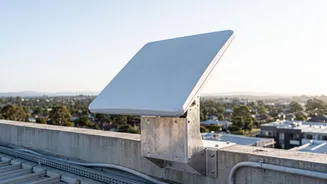
Until now, SpaceX's Starlink has primarily been a satellite internet service, beaming connectivity down to fixed terminals or 'dishes' on the ground. Its ambition for 'Direct to Cell' service—connecting directly to standard smartphones—has one major weakness: satellite signals struggle to get inside buildings. This is where the 800 MHz spectrum comes in. By acquiring these terrestrial airwaves from investment firm Grain Management, SpaceX can build a hybrid network. It can use its satellites for massive outdoor coverage in rural and remote areas, and then use the 800 MHz band to provide a reliable 'coverage layer' on the ground that ensures your phone works indoors and in cities. It is, as CEO Elon Musk described it, the 'last critical piece of the spectrum puzzle' to provide complete phone coverage.
A Direct Challenge to Mobile Giants
This move positions Starlink Mobile as a potential direct competitor to established telecom giants in India and across the globe. Instead of just being a partner that fills in 'not-spots' for existing carriers, owning this spectrum allows SpaceX to build a more independent and comprehensive network. The plan is to combine the high-capacity 2 GHz mid-band spectrum it already controls with this new low-band 800 MHz spectrum. The mid-band will provide the high speeds people expect in populated areas, while the low-band ensures a baseline of connectivity everywhere else. This hybrid satellite-and-terrestrial approach is a first, and it has the potential to create a single, seamless network that works anywhere, a proposition that has already rattled investors in major telecom stocks.
The Road Ahead: Hurdles and Headwinds
Acquiring spectrum is one thing; putting it to use is another. The deal first requires regulatory approval from government bodies like the Federal Communications Commission (FCC) in the US. These agencies must ensure that SpaceX's use of the band won't interfere with existing users, which include public safety services in some regions. Moreover, building out the terrestrial infrastructure needed to use this spectrum—cell towers and ground stations—is a massive and expensive undertaking. In markets like India, Starlink has already faced significant regulatory delays in launching its satellite services, highlighting the challenges of navigating national security clearances and competing with powerful local incumbents. The company has stated it is ready to comply with all local laws and has built India-specific infrastructure, but final approval remains pending.