





The Surprising Link Between Your Desk and Knees
It seems unlikely that sitting at a desk could harm your knees, but the connection is real and rooted in biomechanics. When you work from a non-ergonomic setup—be it a couch, a low dining chair, or a poorly adjusted office chair—your posture suffers.
Slouching or leaning forward causes your pelvis to tilt, which in turn can alter the alignment of your entire leg. This misalignment places uneven stress on the knee joint. Over time, this constant, subtle strain can contribute to the premature wear and tear of cartilage, the protective cushion in your joints. The knee becomes a victim of problems starting higher up in the body.
Common Culprits in Your Home Office
Several common habits of work-from-home professionals are repeat offenders when it comes to knee health. Keeping your knees bent at a sharp angle for hours on end increases pressure behind the kneecap. This can lead to a condition known as patellofemoral pain syndrome, sometimes called 'moviegoer's knee', characterized by an ache around the kneecap after prolonged sitting. Other issues include chairs that are too high, leaving your feet dangling and straining ligaments, or chairs that are too low, creating an acute angle at the knee. Crossing your legs is another habit that restricts blood flow and puts strain on the joints. Prolonged inactivity itself is a major factor; movement is what circulates synovial fluid, the natural lubricant for your joints. When you sit for long stretches, this circulation slows, leading to stiffness.
What Early Joint Wear Feels Like
Early knee joint wear isn't always a sharp, debilitating pain. It often starts with subtle warning signs that are easy to dismiss. You might notice stiffness in your knees for the first few moments after standing up from your desk. Other symptoms include a mild, intermittent ache at the front of the knee, difficulty or discomfort on stairs, or a clicking and grinding sensation when you bend or straighten your leg. While occasional noises can be normal, frequent sounds paired with discomfort are a red flag. This early stage, where the cartilage is just beginning to show signs of stress, is the most critical time to intervene.
An Ergonomic Blueprint for Healthy Knees
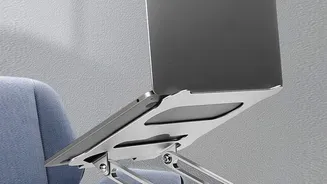
Protecting your knees doesn't require a complete office overhaul. Small, consistent adjustments can make a significant difference. Start with your chair. Adjust the height so your feet rest flat on the floor with your knees at a 90-degree angle, level with or slightly below your hips. There should be a small gap, about one inch, between the back of your knees and the edge of the chair. If your feet don't reach the floor, use a footrest. Position your monitor at eye level to prevent slouching, which helps maintain proper spinal and pelvic alignment. Finally, keep frequently used items within arm's reach to avoid twisting and bending motions that can strain your knees and back.
Movement Is the Best Medicine
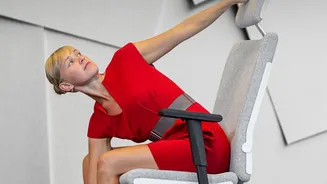
Even the most perfect ergonomic setup can't replace the body's need for movement. Prolonged sitting weakens the key muscles that support the knee, including the quadriceps and glutes. When these muscles are weak, more force is transferred directly to the joint itself. To combat this, set a timer to stand up, stretch, and walk around for a few minutes every hour. Simple exercises you can do during your workday include knee lifts, calf raises, and hamstring curls while standing. This not only improves circulation and reduces stiffness but also helps maintain the muscle strength necessary to keep your knees stable and healthy for years to come.