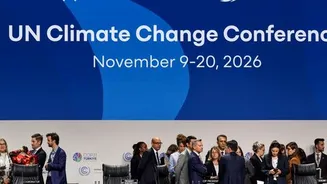






The United Nations' annual climate summit, COP31, has ended in a stunning failure. After running into marathon overtime sessions in Antalya, Turkey, negotiators from nearly 200 countries failed to agree on a final text.
What Caused the Collapse?
The primary cause of the deadlock
was an unbridgeable divide over the future of fossil fuels. A coalition of nations, including the European Union, pushed for the final agreement to include a clear commitment to transition away from oil, gas, and coal, which are the main drivers of climate change. However, this was strongly opposed by oil and gas-producing countries, notably Saudi Arabia and Russia, who resisted any explicit mention of a fossil fuel phase-out in the text. This core disagreement proved impossible to resolve, leading to the first collapse of talks without a deal in over a decade.
The Battle Over Words
Much of the fight came down to specific language. Following a landmark agreement at COP28 to begin 'transitioning away from fossil fuels', many nations arrived at COP31 expecting to create a concrete roadmap for that transition. Instead, draft texts presented by the Turkish and Australian co-presidencies were seen as a step backward, omitting direct references to fossil fuels and instead promoting questionable solutions like carbon capture and storage. This was viewed by many as a 'greenwashing' attempt that would allow pollution to continue. The European Union and other climate-vulnerable nations declared they would rather have no deal than a bad deal that undermined previous commitments.
The Unresolved Issue of Climate Finance
Money was another major sticking point. Developing nations arrived demanding that wealthy countries, who are historically responsible for the majority of emissions, deliver on long-overdue financial promises. These funds are critical for helping poorer countries adapt to climate impacts and transition to cleaner energy. A proposed target of $120 billion for adaptation finance was removed from the final draft, exacerbating a deep sense of mistrust. The failure to provide adequate financial support was seen by many, particularly the African Group of Negotiators, as a failure of climate justice.
What Was Actually Achieved?
Despite the failure to agree on the main political declaration, the summit was not a total loss. Some progress was made on secondary issues. Agreements were reached on the rules governing international carbon markets and on a framework for a 'just transition', which aims to protect workers and communities affected by the shift to a green economy. However, the operational details of the just transition mechanism were postponed to 2027. Several voluntary commitments on methane reduction and clean energy were also made, but these exist outside the formal consensus agreement.
What Happens Now?
The collapse of the talks is a significant setback for global climate efforts, but it does not nullify the Paris Agreement or other existing commitments. The diplomatic process will continue, with the next major summit, COP32, scheduled to take place in Addis Ababa, Ethiopia. However, the failure in Antalya places immense pressure on future negotiations to bridge the divides that have become so apparent. UN Secretary-General António Guterres expressed deep disappointment, stating that while there was no consensus in the room, 'there is no ambiguity in the science'. The climate crisis will not wait for diplomacy, and the pressure for meaningful action will only intensify.