







First Steps: Prep for Success
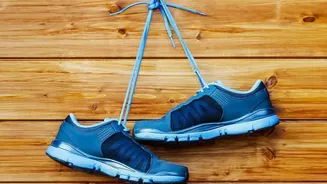
Before you begin drying, a little preparation goes a long way. As soon as you get home, take off your wet shoes and remove any insoles and laces. This allows air to circulate more freely inside the shoe and helps everything dry more evenly. The insoles,
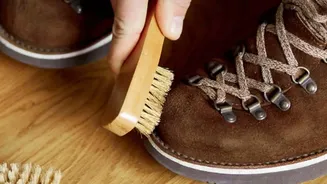
which often hold the most moisture, can be dried separately. If your shoes are caked in mud, give them a quick clean with a brush or damp cloth to remove any dirt before it sets. Pat the outside of the shoes with a dry towel to remove excess surface water.
The Newspaper Method: An Old-School Classic
One of the most effective and time-tested methods involves using newspaper. The paper is highly absorbent and works like a sponge, drawing moisture out from the inside of the shoe while helping it maintain its shape. Ball up sheets of newspaper and stuff them loosely but firmly inside each shoe, making sure to reach the toe area. Avoid pages with heavy ink, as it can sometimes transfer to light-coloured interiors. Check the newspaper every few hours; if it feels damp, replace it with fresh, dry sheets. This process may need to be repeated a few times for very wet shoes, but it is a gentle and highly effective technique.
Harness the Power of Airflow: Using a Fan
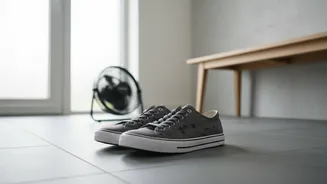
For a faster, yet still safe, option, use a fan. Constant airflow is excellent for wicking away moisture without the damaging effects of heat. Place your shoes in front of a table or floor fan, ensuring there's a bit of distance to allow for good circulation. To maximise effectiveness, open the shoe's tongue and prop it up so air can flow directly inside. For an even better setup, you can use wire hooks to hang the shoes from the fan's grill, allowing air to circulate all around. This method can dry a pair of shoes in just a few hours.
Unconventional Absorbers: Rice and Silica Gel
Some common household items can also serve as excellent moisture absorbers. Uncooked rice, famous for saving wet electronics, works well for shoes too. Fill a pair of old socks with rice, tie them off, and place one inside each shoe. The rice acts as a natural desiccant, slowly drawing out moisture. You can also place the shoes in a sealed box with an open container of rice for several hours. Similarly, don't throw away those little silica gel packets that come with new purchases; they are designed to absorb moisture and can be tossed into wet shoes to speed up the drying process.
What You Must Absolutely Avoid
The most important rule of drying shoes is to avoid direct, high heat. Never place your shoes on a radiator, near a space heater, in an oven, or use a high-heat hairdryer. Intense heat can cause leather to crack and become brittle, melt the glue that holds the shoe together, and warp or shrink synthetic materials. While putting shoes in a clothes dryer might seem tempting, the tumbling can damage both the shoes and the machine, and the heat can cause them to shrink or fall apart. Drying shoes in direct sunlight is also not recommended as it can cause fading and wear.
A Note on Different Materials
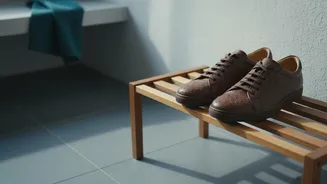
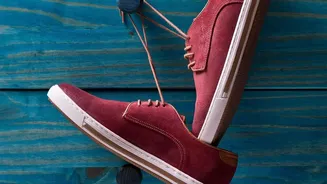
Different shoe materials require slightly different approaches. Leather, in particular, must be dried slowly and naturally to prevent it from becoming stiff and cracked. After drying leather shoes, it's a good idea to apply a leather conditioner to restore their essential oils. For canvas and synthetic athletic shoes, the newspaper and fan methods are particularly effective and safe. If possible, rotating between two pairs of shoes during the monsoon is a great practice. This gives each pair ample time to dry out completely, which extends their lifespan and prevents odours from developing.