


The Romantic, but Costly, Mistake
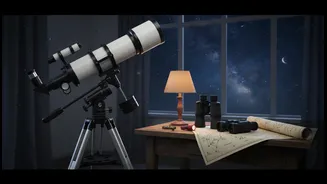
There's an undeniable romance to owning a telescope. It promises close-up views of lunar craters, the majestic rings of Saturn, and distant, glittering galaxies. Spurred by this vision, many aspiring stargazers rush to buy the biggest, most impressive-looking
telescope they can find. More often than not, that expensive piece of equipment ends up gathering dust in a garage. Why? Because a good telescope isn't a simple point-and-shoot device. Finding celestial objects can be difficult, the view can be disorienting (often upside down), and without a clear goal, frustration quickly replaces fascination. The secret to avoiding this common pitfall is to start your journey not with a purchase, but with a little patience and a lot of looking up.
Start with the Basics: Your Eyes and an App
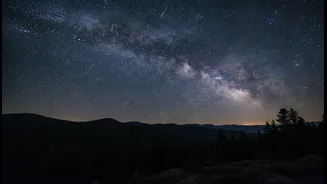
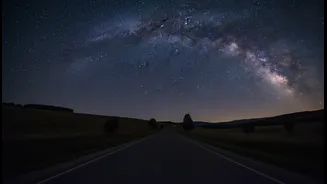
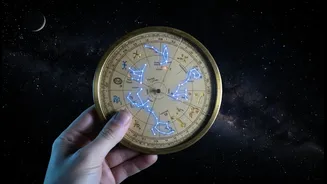
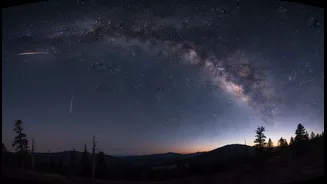
Your first observatory is free and requires no equipment at all. Before you can find faint nebulae, you need to be able to find your way around the celestial neighbourhood. Start by simply going outside and learning the major constellations visible from your location. Use a stargazing app on your smartphone to identify bright stars and planets. These apps use your phone's GPS and compass to create a real-time map of the sky above you. Learning to spot Orion in the winter or Scorpius in the summer is a fundamental skill. It will teach you how the sky moves through the night and changes with the seasons, knowledge that will be invaluable when you eventually use an optical instrument. Give your eyes at least 15-20 minutes to fully adapt to the darkness to see more stars.
The Real Best First Telescope: Binoculars
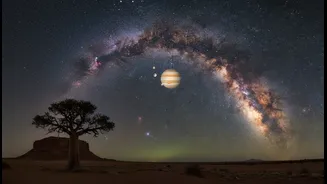
Ask any seasoned amateur astronomer, and they'll likely tell you the best first telescope is actually a good pair of binoculars. A decent pair of 7x50 or 10x50 binoculars is affordable, portable, and incredibly versatile. Unlike a telescope that shows a tiny, magnified patch of sky, binoculars offer a wide field of view that makes it easy to find what you're looking for. The view is also upright and intuitive. With binoculars, you can explore the vast, dark plains and brilliant craters of the Moon. You can spot the four largest moons of Jupiter appearing as tiny pinpricks of light beside the planet. You can even get your first glimpse of the faint, fuzzy glow of the Andromeda Galaxy or the glittering jewels of the Pleiades star cluster. Binoculars teach you how to scan the sky and find objects, a skill known as star-hopping, that is essential for any astronomer.
Discover What Excites You
This is the core of the headline's advice. Once you've spent time with your eyes and binoculars, you'll start to figure out what truly captures your imagination. Are you thrilled by the sharp, detailed views of the Moon and planets? Or are you captivated by the hunt for faint, sprawling deep-sky objects like star clusters, nebulae, and other galaxies? Your answer to this question determines what kind of telescope you should eventually buy. Telescopes designed for high-magnification planetary viewing (like many refractor telescopes) are different from telescopes designed for gathering as much light as possible to see faint objects (like large Dobsonian reflectors). Without knowing what you want to do, you're just guessing on a major purchase.
Find a Local Astronomy Club
You don't have to learn all of this alone. Nearly every region has a local astronomy club filled with passionate, knowledgeable people who are eager to share their hobby. These clubs often host public observing nights, or "star parties," where you can look through a wide variety of different telescopes. This is an incredible opportunity. You can ask owners what they like and dislike about their equipment. You can experience the difference between looking at Saturn through a small refractor versus a giant reflector. This hands-on experience is invaluable and will give you a realistic expectation of what you can see, something no online photo can provide.
When You're Ready to Buy
After you've learned the constellations, spent dozens of hours with binoculars, figured out your primary interests, and perhaps attended a star party, you are finally ready to buy a telescope. Your decision will now be an informed one, not an impulse. You'll know whether you need a portable 'grab-and-go' scope for quick trips or a larger instrument for your backyard. You'll understand the trade-offs between aperture (a telescope's light-gathering ability), magnification, and field of view. You won't be buying a telescope to see if you like astronomy; you'll be buying a specific tool to better enjoy the hobby you've already started.