



What Are These Cosmic Sparklers?
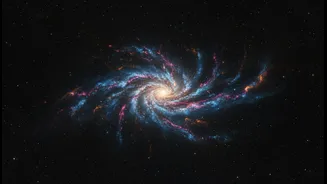
The term “cosmic stellar sparklers” isn't an official scientific classification, but a poetic way to describe some of the most sought-after objects in the universe: the very first stars and galaxies. These aren't the familiar, bright constellations you
see at night. Instead, they are incredibly faint, distant objects whose light has traveled for billions of years to reach us. Recently, astronomers have used Hubble to identify individual stars like 'Earendel', the most distant star ever detected, which existed when the universe was less than a billion years old. Finding these early stars, sometimes called Population III stars, is a primary goal for astronomers. They are believed to be made purely from the hydrogen and helium created in the Big Bang, and they hold the secrets to how the universe first lit up.
The Breakthrough: A Cosmic Magnifying Glass
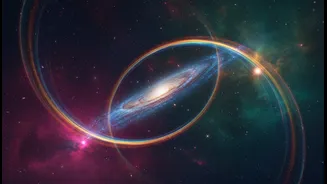
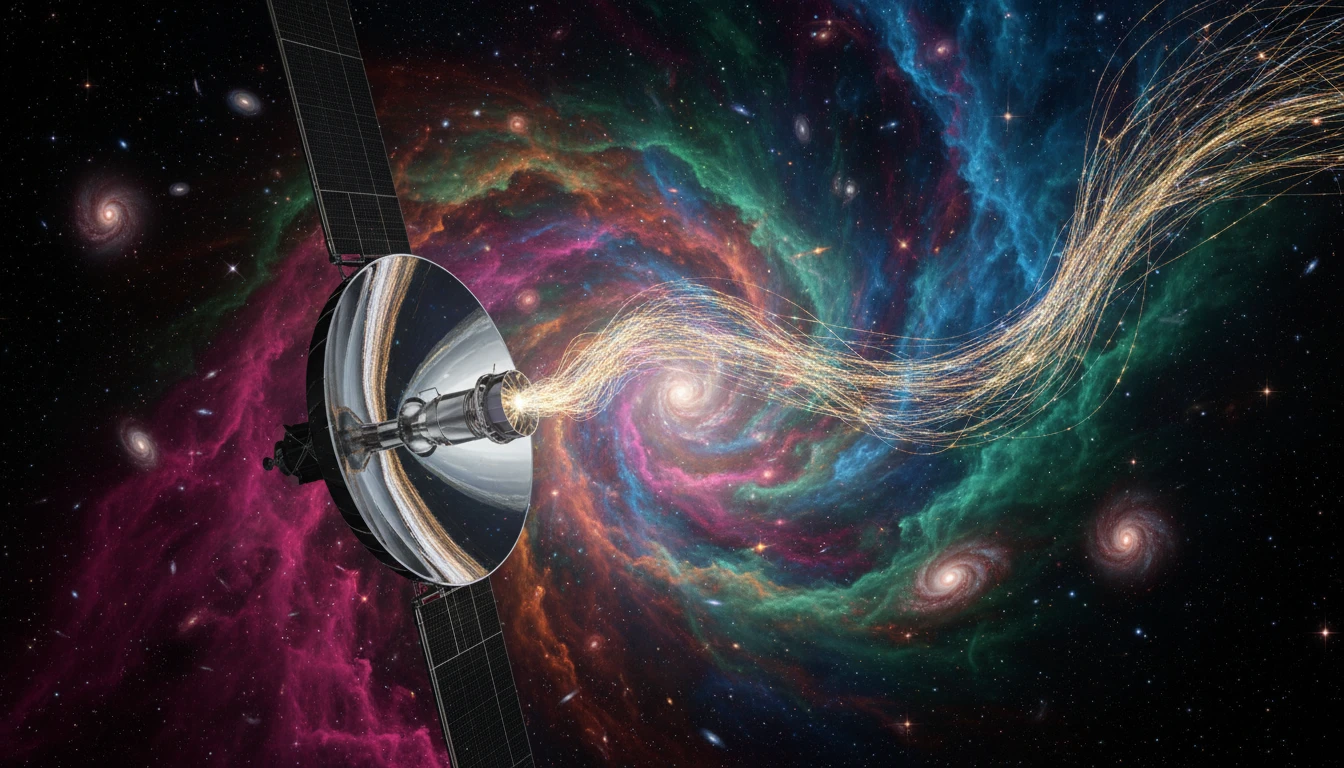
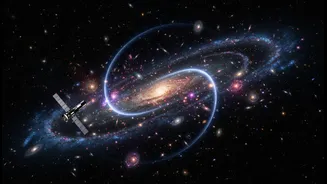
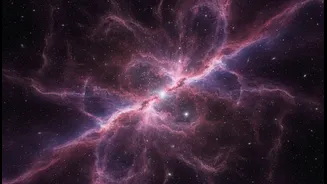
The key “optical breakthrough” isn't a new piece of hardware installed on Hubble. Instead, it’s a natural phenomenon predicted by Albert Einstein called gravitational lensing. According to his theory of general relativity, massive objects bend the fabric of spacetime itself. When a massive object, like a huge galaxy cluster, sits between us and a more distant object, its immense gravity acts like a powerful, natural magnifying glass. It warps and amplifies the light from the background source, making objects that would normally be too faint and far away for any telescope to see suddenly visible. This effect can distort the background galaxy into arcs or even a complete circle known as an 'Einstein Ring'.
Hubble’s New Way of Seeing
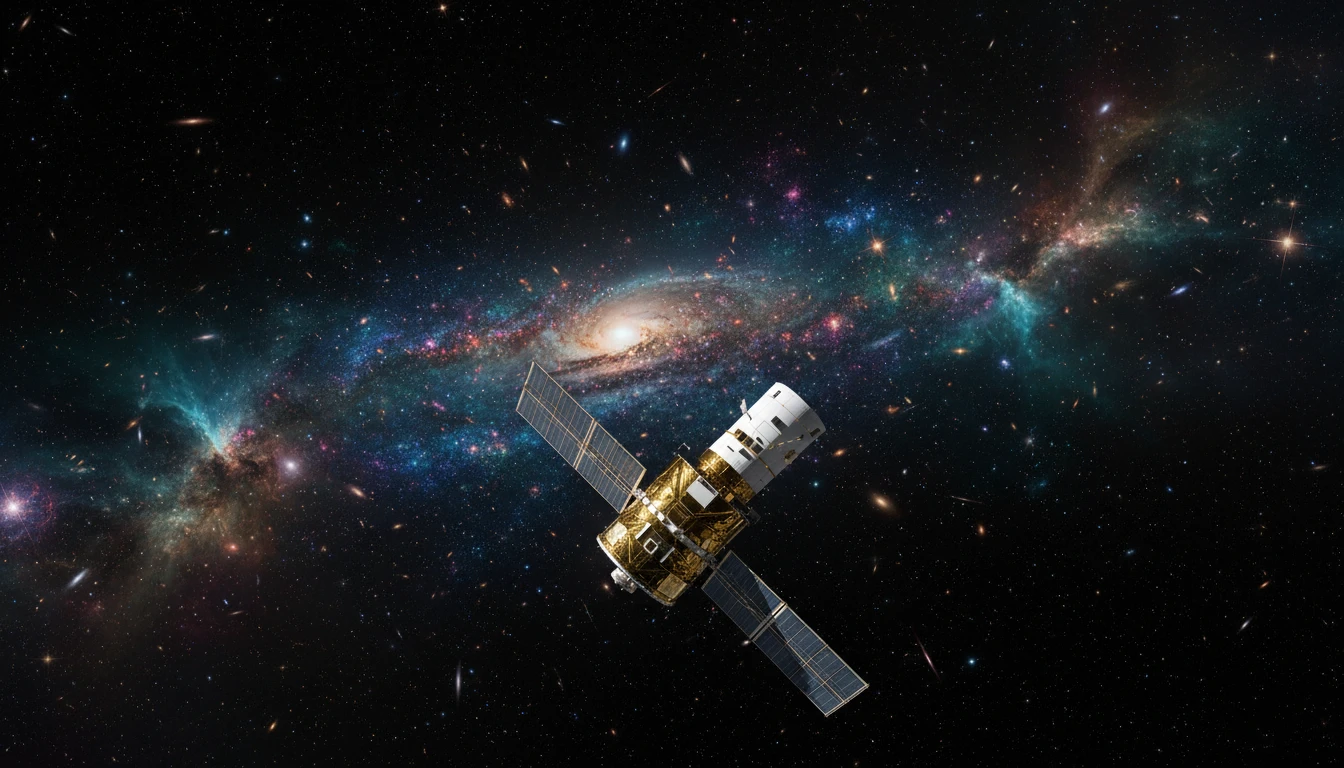
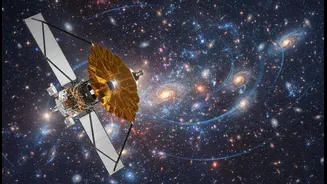
Astronomers are getting incredibly adept at finding and using these cosmic lenses to their advantage. Programs like the Hubble Frontier Fields have systematically targeted massive galaxy clusters, knowing they offer a magnified view of the universe behind them. This allows Hubble, with its high resolution and sensitivity, to spot details that even powerful ground-based telescopes can't because it operates above the blurring effects of Earth’s atmosphere. By combining Hubble’s sharp vision with the power of gravitational lensing, scientists can reveal galaxies 10 to 100 times fainter than any previously observed. This technique has been responsible for spotting record-breaking distant stars like Icarus and Earendel, whose light was magnified thousands of times over by these gravitational effects.
A Window to the Cosmic Dawn
Identifying these primitive stars is about more than just setting distance records. It’s about witnessing a pivotal moment in cosmic history known as the 'Era of Reionization'. For the first few hundred million years after the Big Bang, the universe was filled with a neutral, opaque fog of hydrogen gas. The first stars and galaxies produced intense ultraviolet light that ionized this gas, effectively clearing the fog and making the universe transparent, as it is today. By studying these “sparklers,” astronomers can directly observe the type of stars that drove this transformation. Recent Hubble observations of a galaxy called MXDFz4.4 provided the first direct evidence of this ionizing light escaping a galaxy during this critical period.
An Old Telescope With Enduring Power
While the James Webb Space Telescope (JWST) is grabbing headlines for its infrared views of the early universe, these discoveries show that Hubble remains a vital scientific instrument. Hubble's ability to see in visible and ultraviolet light gives it unique capabilities that complement Webb's. In fact, the two telescopes are often used together to get a more complete picture of cosmic objects. The ingenious use of gravitational lensing has essentially given the 30-year-old telescope a new lease on life, proving that innovative techniques and human ingenuity can continue to push the boundaries of what's possible in our quest to understand the cosmos.