







More Than Just a Moonshot
The Artemis II mission, which concluded in April 2026, was humanity's first crewed journey to the lunar vicinity in over 50 years. Four astronauts, including the first woman and first person of colour on a lunar mission, flew the Orion spacecraft farther
from Earth than anyone in history. The primary goal was to test the spacecraft's life-support, navigation, and re-entry systems under the harsh conditions of deep space. Initial post-mission assessments from NASA have been overwhelmingly positive, confirming that the vehicle and its critical systems, like the heat shield, performed as expected. This successful test flight paves the way for future missions aiming to establish a long-term human presence on the Moon and, eventually, send astronauts to Mars.
The Gaganyaan Connection
While Artemis II aimed for the Moon, India's own ambitious human spaceflight program, Gaganyaan, is focused on a different, but equally critical, first step: sending Indian astronauts into Low Earth Orbit. ISRO is meticulously preparing for its first uncrewed Gaganyaan test flight, with crewed missions to follow. Though the destinations differ, the fundamental challenges of keeping humans alive in space are the same. The success of Artemis II provides a vital boost of confidence and a real-world data set for Gaganyaan. Every system tested on Orion—from life support to high-speed re-entry—offers invaluable lessons for ISRO as it refines its own spacecraft, which will carry India's 'Vyomanauts' into orbit. According to experts, the flawless execution of Artemis II is fantastic news, as Gaganyaan aims to demonstrate similar capabilities.
A Partnership Forged in the Stars
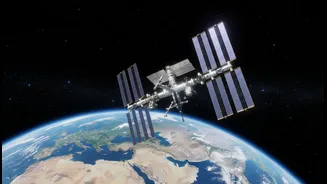
The link between Artemis and India is more than just academic. In 2023, India officially became a signatory to the Artemis Accords, a U.S.-led set of principles for peaceful and transparent cooperation in space exploration. This landmark agreement positions India not as a competitor, but as a key partner in the future of lunar exploration. The Accords create a framework for sharing scientific data and best practices, enhancing safety, and promoting sustainable space activities. This partnership has already borne fruit, with NASA and ISRO agreeing to a joint mission to the International Space Station (ISS). By joining the Accords, India has signalled its readiness to play a significant role on the global space stage, moving from an independent player to a collaborative powerhouse.
Lessons in Lunar Ambition
Beyond the immediate technical learnings for Gaganyaan, the Artemis program serves as a strategic roadmap for India's long-term ambitions. ISRO has already proven its prowess in robotic lunar exploration with the Chandrayaan missions. The next logical step is human exploration. As NASA and its partners work towards building a sustained presence on the Moon, including the Gateway lunar-orbiting station, India has the opportunity to observe and contribute. The Artemis framework could open doors for Indian technology in areas like payload delivery, resource utilisation, and surface infrastructure. This could even pave the way for an Indian astronaut to one day fly on an Artemis mission, turning a national dream into an international reality. The program provides a blueprint for how to transition from short-term visits to a permanent foothold in the cosmos.