

A Quantum Leap in Complexity
Chandrayaan-4 is not just another lunar landing; it is India's first-ever lunar sample-return mission. While landing a rover is a monumental achievement, bringing samples back is an exponentially more complex task that only three other nations have ever accomplished.
Scheduled for launch around 2028, the mission aims to collect roughly two kilograms of soil and rock from the Moon's south polar region and return it for detailed scientific analysis on Earth. This isn't just about prestige; it's a critical stepping stone for future deep-space exploration, including India's goal of sending an astronaut to the Moon by 2040. The mission will push ISRO's technological capabilities to their limits, requiring a series of perfectly orchestrated manoeuvres hundreds of thousands of kilometres from home.
The Five-Module Masterplan
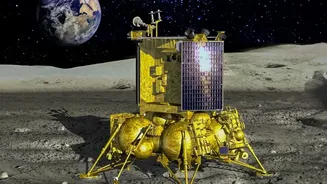
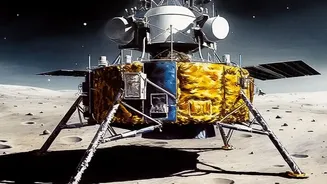
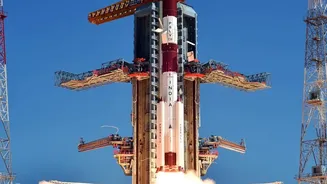
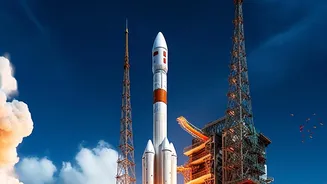
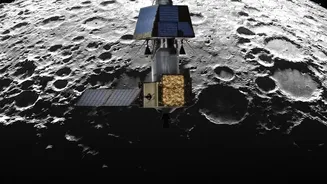
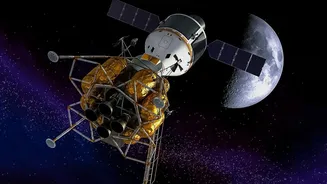
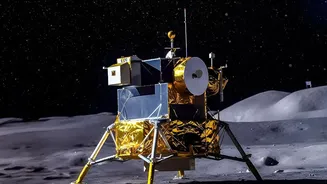
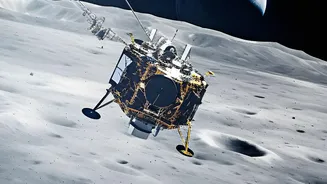
Unlike its predecessor, which had three main components, Chandrayaan-4 is an engineering marvel composed of five distinct modules. This modular design is necessary to handle the different phases of the mission. The five components are the Propulsion Module, Descender Module (the lander), Ascender Module, Transfer Module, and Re-entry Module. Because the combined weight of this entire assembly is too heavy for a single rocket, ISRO plans to use two separate launches of its most powerful rocket, the LVM3. The two sets of modules will be launched into Earth's orbit and then perform a delicate, autonomous docking procedure to form the complete Chandrayaan-4 spacecraft before beginning its journey to the Moon.
The Intricate Journey Home
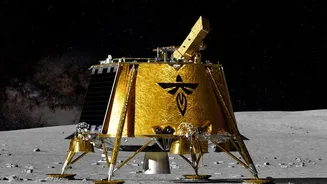
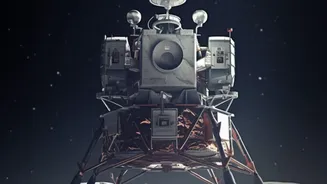
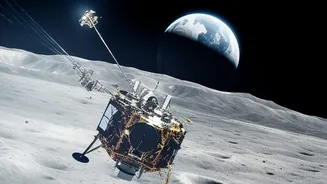
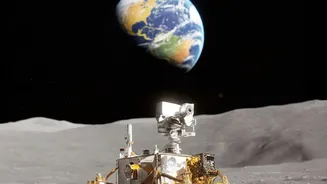
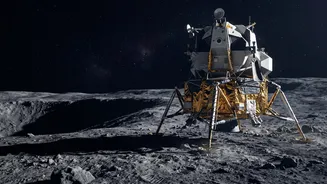
The mission plan reads like a science-fiction script. After arriving in lunar orbit, the Descender and Ascender modules will separate and make a soft landing near the Moon's south pole. Once on the surface, a robotic arm will scoop up soil while a drill collects subsurface material, potentially including precious water ice. These samples will be sealed in a container inside the Ascender module. Then comes the first major test: the Ascender must fire its engine and lift off from the lunar surface, leaving the Descender behind to become India's first launchpad on another world. It will then navigate into lunar orbit to find and dock with the Transfer and Re-entry modules. Once docked, another robotic system will transfer the sample container into the Re-entry module for the final leg of the journey.
The Final Fiery Return
With the precious lunar cargo secured, the Transfer Module will fire its engines to push the Re-entry Module out of lunar orbit and onto a path back to Earth. The final phase is one of the most dangerous. As it approaches our planet, the Re-entry Module will separate and plunge into the atmosphere at immense speed. Designed like a heat shield-equipped capsule, it must survive the extreme temperatures and forces of re-entry before deploying parachutes for a safe landing on Earth. This will be the first time ISRO attempts such a high-speed re-entry from deep space, a technology vital for future human spaceflight. If all goes to plan, scientists in India will have pristine samples from the Moon's enigmatic south pole in their labs.
Why Bring Back Moon Rocks?
The scientific payoff for this complex undertaking is immense. The lunar south pole is a region of great interest because its permanently shadowed craters are believed to hold vast quantities of water ice. Analysing this ice and the surrounding soil directly on Earth, with the full power of terrestrial laboratories, could answer fundamental questions about the Moon's history, the origin of water in our solar system, and the feasibility of using lunar resources to support future Moon bases. These samples, untouched by Earth's atmosphere, are a time capsule from billions of years ago. By successfully bringing them home, Chandrayaan-4 will not only cement India's status as a major space power but also unlock a new chapter in our understanding of the cosmos.