




The Original Recipe for Martian Air
To solve the oxygen problem on Mars, you first need to understand the air itself. The Martian atmosphere is incredibly thin and unbreathable, composed of about 96% carbon dioxide (CO2). For years, the leading solution was to find a way to split those
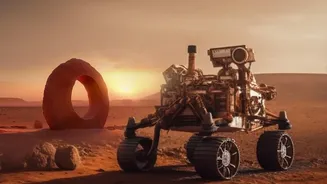
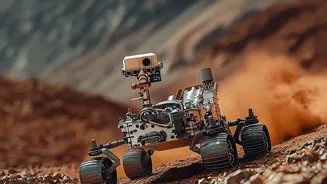
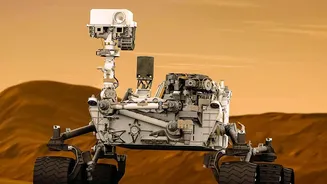
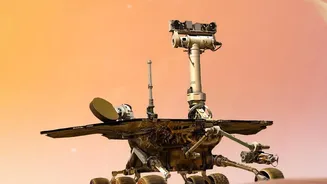
CO2 molecules and harvest the oxygen. This concept was brilliantly proven by NASA's MOXIE instrument aboard the Perseverance rover. From 2021 to 2023, the toaster-sized device successfully used a process called solid oxide electrolysis to pull in Martian air, heat it to around 800°C, and strip out oxygen atoms. MOXIE produced about 122 grams of oxygen over 16 runs, enough to keep a small dog alive for about 10 hours. While a modest amount, it was a monumental proof-of-concept: making oxygen on another planet is possible.
A New Strategy: From Air to Water
While MOXIE targeted the atmosphere, a new and potentially more powerful approach looks beneath the surface. Evidence from multiple Mars missions suggests that the planet holds significant reserves of water, not as fresh liquid, but as salty brine trapped underground. This is not your typical saltwater; it's rich in salts called perchlorates, which act as a natural antifreeze, allowing the water to remain liquid even at Mars's frigid temperatures, which can dip well below -36°C. Instead of wrestling with the thin atmosphere, what if future astronauts could tap into this abundant briny water? This question has led researchers to develop a completely different kind of electrolysis reactor, one designed specifically for the unique chemistry of Martian water.
The Brine Reactor Breakthrough
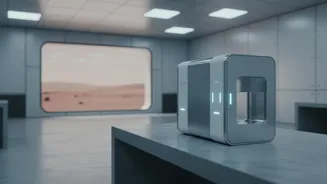
Researchers have developed a new type of electrolyzer that thrives in the cold, salty conditions of Mars. Instead of just producing oxygen, this brine electrolyzer splits the Martian water into two critical components: pure oxygen and hydrogen gas. This is a game-changer. The oxygen can be used for life support, while the hydrogen can be used as a primary component of rocket fuel. A team from Washington University published stunning findings on their system, which uses a specialized lead ruthenate pyrochlore anode. Their system not only works without needing to heat or purify the brine, it actually uses the perchlorate salts to its advantage. Most impressively, the researchers claim their brine electrolyzer can produce 25 times more oxygen than MOXIE using the same amount of power, a massive leap in efficiency.
More Oxygen, More Possibilities
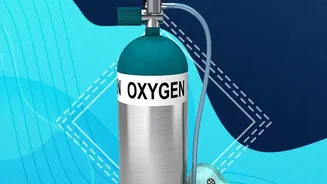
The ability to generate both oxygen and hydrogen fuel from a local resource fundamentally changes the logistics of a Mars mission. The single heaviest item for a return trip is the propellant. To lift off from Mars, astronauts would need an estimated 30 metric tons of oxygen to serve as the oxidizer for their rocket engines. Hauling all of that from Earth is astronomically expensive and difficult. By producing it on-site—a concept known as In-Situ Resource Utilization (ISRU)—the entire mission architecture becomes more feasible and sustainable. A system that provides breathable air and return fuel from the same process significantly reduces the payload mass that must be launched from Earth, making long-term human habitation a more realistic goal.
The Road Ahead for India and the World
This technological leap is not just of interest to NASA. For ambitious space programs like India's ISRO, which has its own long-term interplanetary goals, developing robust ISRU capabilities is paramount. Mastering technologies that allow us to 'live off the land' on other worlds will define the next era of space exploration. It's the key to moving from short, flag-planting visits to establishing a sustained presence. Furthermore, this innovation could have significant applications back on Earth. The same principles could be used to develop compact and efficient systems for generating oxygen from seawater for submarines or for use in other remote, harsh environments. It’s a powerful reminder that pushing the boundaries of space exploration often leads to powerful new tools for our own planet.