







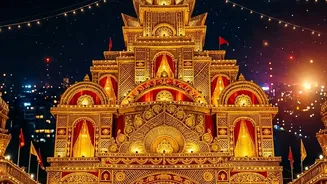
A City Reimagined Through Art
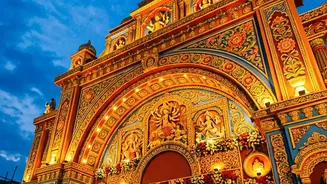
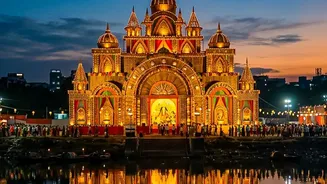
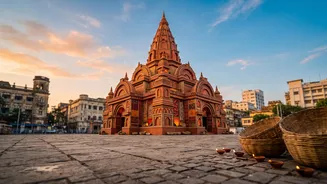
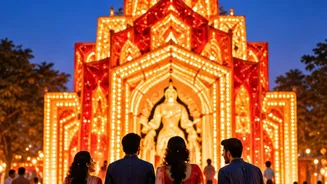
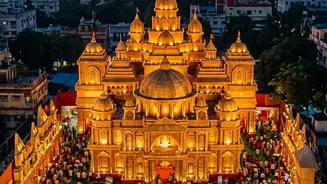
The assertion that Kolkata becomes a massive, open-air art gallery is not an exaggeration. It is the literal truth of Durga Puja. For these few days, the city showcases thousands of temporary temples, known as 'pandals', each a unique and often breathtaking
art installation. These are not mere religious structures but elaborate, thematic creations that can replicate world-famous monuments, depict scenes from mythology, or make powerful social statements. Entire neighbourhoods are transformed into immersive galleries where millions of people, in an activity fondly called 'pandal-hopping', wander from one creative marvel to the next. This city-wide exhibition is a core part of the celebration, turning the urban landscape into a vibrant canvas.
The Genius of Theme-Based Pandals
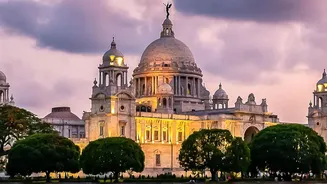
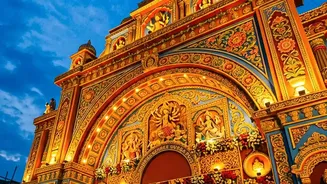
The modern Durga Puja is defined by its themes. Community clubs, or 'sarbojanin pujas', compete to create the most innovative and talked-about pandal. One year, a pandal might be a stunning replica of the Somnath Temple or Jaipur's Hawa Mahal. Another might use thousands of recycled plastic pens or terracotta pots to construct its facade, promoting a message of sustainability. Themes can be inspired by everything from blockbuster films and literature to current events and abstract concepts. This creative competition pushes artists to experiment with materials like bamboo, cloth, metal, and jute, blending traditional craftsmanship with contemporary installation art. The result is a dynamic and ever-evolving artistic tradition that ensures no two Pujas are ever the same.
The Hands Behind the Magic
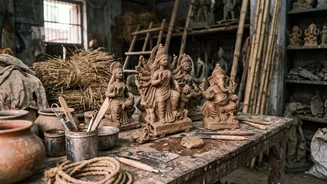
This grand transformation is the work of countless artisans, many of whom come from rural Bengal. For months leading up to the festival, they toil in shifts to bring these ambitious visions to life. The process begins with the idol makers of neighbourhoods like Kumartuli, who sculpt the divine forms from river clay, a tradition passed down through generations. Alongside them, a diverse team of farmers, carpenters, painters, and electricians lend their skills to pandal construction. In recent years, professional artists and art school graduates have also joined the fold, collaborating to create conceptual art pieces that blur the line between a religious icon and a gallery installation. For many of these artisans, the festival is not just a creative outlet but a crucial source of income that far surpasses what they might earn from their usual professions.
A Global Cultural Heritage Event
The cultural and artistic significance of Kolkata's Durga Puja is recognized on a global scale. In 2021, UNESCO added the festival to its Representative List of the Intangible Cultural Heritage of Humanity. The organization described it as the 'best instance of the public performance of religion and art' and a 'thriving ground for collaborative artists and designers'. This acknowledgement highlights that the festival's value lies not in monuments, but in the living traditions, skills, and community participation that bring it to life year after year. The event breaks down social barriers, as people from all walks of life, regardless of class or religion, come together to celebrate this shared cultural identity.