






A Personal Life Support System
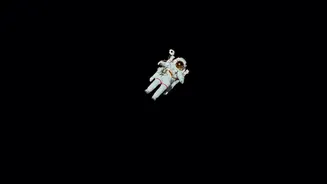
The most critical part of any spaceship is its life support system, and a spacesuit has one packed into a backpack called the Portable Life Support System (PLSS). This unit provides pure oxygen for the astronaut to breathe and pressurizes the entire suit.
Without this pressure, the vacuum of space would cause an unprotected person's body fluids to boil, a fatal condition called ebullism. The suit maintains a pressure of about 4.3 psi, which is lower than Earth's atmosphere but high enough to keep an astronaut safe and the suit flexible enough for work. The PLSS also contains fans to circulate air and a system to scrub the exhaled carbon dioxide, which is toxic in a sealed environment. Power for these fans, radios, and other electronics comes from a lithium-ion battery housed within the backpack.
Advanced Climate Control
In direct sunlight, a suit's surface can heat up to 121°C, while in shadow it can plummet to -157°C. To manage these extremes, the astronaut first puts on a Liquid Cooling and Ventilation Garment (LCVG). This looks like a set of long underwear but has about 91 metres of thin plastic tubes woven into the fabric. Chilled water circulates through these tubes, absorbing the astronaut's body heat and carrying it back to the PLSS. There, a device called a sublimator exposes the water to space, allowing some of it to turn to ice and then vapour, carrying the excess heat away. This system acts as the suit's personal radiator, keeping the astronaut comfortable no matter the external temperature.
A Multi-Layered Hull
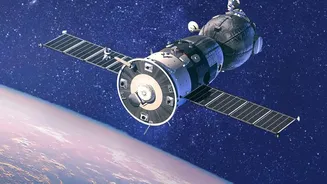
Just like a spaceship's hull, the spacesuit itself is made of multiple specialized layers—around 14 in total for NASA's Extravehicular Mobility Unit (EMU). Directly over the cooling garment is a urethane-coated nylon bladder, which holds the air pressure. A fabric restraint layer on top of that prevents the bladder from ballooning outwards. Next come multiple layers of aluminised Mylar, which act like the insulation in a thermos flask to block the extreme heat and cold of space. The outermost layers form the Thermal Micrometeoroid Garment. This includes tough, puncture-resistant materials like Kevlar and Nomex to protect the astronaut from impacts by tiny, high-velocity particles of space debris. The final, white outer layer reflects harsh sunlight.
Command, Control, and Mobility
An astronaut needs to see, communicate, and move effectively. The helmet provides a bubble of protected space with a wide field of view. A special visor assembly, often coated with a thin layer of gold, can be lowered to protect the astronaut's eyes from the sun's intense glare and harmful ultraviolet radiation. A communications carrier, often called a 'Snoopy cap', is worn underneath the helmet and contains the microphone and earpiece for constant contact with mission control and other crew members. While the pressurised suit is inherently stiff, it is built with carefully designed joints, bearings, and gores at the shoulders, elbows, hips, and knees that allow for crucial mobility, enabling astronauts to use tools and navigate their worksite.