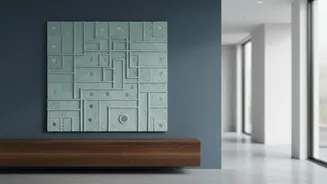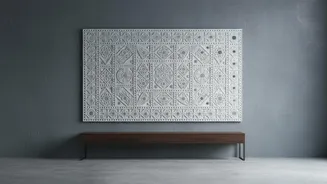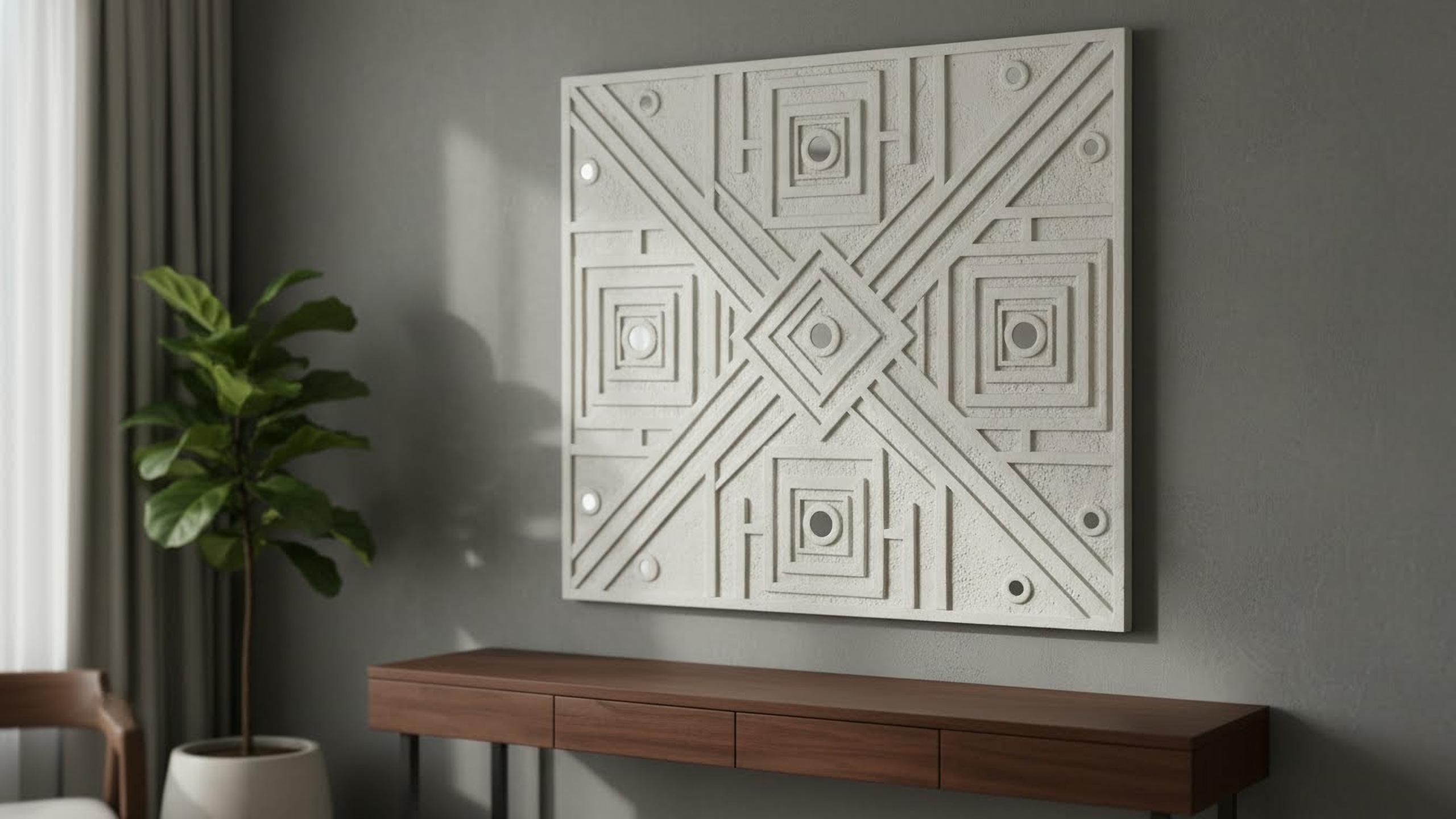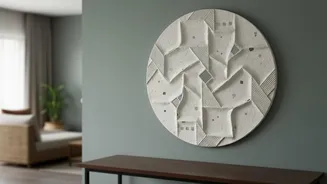


An Art Born of the Desert
At its heart, Lippan Kam is a traditional mud-relief craft from the Kutch region of Gujarat. The name itself comes from the local word 'lipan', meaning 'to apply' or 'plaster'. For generations, women from communities like the Rabari, Mutwa, and Meghwal
have decorated the inner and outer walls of their circular mud huts, known as 'bhungas'. They use a mixture of locally sourced clay and animal dung to create intricate, raised patterns by hand. Small, hand-cut mirrors, or 'aabhla', are embedded into the wet clay. This wasn't just for decoration; the mud-dung mixture provided insulation, keeping homes cool in the scorching desert heat, while the mirrors reflected scarce light, brightening up the interiors. The art was a part of life, a communal activity passed from mother to daughter.
From Village Walls to Urban Living Rooms
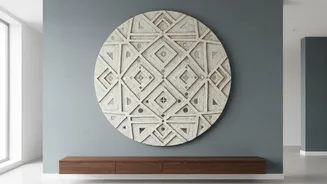
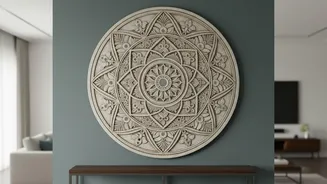
What was once an architectural feature of rural homes has undergone a remarkable transformation. Today, Lippan Kam is a celebrated art form adorning urban apartments, hotels, and galleries. This revival was boosted by events like the Rann Utsav, a festival celebrating Kutchi culture, which brought the craft to a wider audience. The shift has seen the art become portable. Instead of decorating a permanent wall, artisans now create Lippan panels on MDF boards, plywood, or canvas, making them accessible to city dwellers who can’t exactly plaster their apartment walls with mud and dung. This evolution allows the art to travel, becoming a commodity that can be bought, sold, and shipped worldwide.
A Modern Makeover with Ancient Roots
For Lippan art to fit into a modern apartment, it had to adapt. The traditional, and somewhat fragile, mixture of mud and dung has often been replaced with more durable and lightweight materials. Contemporary artists and hobbyists use everything from Plaster of Paris and adhesives to chalk powder and acrylic clay, making the art more resilient and odour-free. While the classic white finish remains popular, artists are now experimenting with vibrant colours to match modern interior palettes. The motifs are also evolving. Alongside traditional patterns of peacocks, camels, and geometric shapes that reflect the culture of Kutch, artists are creating more abstract and minimalist designs to suit contemporary tastes. This adaptation is key to its growing popularity, making the ancient craft relevant for today's homes.
More Than Just Wall Decor
For an urban apartment owner, hanging a piece of Lippan art is about more than just aesthetics. In a world dominated by mass-produced goods, this handcrafted art offers a tangible connection to authenticity and tradition. It tells a story of a place, a community, and a way of life. The trend reflects a broader desire among city dwellers to incorporate elements of sustainable, eco-friendly design into their homes. Furthermore, the revival has a direct impact on the artisans of Kutch. The growing market provides a sustainable livelihood, empowers women who have historically been the keepers of this craft, and helps preserve a vital part of India’s cultural heritage. Purchasing a piece of Lippan art becomes an act of cultural patronage, connecting the consumer directly with the artisan community.