
A Storm Within a Storm
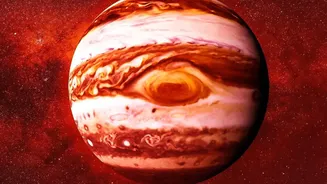
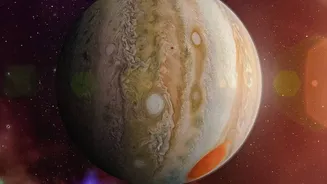
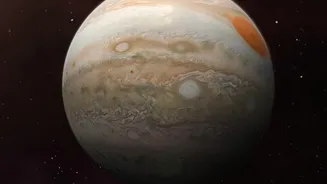
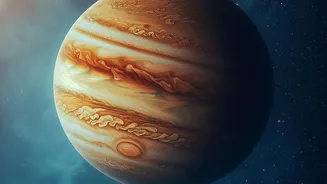
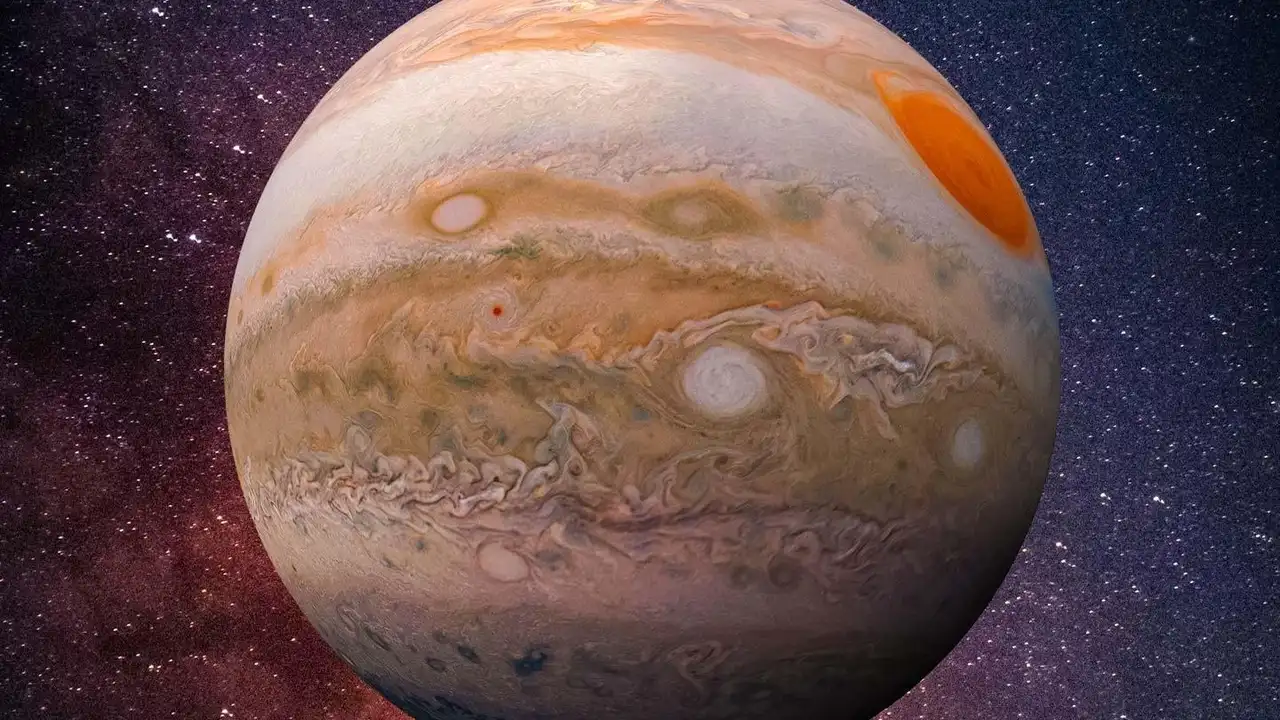
For centuries, Jupiter's Great Red Spot was seen as a single, colossal entity. But thanks to the persistent gaze of space telescopes, we now understand it as a complex weather system, more like a hurricane on Earth but on a planetary scale. The phrase
“cosmic tornados” in the headline refers to the smaller vortices and eddies that swirl around and interact with the main storm. These smaller storms are not just passive features; they are actively drawn into the Great Red Spot, acting as a source of energy that can alter its behaviour. Scientists have observed these smaller storms being stretched, torn apart, and ultimately consumed by the larger vortex. This constant feeding process is crucial to understanding the storm's long-term survival and its recent, dramatic changes. It’s a chaotic dance of atmospheric forces, where smaller tempests sacrifice themselves to the giant, influencing its power and stability in ways we are only just beginning to model and understand.
A New Eye on a Gas Giant
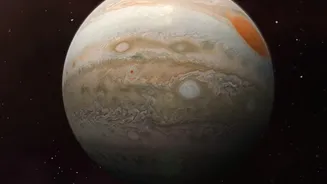
The “new space camera” providing these remarkable insights is not a single, recently launched device but rather the sustained, high-resolution vision of the Hubble Space Telescope. Through its Outer Planet Atmospheres Legacy (OPAL) program, Hubble conducts annual check-ups on our solar system’s outer planets, creating a priceless long-term dataset. This consistent monitoring allows scientists to move beyond static snapshots and observe dynamic weather patterns over time. By capturing images of Jupiter year after year, astronomers can track the subtle shifts in wind speed, colour, and size of its storms. Recent observations, particularly a dedicated study from late 2023 and early 2024, have provided an unprecedented look at the Great Red Spot’s behaviour. These are not just pretty pictures; they are detailed maps of atmospheric physics, revealing changes that would be invisible to less powerful or less consistent observation methods.
The Incredible Shrinking Spot
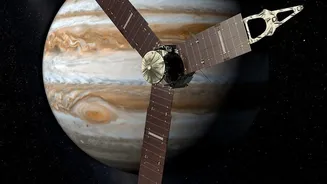
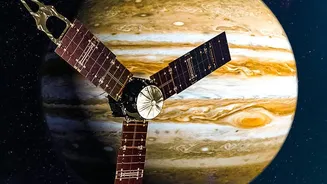
One of the most significant findings from decades of observation is that the Great Red Spot is shrinking. When detailed measurements began in the late 1800s, the storm was vast enough to swallow three Earths. By the time NASA’s Voyager probes flew past in 1979, it had noticeably downsized. Today, it is barely wide enough for one Earth to fit inside. The storm is not only getting smaller but also changing shape, becoming more circular and less of a distinct oval. The rate of this shrinkage has even appeared to accelerate at times, leading some scientists to hypothesise that these smaller eddies feeding into the storm might be altering its internal dynamics and sapping its energy. This long-term shrinking trend provides the crucial context for the latest, more surprising discoveries about the storm’s behaviour.
An Unexpected Wobble
While the shrinking has been a long-running story, the latest data from Hubble revealed something completely unexpected. The Great Red Spot isn’t just shrinking steadily; it’s also oscillating. Recent time-lapse observations showed the storm jiggling, squeezing in and out like a stress ball over a 90-day cycle. During this cycle, its shape fluctuates, and its rotation speed changes. This behaviour was a genuine surprise to planetary scientists, who had no existing hydrodynamic models that predicted such a wobble. It suggests that the processes driving this ancient storm are far more complex than previously thought. This oscillation could be linked to the way the storm interacts with the smaller vortices it consumes, or it may point to deeper, unseen processes far below Jupiter's cloud tops. It transforms our view of the Great Red Spot from a slowly fading landmark into a dynamic, pulsating weather engine whose future is more uncertain than ever.