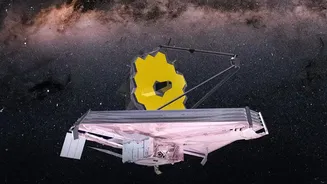



A Glimpse Into a Distant World
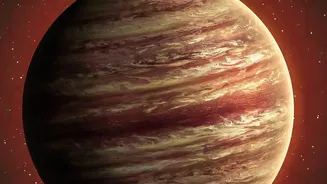
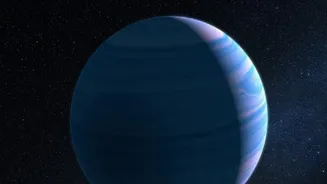
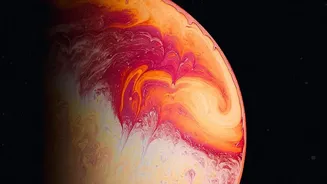
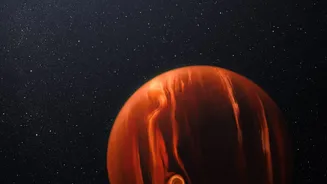
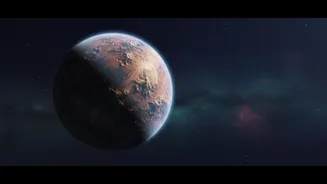
The detection was made in the atmosphere of an exoplanet, a planet that orbits a star outside our solar system. While the telescope has observed several such worlds, this recent finding provides some of the clearest evidence to date of water existing
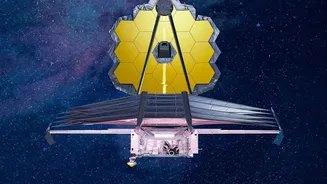
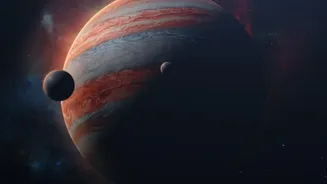
beyond our cosmic neighbourhood. The planet in question is what is known as a gas giant, similar in some ways to Jupiter or Saturn, and it orbits its star at a distance that makes its atmosphere incredibly hot. This is not a candidate for a new Earth, but the discovery is monumental for a different reason. It proves that Webb has the power to identify the key ingredients for life hundreds or even thousands of light-years away, transforming what was once science fiction into observable fact.
Decoding a Planet's Breath With Light
The magic behind this discovery lies in a technique called transmission spectroscopy. Think of it like this: when an exoplanet passes in front of its host star from our perspective, a tiny fraction of the starlight filters through the planet's atmosphere. The gases and chemicals in that atmosphere absorb very specific colours, or wavelengths, of light. By capturing the starlight that has passed through this atmospheric filter, the James Webb Space Telescope can see which colours are missing. These missing pieces create a unique chemical "barcode" that tells scientists exactly what the atmosphere is made of. In this case, the spectrum showed clear absorption features that perfectly matched the signature of water (H2O), confirming its presence.
Why the Signature of Water Matters
On Earth, life as we know it is fundamentally tied to water. It is the universal solvent that facilitates the chemical reactions necessary for biology. Finding it elsewhere in the galaxy, even in the atmosphere of a scorching hot gas giant, is a profound achievement. It tells astronomers that one of the most crucial prerequisites for life is present in other planetary systems. Every detection of water, whether it's vapour, ice, or potentially liquid, helps scientists build a better understanding of how planets form and how water is distributed across the cosmos. This knowledge is essential for narrowing down the search and knowing where to point our telescopes next in the quest to find a truly habitable world.
Managing Expectations: Not Habitable, But a Huge Step
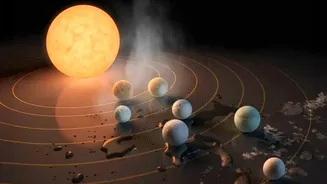
It's important to be clear that finding water vapour does not mean we've found a planet with oceans or life. The exoplanet where this detection was made is likely far too hot and lacks a solid surface, making it inhospitable. However, the true significance of this finding is the technological proof of concept. Before the James Webb Space Telescope, getting such a detailed look at the atmosphere of a distant planet was incredibly difficult, with results often obscured by clouds or instrumental limitations. Webb's power and precision have ushered in a new era. By successfully identifying water on a gas giant, scientists have demonstrated that the telescope has the capability to perform the same analysis on smaller, rocky, Earth-like planets that orbit within their star's 'habitable zone' — the region where conditions could be just right for liquid water to exist on the surface.