




Why August is a Great Month for Saturn
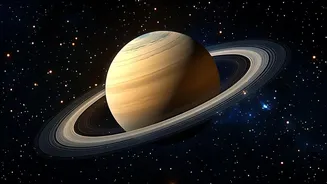
Throughout August, Saturn will become progressively easier to see. The ringed planet is heading towards its annual “opposition” in early October, an event where Earth passes directly between Saturn and the Sun. This alignment means Saturn is at its closest
and brightest for the year. While the peak is in October, August is the perfect time to start tracking it. Each night, the planet will rise a little earlier and shine a little brighter, making it an increasingly prominent feature of the late evening sky. By mid-August, it will be rising around 10 or 11 PM, and by the end of the month, it will be visible as early as 9 PM. This steady approach gives you a fantastic, month-long window to find your bearings and prepare for the main event.
How to Find Saturn in the Night Sky
Finding a planet can seem daunting, but Saturn is quite easy to locate this month. It will be situated in the constellation Pisces. To find it, look towards the eastern sky late in the evening. Since Pisces is a relatively faint constellation, the much brighter Saturn should stand out. The planet shines with a steady, yellowish-white light, which is a key clue to its identity. Unlike stars, which twinkle due to atmospheric turbulence, planets have a more stable, unwavering glow. If you're still unsure, the Moon can act as a helpful guide. On the nights of August 30th and 31st, the Moon will pass close to Saturn, making the planet unmistakable.
What You Can See With the Naked Eye
You don't need any special equipment to get your first glimpse of Saturn. To the naked eye, it will appear as a bright, star-like point of light. You won't be able to distinguish its famous rings, but simply identifying a planet that is over a billion kilometers away is a thrilling experience in itself. This August, Saturn will shine at a magnitude of around 0.5, making it as bright as some of the most prominent stars in the night sky. The key is to find a location with minimal light pollution and give your eyes about 20 minutes to fully adjust to the darkness. This will make fainter objects, including Saturn early in the month, much easier to spot.
A Better View With Binoculars
A standard pair of binoculars will significantly enhance your view. While you still won't see the rings as a distinct, separate structure, they will reveal that Saturn is not just a simple point. With a steady hand or by mounting the binoculars on a tripod, you may notice that the planet appears slightly elongated or oval-shaped. This is the first hint of its incredible ring system. Additionally, binoculars might just be enough to spot Saturn's largest moon, Titan. Titan is the second-largest moon in our solar system and shines at a magnitude of about 8.5, making it a visible pinpoint of light very close to the planet with good, steady binoculars.
The Magic of a Telescope
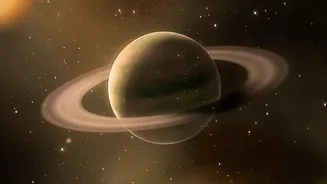
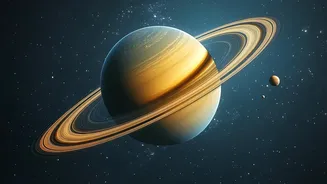
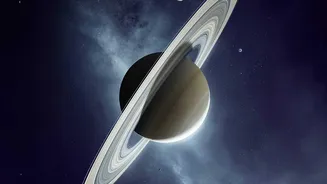
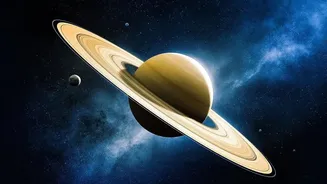
This is where the real magic happens. Even a small beginner's telescope, with an aperture of 60mm or 70mm, is powerful enough to reveal Saturn’s rings. At a magnification of around 50x, the rings will appear clearly separated from the planet's disk. This is an unforgettable sight for any stargazer. After being nearly edge-on and invisible in 2025, the rings are now tilting back towards us, making 2026 a great year to watch their return. With a slightly larger telescope (4 inches or more) and higher magnification (100x to 150x), you might even spot the Cassini Division, a dark gap in the rings. Several of Saturn's other moons, like Rhea, Dione, and Tethys, may also become visible as tiny specks of light orbiting the majestic planet.