





Your Lifeline: A High-Flotation Whitewater PFD
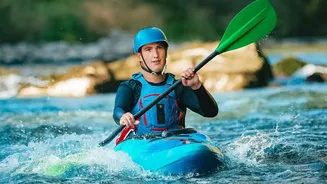
This is the single most critical piece of gear. For Meghalaya's powerful, aerated monsoon rivers, a standard recreational life vest is not enough. You need a US Coast Guard-rated Type V whitewater Personal Flotation Device (PFD). Look for models with
high buoyancy, often called 'high-float' or 'rescue' vests, which provide more lift in turbulent water. Features like a quick-release harness, large pockets for rescue gear, and reinforced shoulder straps are non-negotiable. A proper fit is crucial; it should be snug, allowing full range of motion without riding up when you're in the water.
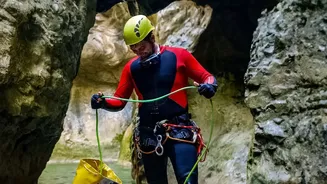
A Helmet for Hostile Environments
The canyons of Meghalaya are steep and rocky. During the monsoon, rivers carry submerged debris and navigating boulder gardens is common. A high-quality, whitewater-specific helmet is essential to protect against impact with rocks, a low-hanging branch, or even your own equipment during a capsize. Ensure it covers your forehead, temples, and the back of your head, with a secure four-point chin strap system that keeps it locked in place no matter the force of the water.
Core Rescue Gear: Throw Bag and River Knife
You are your group’s first line of defence. Every kayaker must carry a throw bag with a floating rope, ideally around 15-20 metres long. This is your primary tool for rescuing a swimmer from a distance. Practice using it until it's second nature. Equally important is a river knife. This is not a weapon, but a rescue tool designed to be accessed with one hand to cut a rope or webbing in an emergency entanglement. It should be mounted securely on your PFD's lash tab for quick deployment.
Dressing for Immersion, Not Air Temperature
While Meghalaya is not cold, the water can be. Prolonged immersion in fast-moving, rain-fed rivers can lead to hypothermia. Avoid cotton clothing at all costs, as it retains water and drains body heat. Instead, opt for layers of synthetic, moisture-wicking fabrics. A wetsuit or, for more serious expeditions, a drysuit is the appropriate choice. This thermal protection keeps you functional and focused if you find yourself swimming in a chilly, powerful rapid.
Communication and First Aid for Remote Areas
Many of Meghalaya’s best kayaking runs are in remote areas with non-existent mobile service. A satellite messenger or personal locator beacon (PLB) is vital for calling for help in a serious emergency. For less critical situations, a comprehensive first-aid kit stored in a waterproof dry bag is a must-have. Your kit should be tailored to whitewater injuries, including supplies for wound management, strapping tape, pain relief, and any personal medications. Also pack insect repellent to deal with the inevitable bugs of the monsoon season.
The Right Boat for the Job
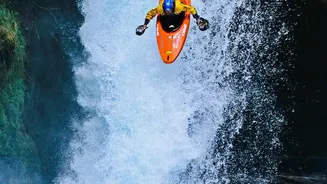
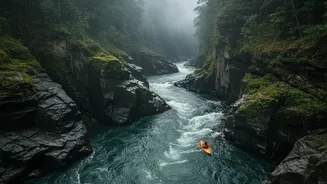
Finally, ensure your kayak and paddle are suited for the challenge. The rivers in Meghalaya can feature Class IV and Class V rapids, which are at the upper end of the difficulty scale. This requires a modern whitewater creek boat designed for steep, technical rivers. It should be in excellent condition with no cracks or damage. Your paddle should be robust, correctly sized, and something you trust implicitly. Carrying a spare, breakdown paddle within the group is a wise precaution for any multi-day expedition.