





Start with a Smart Design
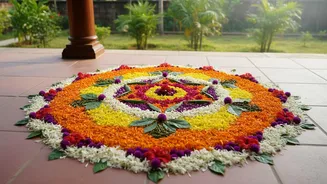
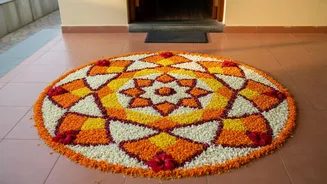
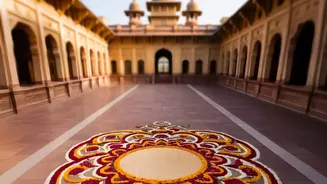
The secret to a manageable pookkalam begins before you even touch a petal. A thoughtful design plan is your best tool. Instead of aiming for a massive, intricate pattern, consider the power of simplicity. Small, minimalist designs can be just as impactful.
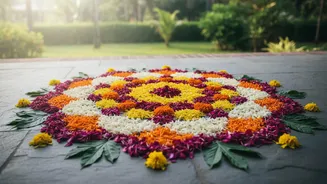
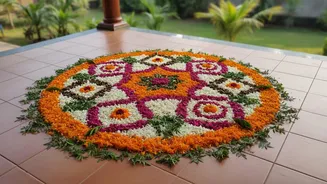
Classic concentric circles, a graceful swirl, or a simple geometric shape are elegant choices that require fewer flowers. Before you start, sketch your design on the ground with chalk or rice powder. This outline acts as your guide, helping you allocate flowers efficiently and ensuring the final result is balanced and symmetrical. Planning your pattern allows you to estimate exactly how many flowers you’ll need, preventing waste and last-minute stress.
Choose Your Flowers Strategically
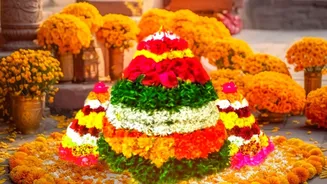
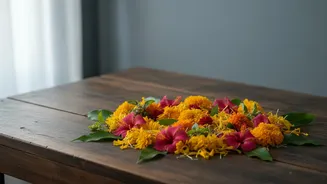
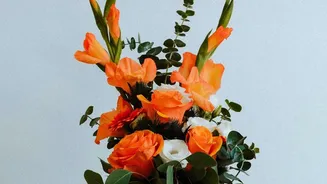
While a vast array of flowers can be used, you don’t need every colour of the rainbow. A limited palette of two or three contrasting colours can create a striking effect. Flowers like marigolds are an excellent choice because their bright orange and yellow hues are not only traditional but their petals are dense, providing great coverage. Roses and chrysanthemums are also popular for their vibrant colours. Traditionally, locally sourced flowers like Thumba (Ceylon Slitwort), Chethi (Flame of the Woods), and Shankhupushpam (Butterfly Pea) are used. Mixing these with more common market flowers can add a layer of authenticity. The key is to choose flowers whose petals can be easily separated and spread to cover more ground, maximising the visual impact of each bloom.
Incorporate Leaves and Natural Fillers
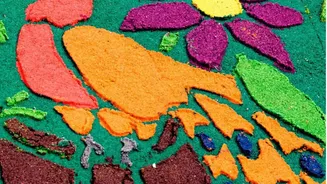
Flowers don't have to do all the work. To make your design fuller without buying more blossoms, turn to other natural materials. Green leaves are perfect for creating borders or filling in outer rings, providing a beautiful contrast to the colourful petals. You can use tulsi (holy basil) leaves for fragrance and tradition, or simply gather different shades of green from your garden. For a modern, eco-friendly twist, consider using coloured rice, lentils, or even coloured sawdust to fill sections of your design. These materials add unique textures and colours, helping you create a larger, more complex-looking pookkalam while keeping your flower consumption low. This approach is both resourceful and creative, celebrating nature in all its forms.
Master the Art of Arrangement
The way you place the petals is crucial for both beauty and efficiency. Always begin your pookkalam from the center and work your way outwards. This helps maintain symmetry and control over the design's growth. Place the petals in a dense layer to avoid gaps, but you don't need to pile them high. A single, well-laid layer is often sufficient. For a clean, professional look, use white petals or a line of leaves to outline each coloured section. This defines the pattern and makes the colours pop. To keep the flowers looking fresh, you can lightly mist the pookkalam with water. Finally, placing a traditional brass lamp or a few diyas in the center or around the design can elevate its beauty, especially in the evening.