


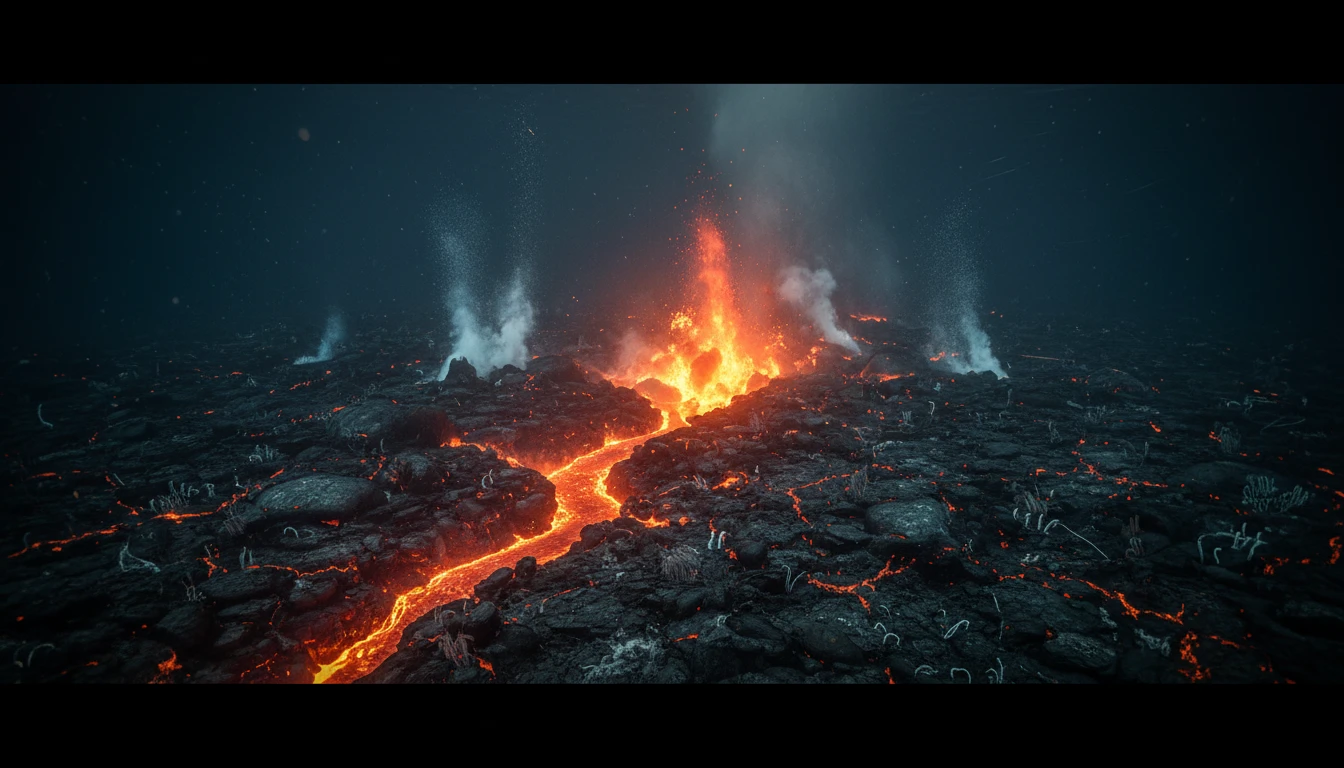



The Planet's Hidden Engine
At the heart of our planet's dynamism is the theory of plate tectonics, and seafloor spreading is its engine. Imagine long, underwater mountain ranges called mid-ocean ridges, which wrap around the globe like seams on a baseball. At these ridges, tectonic plates
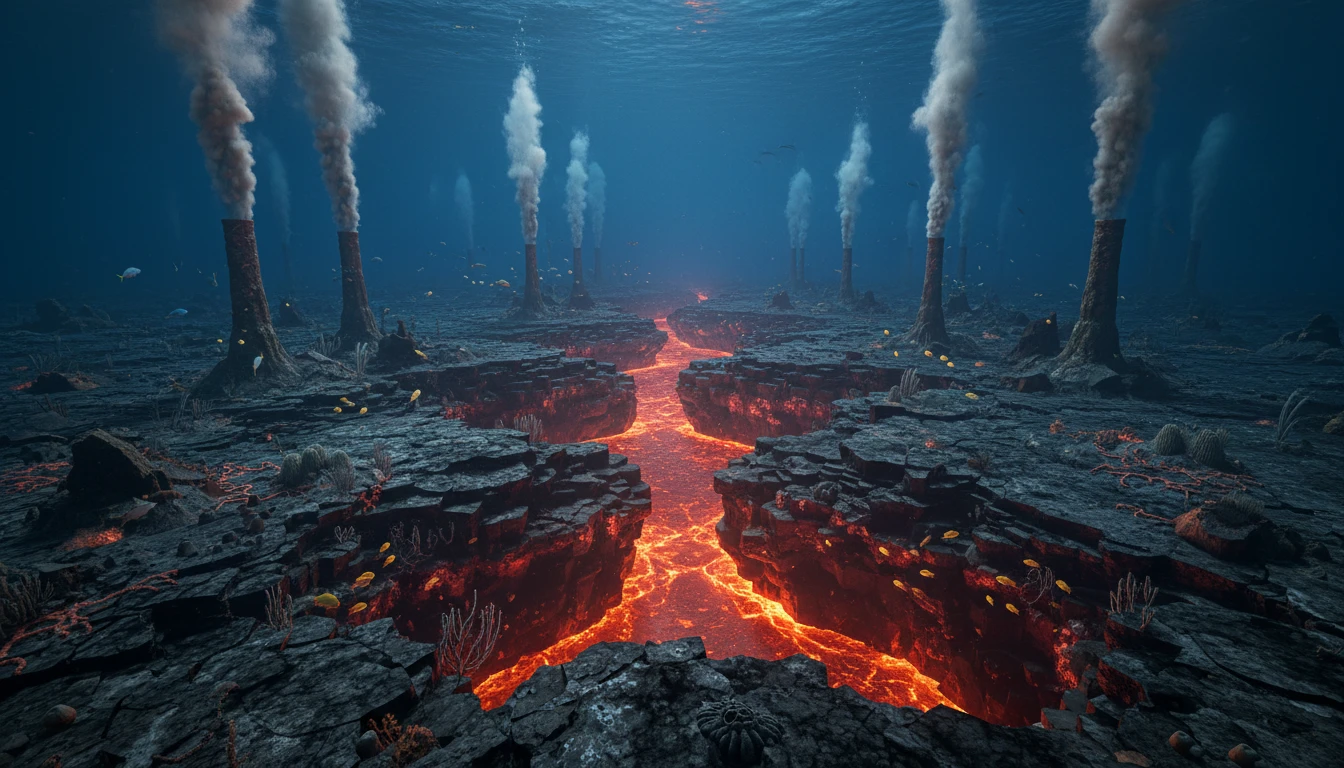
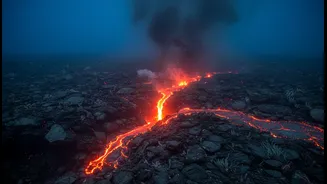
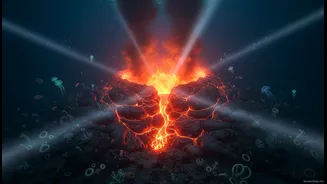
are pulling apart. As they separate, molten rock, or magma, from the Earth's mantle rises to fill the gap. It cools and solidifies, forming fresh oceanic crust. This new crust is then pushed away from the ridge as even newer material emerges, a slow but relentless conveyor belt that widens ocean basins and moves continents over millions of years. This process is fundamental, helping to explain everything from continental drift to the location of volcanoes and earthquakes.
A World Shrouded in Darkness
For geologists, directly observing this process is incredibly challenging. Mid-ocean ridges are located thousands of metres below the sea surface, under immense pressure and in total darkness. Surveying the seafloor in detail is compared by some scientists to mapping a landscape at night using only a torch. As a result, our understanding has historically been based on inferences—studying ancient rocks, analysing magnetic stripes on the seabed that record Earth's magnetic reversals, and using seismic imaging to get a blurry picture of the crust's structure. Actually witnessing the birth of the seafloor in real-time has remained largely out of reach. While a recent event on the Southeast Indian Ridge in 2024 provided a first-ever glimpse of a spreading event as it happened, these occurrences are unpredictable and fleeting.
The Indian Ocean's Tectonic Window
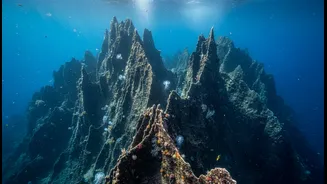
This is what makes certain parts of the Indian Ocean so important. Along the ultra-slow spreading Southwest Indian Ridge, the typical rules don't always apply. Here, the supply of magma is often so low that the crust doesn't form in the usual layered, volcanic way. Instead, the tectonic plates are pulled apart with such force that the crust cracks and stretches thin. In some places, it breaks entirely along massive faults known as 'detachment faults'. This process can be so extreme that huge blocks of the lower crust and even the Earth's upper mantle—rocks that are normally buried kilometres deep—are heaved up and exposed directly on the seafloor. These exposed sections are called oceanic core complexes.
A Glimpse into the Mantle
The presence of these oceanic core complexes along the Southwest Indian Ridge is like opening a tectonic window. Instead of having to drill through kilometres of solid volcanic rock, scientists can directly sample rocks from the Earth's mantle. This provides an unprecedented opportunity to study the composition and properties of the deep Earth. It challenges the long-held, simplified model of how oceanic crust forms. Studies here show that at slow-spreading ridges, crustal formation is messy, asymmetrical, and far more complex than the neat models found in textbooks. The process involves a mix of magmatic activity and massive-scale faulting, creating a heterogeneous and surprising seabed.
Why This Deep-Sea Drama Matters
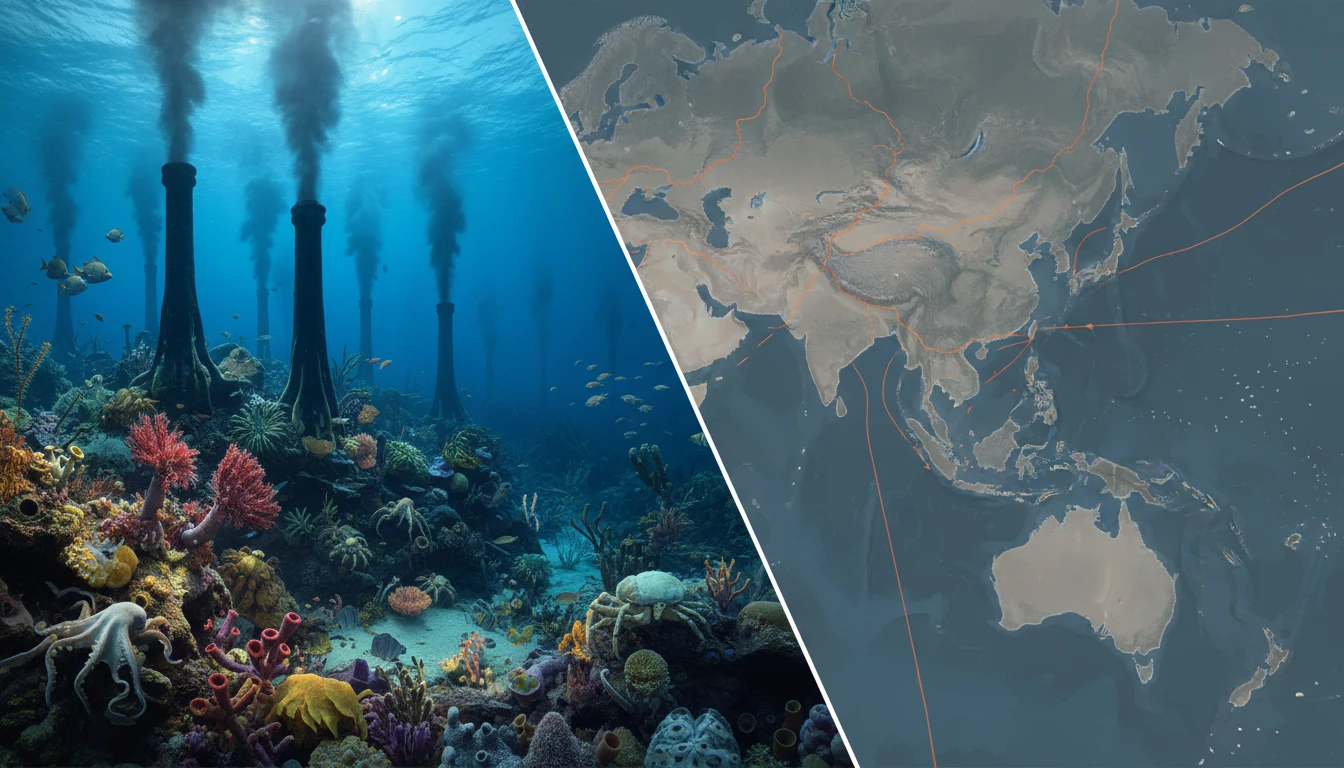
Understanding these unique processes in the Indian Ocean has profound implications. It forces scientists to rethink the very nature of plate tectonics and crustal formation, particularly at the world's slow-spreading ridges, which make up a significant portion of the global mid-ocean ridge system. Studying the behaviour of these detachment faults helps geologists understand how continents can rift apart and how new ocean basins are born. Furthermore, the interaction of seawater with these exposed mantle rocks drives unique chemical reactions and creates hydrothermal vent systems, which host exotic ecosystems that thrive in the absence of sunlight. By studying this strange and violent form of seafloor spreading, we gain fundamental insights into the forces that shape our planet, from the deep mantle to the ocean floor.