


The Astronomer's Greatest Foe: Turbulence
Anyone who has seen a star twinkle knows the Earth’s atmosphere isn’t perfectly still. That shimmer, while romantic, is the enemy of a sharp astronomical image. Astronomers call this effect 'seeing', and it refers to the blurring and distortion caused
by turbulence in the air. Imagine looking at something at the bottom of a swimming pool on a windy day; the ripples on the water’s surface warp your view. The atmosphere does the same thing to starlight. This turbulence is caused by pockets of air, or 'cells', of different temperatures and densities mixing. As light from a distant object like Jupiter passes through these shifting layers, its path is bent repeatedly, causing the final image we see to jump, quiver, and blur.
The Heat Haze Effect, Day and Night
The primary cause of this atmospheric turbulence is temperature difference. We see it during the day as a heat haze shimmering above hot asphalt. The ground, heated by the sun, warms the air directly above it. This warmer, less dense air rises and mixes with the cooler air above, creating convection currents that distort light. A similar process happens at night. Buildings, roads, and even the ground itself radiate the heat they absorbed during the day. This creates a turbulent layer of air near the ground, often for several hours after sunset, which can degrade telescopic views. On a larger scale, the entire atmosphere can have layers of different temperatures moving at different speeds, each layer contributing to the overall 'bad seeing'.
Autumn's Atmospheric Advantage
So, why is autumn special? The season brings a combination of factors that lead to more stable air. Firstly, as the nights grow longer and cooler, the temperature difference between the ground and the air above it tends to be less extreme than during hot summer nights. Less ground heat being radiated means less low-level turbulence. Secondly, and perhaps more importantly, autumn air is often significantly drier. Summer air is typically laden with humidity. While some very stable, humid nights can offer surprisingly steady views of bright objects, water vapor generally scatters light, reducing transparency and contrast. The drier, continental air masses common in autumn are more transparent, meaning more starlight reaches our eyes and less of it is scattered by airborne moisture, leading to darker skies and higher contrast.
Jupiter and Its Moons: The Perfect Test
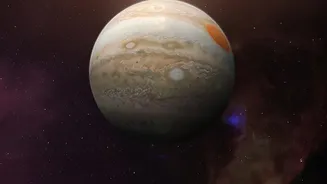
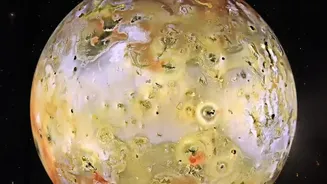
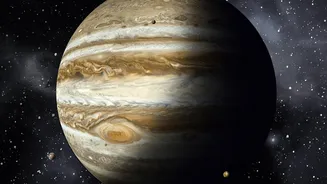
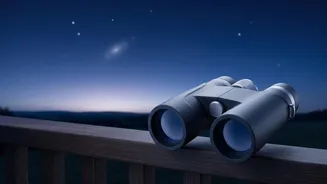
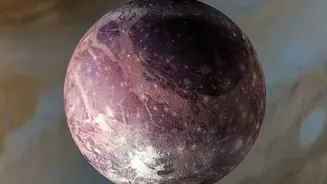
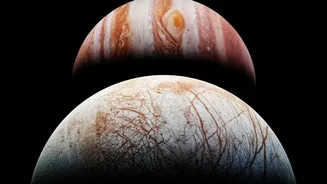
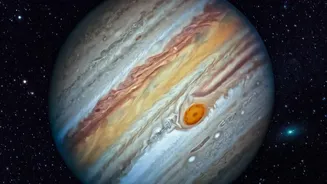
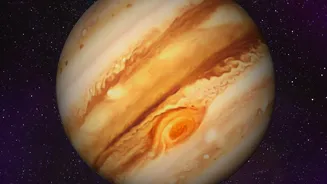
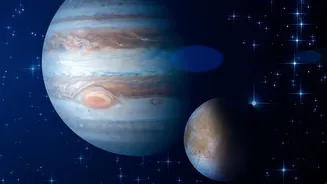
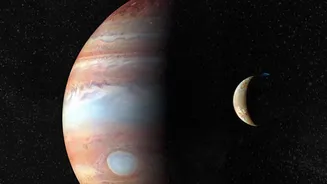
Jupiter, being one of the brightest objects in the night sky, is a fantastic target for this phenomenon. With a good pair of binoculars, you can spot its four largest moons—Io, Europa, Ganymede, and Callisto—which appear as tiny, star-like points of light in a line on either side of the planet. However, the planet's own glare and the close proximity of the moons can make them challenging to pick out, especially in unsteady air. When the 'seeing' is poor, the moons can seem to blink in and out of existence or merge with the overwhelming brightness of Jupiter itself. On a night with good seeing, thanks to that calm, crisp autumn air, the planet's disk appears sharper and the four tiny Galilean moons resolve into steady, distinct points of light, making them much easier to observe.