






What Is Being Proposed?
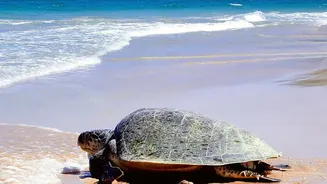
The Goa Forest Department has formally proposed that 24 beaches across the state be officially designated as turtle nesting sites under the Coastal Regulation Zone (CRZ) Notification of 2019. This move is a significant step up from the four beaches currently
notified for protection. The proposal, sent to the Department of Environment and Climate Change, would pave the way for much stricter regulations on coastal activities, especially during the nesting season which typically runs from November to March. The primary goal is to minimise human disturbance and create a safer environment for the endangered turtles. This includes tighter controls on artificial lighting, the operation of beach shacks, nighttime events, and even vehicle movement along these sensitive stretches of sand.
The Science: Why Darkness Matters
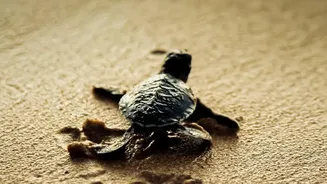
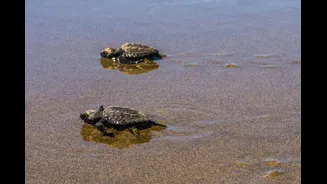
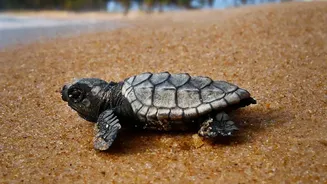
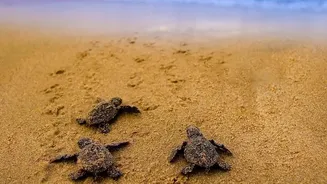
For sea turtles, light pollution is a serious threat. Female turtles seek out dark, quiet beaches to lay their eggs; bright, artificial lights can deter them from coming ashore at all, forcing them to abandon their nesting attempts. The problem is even more critical for the hatchlings. After emerging from their nests, baby turtles instinctively crawl towards the brightest horizon, which for millennia has been the moon and stars reflecting off the ocean. However, the powerful lights from shacks, resorts, and streetlights can disorient them, causing them to crawl inland instead of towards the sea. This often leads to exhaustion, dehydration, and increased vulnerability to predators, drastically reducing their chances of survival. Studies have shown a direct link between higher levels of artificial light and lower nest density.
Which Beaches Are Included?
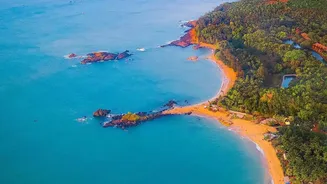
The proposal significantly expands the list of protected areas. Previously, conservation efforts were focused on four primary sites: Morjim and Mandrem in North Goa, and Agonda and Galgibaga in South Goa. The new list of 24 beaches includes some of Goa's most popular and commercially active tourist hubs. In North Goa, the proposed sites include Keri, Arambol, Ashvem, Vagator, Baga, and Calangute, among others. The South Goa list is also extensive, featuring beaches like Cavelossim, Varca, Palolem, Patnem, and Mobor alongside the already recognised sites. This expansion reflects growing concern over a recent decline in nesting numbers and the fact that turtles sometimes nest on beaches not officially designated as protected.
Balancing Conservation and Tourism
The proposal has sparked a conversation among local stakeholders who depend on beach tourism for their livelihoods. Owners of beach shacks, guesthouses, and other businesses have expressed concern about how these new rules will affect their operations. They argue that while they support turtle conservation, declaring so many popular beaches as nesting sites during peak tourist season could have a significant economic impact. The key will be finding a middle ground. Conservationists and officials stress that the goal is not to shut down tourism but to make it more sustainable. This could involve mandating the use of 'turtle-friendly' lighting like shielded, low-mounted amber lights, setting curfews for loud music and events, and clearly demarcating no-go zones around nests. The government has stated that a detailed environmental management plan will be formulated for these ecologically sensitive areas.