


First, What Is a Real Meteor?
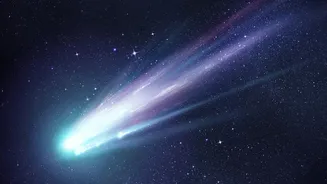
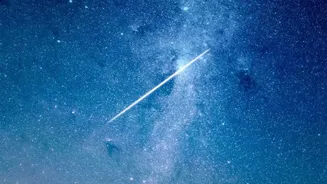
Before we get to the impostors, let’s clarify what a meteor actually is. It all starts with a meteoroid, which is a small rock or piece of debris travelling through space. When this meteoroid enters Earth's atmosphere at high speed, it burns up due to friction,
creating a spectacular streak of light—that’s the meteor, or what we commonly call a shooting star. Most are caused by particles no bigger than a grain of sand and burn up completely. If a piece of the rock survives the fiery journey and lands on the ground, it is then called a meteorite. So, in short: it’s a meteoroid in space, a meteor in the sky, and a meteorite on the ground.
The Steady March of Satellites
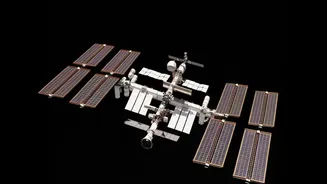
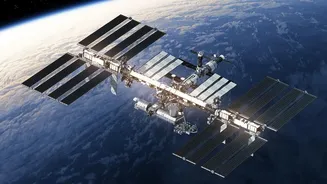
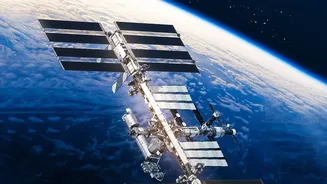
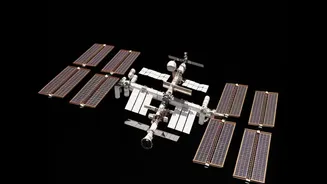
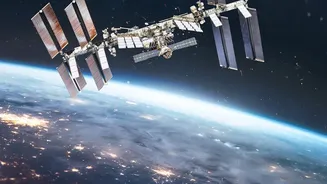
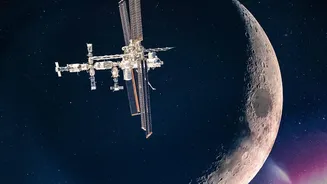
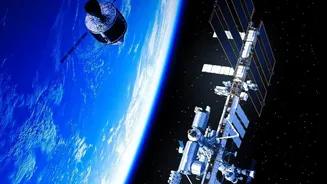
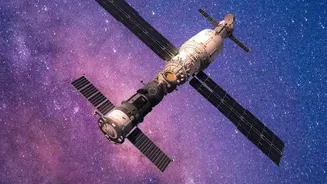
One of the most common things mistaken for meteors today are artificial satellites. Unlike the fleeting flash of a meteor, a satellite appears as a steady point of light moving smoothly and silently across the sky. They don't have blinking lights, which distinguishes them from airplanes. The International Space Station (ISS) is a prime example; it can be as bright as the planet Venus and takes several minutes to traverse the sky. In recent years, SpaceX's Starlink satellites have become a major source of sightings. Shortly after launch, they appear as a distinct “train” of bright dots moving in a perfectly straight line. These have been frequently reported as UFOs by those unfamiliar with them. Over time, these satellites spread out and become fainter, but are still visible as individual moving points of light.
The Blinking Lights of Aircraft
From a distance, an airplane can easily be confused with a celestial object. However, there are a few key giveaways. Aircraft are required to have navigation and anti-collision lights. You will typically see a combination of steady and flashing lights. Standard navigation lights are a steady red light on the left wing, a green one on the right, and a white one on the tail. This system allows observers to know which direction the plane is travelling. Additionally, you’ll often see bright, flashing white strobe lights on the wingtips and tail, or a pulsing red beacon. If it’s blinking, it’s almost certainly an airplane, not a meteor.
That Bright ‘Star’ Might Be a Planet
Some of the brightest objects in the night sky aren't stars at all—they're planets. Venus, often called the “Evening Star” or “Morning Star,” is the brightest planet we can see and is frequently mistaken for a UFO or aircraft landing light because of its intense, steady glow. Jupiter is also incredibly bright, outshining all the actual stars in the sky. Unlike stars, which appear to twinkle due to atmospheric disturbance, planets generally shine with a steady, unwavering light. This is a great way to tell them apart. Currently, in August 2026, Venus is a brilliant object in the western evening sky, while Jupiter is rising in the morning.
The Sudden Gleam of an Iridium Flare
Have you ever seen a point of light that suddenly brightens to an incredible intensity for just a few seconds before fading away again? You might have witnessed an Iridium flare. These spectacular flashes are caused by sunlight reflecting off the large, flat antennas of Iridium communication satellites. At their peak, these flares can be much brighter than Venus, creating a truly dramatic and surprising sight in the night sky. The event is predictable if you know where and when to look, though the original satellite constellation that caused them is being de-orbited, making them less common than they once were. The flare appears as a slow-moving point of light that rapidly intensifies and then dies down over about 5 to 20 seconds.
Other Possibilities Up Above
The sky is a busy place, and there are other, less common objects that can catch your eye. This includes space debris—spent rocket boosters or defunct satellites—tumbling as they orbit, which can cause them to flash or glint unpredictably as they catch the sun. High-altitude weather balloons can also reflect sunlight in unusual ways, and on rare occasions, you might even see the fiery re-entry of a larger piece of space junk breaking up in the atmosphere, a far more dramatic and prolonged event than a typical meteor.