



The Green Beginning: A Starchy Start
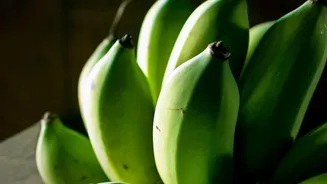
An unripe, green banana is a completely different beast from its yellow sibling. Its taste is less sweet, almost chalky, and its texture is firm, sometimes waxy. This is because up to 80% of its carbohydrate content is starch. Much of this is 'resistant
starch', a type of complex carbohydrate that your body doesn't easily digest. Instead of being broken down into sugar in your small intestine, it travels to the large intestine, where it acts like a prebiotic, feeding the friendly bacteria in your gut. This makes green bananas a good choice for gut health and blood sugar control, as they have a lower glycemic index. However, for some, the high starch content can lead to gas and bloating.
The Yellow Sweet Spot: Sugar Emerges
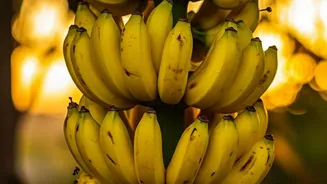
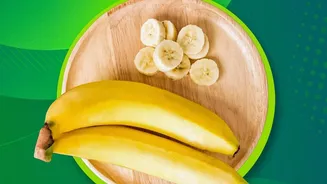
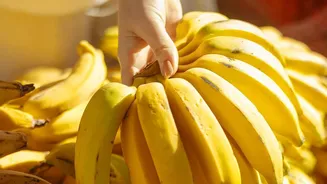
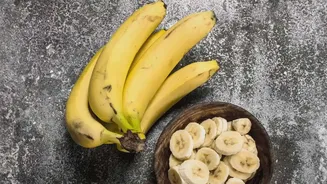
As a banana ripens, a natural plant hormone called ethylene gas triggers a cascade of changes. Enzymes, particularly amylase, get to work, breaking down the complex resistant starches into simple sugars. By the time a banana is perfectly yellow and firm, its chemical profile has flipped. The starch content drops dramatically, and it's now mostly simple sugars—mainly sucrose, with some glucose and fructose. This is why yellow bananas taste so much sweeter and have a softer, creamier texture. They are also easier to digest for most people. Because these sugars are readily available, yellow bananas provide a quick source of energy, making them a favourite snack for athletes. The antioxidant levels also begin to increase as the banana matures.
Brown and Spotted: Peak Sweetness and Nutrients
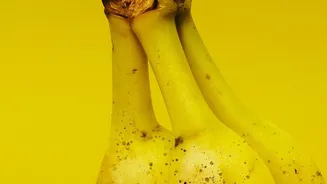
Those brown spots, often called 'sugar spots', are a sign that the starch-to-sugar conversion is reaching its peak. A fully brown or heavily spotted banana has very little starch left and is at its sweetest. While some may be put off by the mushy texture, this is the stage where the fruit's antioxidant properties are at their highest. The breakdown of chlorophyll, the pigment that makes bananas green, is linked to the formation of powerful antioxidants. The soft texture is due to the breakdown of pectin, a structural component in the fruit's cell walls, which makes these bananas perfect for baking. Mashing them into banana bread or smoothies is an excellent way to use their intense sweetness and unlock their nutrients, as the simple sugars provide natural sweetness without needing to add much more.
The Carbohydrate Journey Explained
The entire ripening story is a lesson in carbohydrate chemistry. It begins with long, complex chains of starch that the body finds difficult to break down. As ripening progresses, enzymes act like molecular scissors, snipping these long chains into simple, two-molecule sugars (like sucrose) and single-molecule sugars (like glucose and fructose). This fundamental shift from complex to simple carbohydrates is what changes everything: the taste goes from bland to sweet, the texture from firm to soft, and the digestive impact from a slow-burn, fibrous effect to a quick-release energy boost. So when you choose a banana, you are essentially selecting your preferred carbohydrate profile.
Which Banana Is Best For You?
There's no single 'best' banana; it all depends on your goals and preferences. If you're managing blood sugar or want to promote gut health with prebiotics, the firm, starchy green banana is your ally. If you need a quick burst of energy before a workout or simply prefer a classic sweet taste, a perfectly yellow banana is the ideal choice. And for the sweetest flavour, highest antioxidant levels, or the perfect ingredient for baking, let those brown spots appear. Each stage offers a unique set of benefits and flavours, all dictated by the fascinating journey of its carbohydrates.