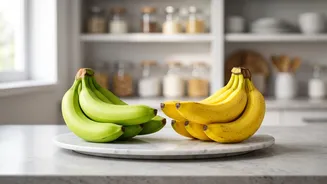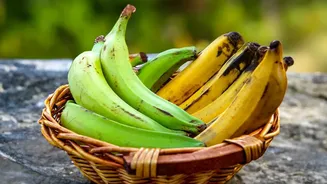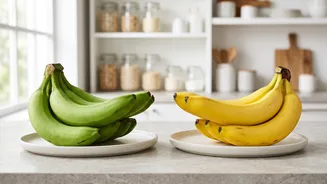






It’s a daily dilemma in the fruit bowl: do you reach for the firm, green-tinged banana or its soft, sweet, yellow sibling? The truth is, the best choice depends entirely on your health goals, as a banana’s nutritional profile changes dramatically as it ripens.
The Case for the Green, Unripe Banana
A green or 'raw' banana is defined by its high content of resistant starch. This type of carbohydrate functions more like dietary fibre, as it 'resests' digestion in the small intestine. Instead of being quickly broken down into sugar, it travels to the large intestine where it acts as a prebiotic, feeding the friendly bacteria in your gut. This process is linked to numerous benefits, including improved digestive health, better gut balance, and enhanced feelings of fullness, which can aid in weight management. Furthermore, because the starch is not rapidly converted to glucose, green bananas have a lower glycemic index (GI), meaning they cause a slower, more gradual rise in blood sugar. This makes them a potentially better choice for individuals managing blood sugar levels.
The Appeal of the Yellow, Ripe Banana
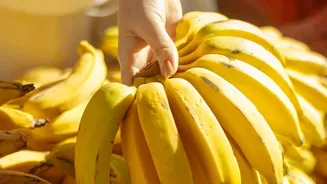
As a banana ripens, a significant transformation occurs. Enzymes convert the complex resistant starches into simple sugars like glucose, fructose, and sucrose. This is why a yellow banana is noticeably sweeter and softer. This conversion also makes the banana easier to digest for many people. While the sugar content is higher, ripe bananas also bring their own set of benefits. The breakdown of chlorophyll as the peel yellows and develops brown spots is associated with an increase in antioxidant levels. These antioxidants help protect the body from cellular damage. Ripe bananas remain a great source of essential nutrients like potassium and vitamin B6. Their natural sweetness and quick-release energy make them an ideal snack for athletes or anyone needing a rapid energy boost.
Why Portion Size is the Real Game-Changer
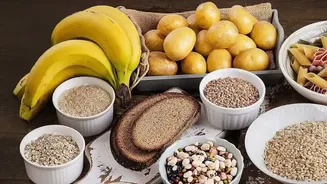
The debate over raw versus ripe often overlooks the most critical factor: portion size. The glycemic load (GL) of a food, which accounts for both its glycemic index and the amount of carbohydrates in a serving, gives a more practical picture of its effect on blood sugar. A large, very ripe banana can have a significantly higher glycemic load than a small, slightly green one. This means that even if you're choosing a ripe banana for its flavour or quick energy, consuming a smaller portion can help mitigate a sharp spike in blood sugar. Conversely, while green bananas have a lower GI, eating a very large one will still deliver a substantial amount of carbohydrates. For anyone, but especially those with diabetes or insulin sensitivity, moderating portion size is the most effective strategy for including bananas in a balanced diet.
Matching the Banana to Your Health Goals
So, which banana should you choose? The answer lies in your personal health objectives. For Better Blood Sugar Control: A smaller, greener banana is generally the better option due to its high resistant starch and lower glycemic index. For Improved Gut Health: Go green. The prebiotic effects of resistant starch feed beneficial gut bacteria, promoting a healthy microbiome. For a Quick Energy Boost: A ripe, yellow banana is your best bet. The simple sugars are quickly absorbed, providing fast fuel for physical activity. For Easier Digestion: Ripe bananas are often easier on the stomach because the starches have already been broken down into simpler sugars. For Maximum Antioxidants: A fully ripe banana with brown spots indicates a higher concentration of beneficial antioxidants.