



Catch the End of a Celestial Downpour
The Perseid meteor shower, one of the best of the year, peaked around August 12-13, but don't worry if you missed it. The shower remains active until about August 24, meaning you can still catch shooting stars in the evenings. These meteors are bits of debris
left behind by Comet Swift-Tuttle, and they create bright streaks as they burn up in our atmosphere. For your best chance, find a spot far from city lights, lie back, and let your eyes adjust to the darkness for about 30 minutes. The show is best viewed in the Northern Hemisphere after midnight, but meteors can appear any time after dark. No special equipment is needed, just patience.
Look for the Summer Triangle
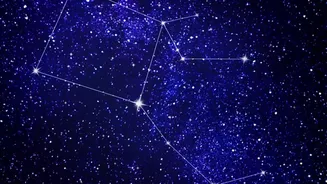
One of the easiest patterns to spot in the August sky is the Summer Triangle. It’s not a constellation, but an asterism—a simple shape made from three bright stars from different constellations. Look straight up on a clear night to find the brightest star, Vega, in the constellation Lyra. The other two corners are marked by Deneb (in Cygnus, the swan) and Altair (in Aquila, the eagle). This giant triangle is high in the sky all month and serves as a great landmark to help you navigate the cosmos. Once you find it, you can easily trace the star patterns around it.
Gaze upon the Milky Way
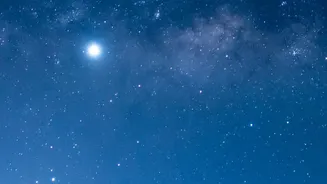
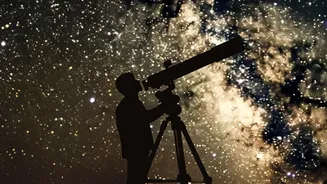
August is one of the best months for viewing our own galaxy, the Milky Way. From a dark location, it appears as a faint, glowing band of light stretching across the sky. This is the collective light of billions of stars in the galactic plane. To find it, first locate the Summer Triangle. The Milky Way runs right through it, passing by the stars Deneb and Altair on its way down to the southern horizon. The area within the constellation Sagittarius, which looks a bit like a teapot, marks the direction of the galaxy's bright, dense core. For the best view, get as far away from light pollution as possible; the darker the sky, the more spectacular the sight.
Say Hello to Saturn
While the ringed planet Saturn won't reach its peak viewing moment—called opposition—until early October, it's becoming a wonderful evening object throughout August. The planet will be rising earlier each night, making it increasingly convenient to spot. It will appear as a bright, steady, golden-hued point of light. Unlike stars, planets generally don't twinkle. Even a basic pair of binoculars can reveal its oval shape, and a small telescope will begin to show its famous rings, which are slowly tilting back into our view after being edge-on in 2025. Look for it rising in the east after sunset.
Discover Some Easy Constellations
Besides the big-name patterns, August is a great time to find a few other key constellations. High in the northern sky, you can find Cassiopeia, which looks like a distinct 'W' or 'M' depending on its orientation. It's easy to spot and one of the most recognizable shapes in the sky. To the south, look for Scorpius, with its bright, reddish star Antares marking the scorpion's heart. The constellation is shaped like a fishhook, making it relatively easy to trace. Using a stargazing app on your phone can be a huge help in identifying these patterns until you learn to recognize them on your own.