





The Atmosphere's Normal Daytime Routine
On a typical day, the sun warms the Earth's surface. This, in turn, heats the layer of air closest to the ground. As this air becomes warmer and less dense, it rises. This upward movement, or convection, allows pollutants from traffic, industry, and other
sources to be carried upward and dispersed into the upper atmosphere. Cooler, denser air from above sinks to take its place, creating a continuous cycle of vertical mixing that helps keep the air we breathe relatively clean. This is the atmosphere’s natural ventilation system in action.
What is a Nighttime Inversion?
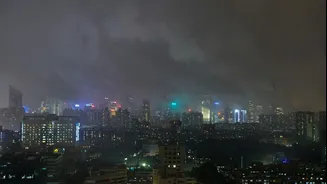
A temperature inversion flips this normal process on its head. It occurs when a layer of warmer air settles above a layer of cooler air near the ground. This phenomenon is particularly common during winter nights for several reasons. After sunset, the ground rapidly loses heat, a process called radiational cooling. This chills the air directly above it. Because winter nights are long and often have clear skies, this cooling effect is more pronounced. The result is a stable, cold, dense layer of air at the surface, trapped beneath a warmer, less dense layer above it.
Putting a Lid on Pollution
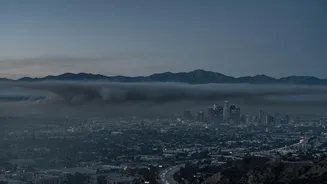
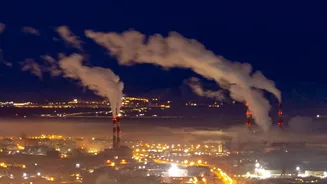
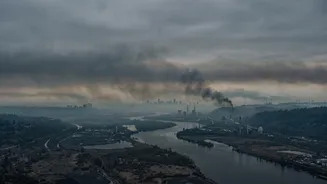
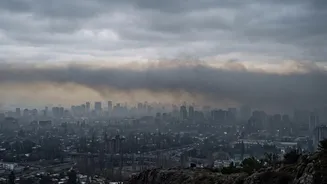
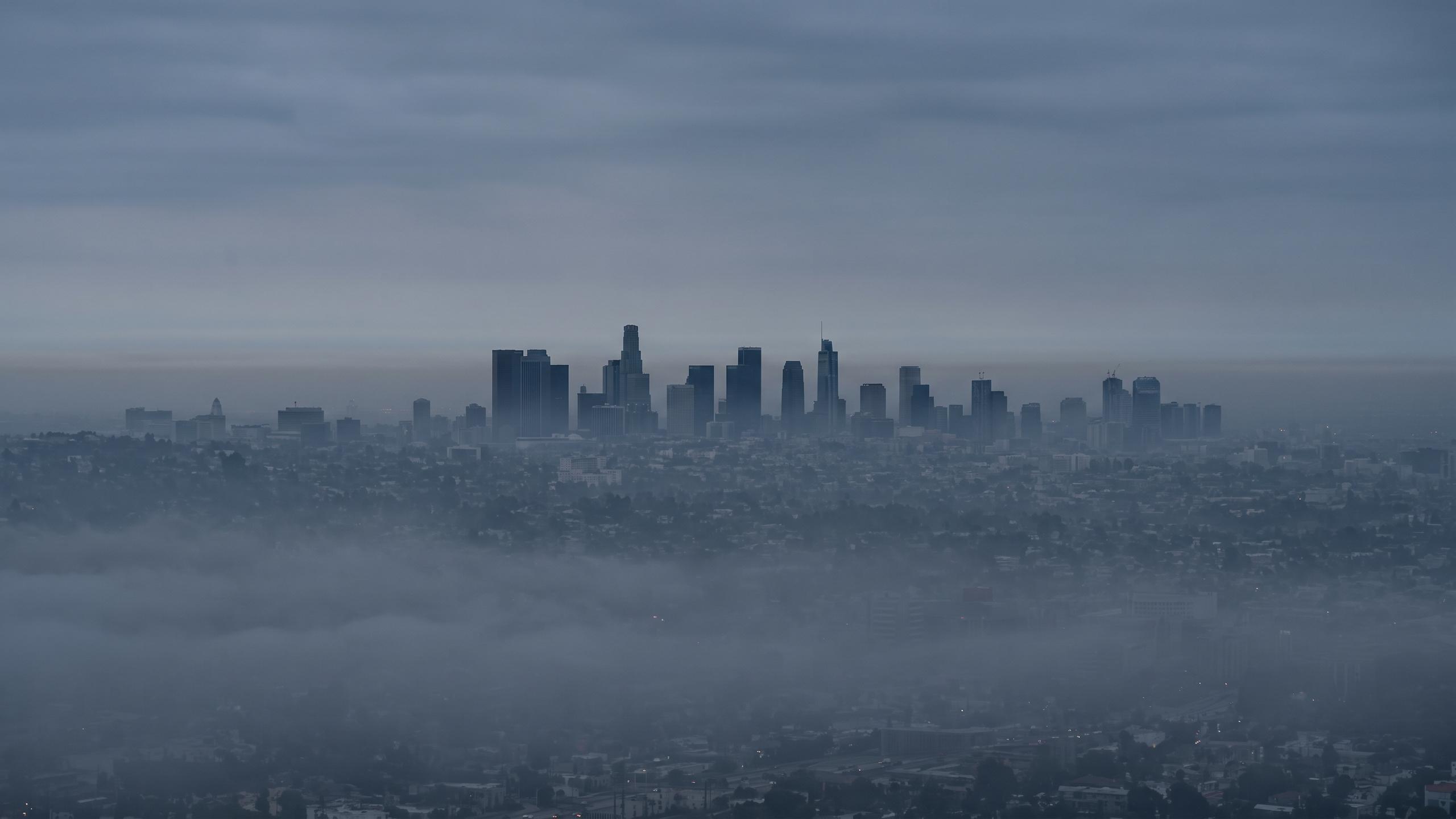
This layer of warm air acts like a lid or a cap on the atmosphere. It prevents the vertical mixing that would normally clear the air. All the emissions released overnight and during the early morning—from vehicles starting their commute, industrial processes, and residential heating—get trapped in this shallow layer of cold air near the ground. With nowhere to go, these pollutants accumulate, leading to a rapid spike in concentrations. This effect is even more intense in geographical basins or valleys, where the surrounding terrain further restricts air movement, and in regions like the Indo-Gangetic Plain, where the Himalayas can block airflow.
The Toxic Morning Cocktail
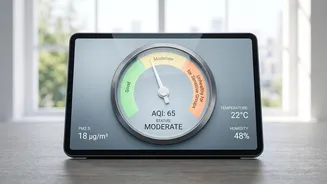
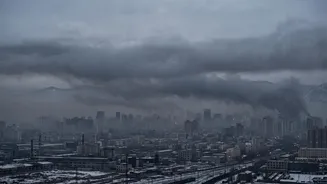
The trapped air becomes a concentrated cocktail of harmful pollutants. This includes fine particulate matter (PM2.5 and PM10), nitrogen oxides (NOx), sulfur dioxide (SO2), and carbon monoxide. PM2.5, which are tiny particles that can penetrate deep into the lungs and bloodstream, are a major concern. During a strong inversion, the concentration of these pollutants can increase to hazardous levels, often many times higher than international health guidelines. This is what causes the thick, visible smog and poses significant health risks, especially for people with asthma, heart conditions, children, and the elderly.
Why Midday Brings Relief
The inversion doesn't last forever. As the sun rises and its rays gain strength, it begins to heat the ground once more. This warming starts from the bottom up, heating the trapped layer of cold air. Eventually, this surface air becomes warm enough to break through the overlying warm layer. This process, often called 'burning off' the inversion, typically happens a few hours after sunrise, which is why air quality often remains poor through the morning and only begins to improve around midday. Once the inversion breaks, normal atmospheric mixing resumes, and the trapped pollutants are finally able to disperse, clearing the air until the cycle begins again at night.