





The Sun's Unseen Threat
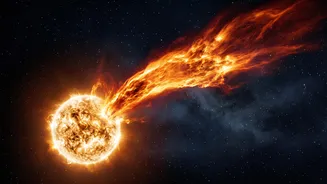
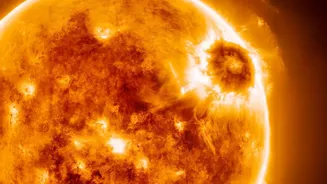
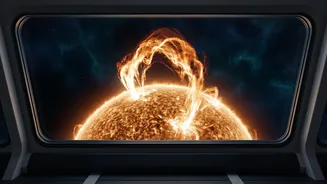
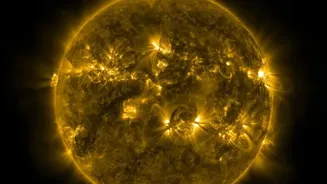
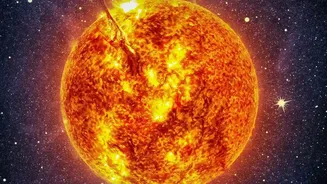
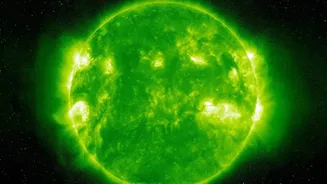
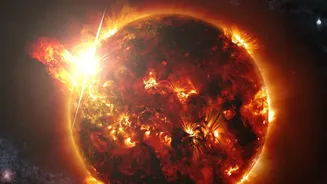
Our Sun is not just a benign source of light and heat. It's an active star that constantly sends out a stream of charged particles called the solar wind. Occasionally, it unleashes massive eruptions of plasma and magnetic fields known as coronal mass ejections,
or CMEs. These solar storms can hurl billions of tons of material into space at millions of miles per hour. If Earth is in the path of one of these CMEs, the consequences can be severe. The interaction with our planet's magnetic field can trigger powerful geomagnetic storms, which are capable of disrupting satellite operations, causing widespread power outages, and interfering with communications and GPS systems. In a worst-case scenario, a major storm could lead to cascading failures across our interconnected technological society.
The Challenge of Early Warnings
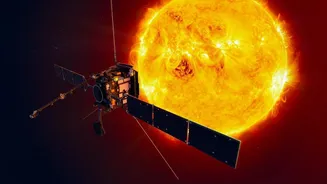
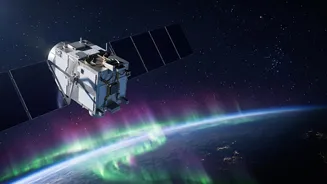
For decades, predicting exactly when and where a solar storm's impact will be felt has been a monumental challenge for scientists. While satellites like NASA's STEREO mission, launched in 2006, have given us unprecedented 3D views of CMEs as they leave the Sun, forecasting their effects on Earth remained a slow process. Scientists had to manually analyze data from multiple spacecraft and ground observatories to create a forecast. By the time they could issue a warning, the storm might already be upon us, leaving little time for power grid operators, satellite controllers, and airlines to take protective measures. This method was reliable but not timely enough for the rapid response needed to mitigate the worst effects.
Enter DAGGER: An AI Shield
This is where a groundbreaking new tool comes into play. An international team of researchers, through a public-private partnership called the Frontier Development Lab that includes NASA, has developed an AI-powered model called DAGGER. The name stands for Deep Learning Geomagnetic Perturbation. Unlike previous models that were either localized or not timely, DAGGER is the first system to combine the speed of AI with real-time data from space and Earth to provide rapid and accurate global predictions. This AI represents a paradigm shift from reactive analysis to proactive warning, acting like a global tornado siren for space weather.
How the AI Tracks the Storm
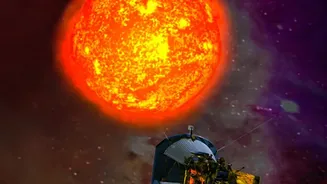
DAGGER uses a sophisticated AI method called deep learning to find hidden patterns in vast amounts of data. The model was trained on information from a fleet of heliophysics missions that measure the solar wind, as well as data from ground-based magnetic observatories around the planet. By analyzing these historical examples, the AI learned the complex relationship between the properties of the solar wind and the resulting geomagnetic disturbances on Earth. Now, it uses live data from spacecraft to analyze the incoming solar wind and predict the location and intensity of a geomagnetic storm anywhere on the globe with 30 minutes of advance warning. The system can generate these crucial predictions in less than a second and updates them every minute.
Why This Is a Game-Changer
A 30-minute warning might not sound like much, but in the world of infrastructure protection, it's a critical window of opportunity. This lead time allows power companies to take sensitive systems offline, satellite operators to move their assets into safer orbits, and airlines to reroute flights away from polar regions where the effects are strongest. DAGGER's effectiveness has already been proven by successfully forecasting the impacts of past storms from 2011 and 2015 with speed and accuracy. As we approach the next solar maximum—the peak of the Sun's 11-year activity cycle—the risk of disruptive storms increases, making this advanced warning capability more vital than ever.