







The Core Problem: A Teacher's Time Crunch
Indian teachers operate in one of the world's most demanding educational environments. With large class sizes and significant administrative duties, the time left for actual teaching and student interaction is often squeezed. Lesson planning, a critical
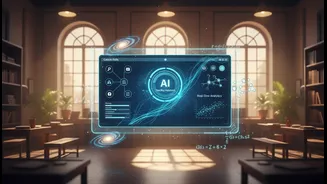
but repetitive task, can consume several hours each week. This is the primary problem that AI-powered tools are solving. Platforms like MagicSchool AI, Google Gemini, and Teachmint can generate structured lesson plans, activity ideas, and worksheets in minutes, a task that would otherwise take hours. Surveys indicate a significant uptake, with some reports suggesting over 70% of Indian teachers now use AI tools, largely for this purpose. By automating the creation of these first drafts, AI frees educators from a major administrative burden.
Beyond Efficiency: Personalised Learning at Scale
The most significant promise of AI in education extends beyond just saving time. It lies in its ability to enable personalised learning, a key goal of India's National Education Policy (NEP) 2020. In a typical classroom with students at varying learning levels, creating differentiated materials is a huge challenge. AI tools can analyse student performance data and generate customized content, such as reading materials at different difficulty levels or practice questions targeting specific areas of weakness. This allows a single teacher to cater to diverse needs more effectively, ensuring that no student is left behind. AI can also help create more engaging and interactive materials, from gamified lessons to video tutorials, making learning more dynamic.
A Superpower for Coaching Centres
The competitive landscape of coaching centres, focused on exams like NEET and JEE, presents a unique use case for AI. Here, the demand for vast quantities of practice questions, mock tests, and revision schedules is immense. AI excels at this. Tools like Quillionz, which has Indian origins, can automatically generate thousands of questions in various formats (MCQs, short-answer) from any given text. This allows coaching centres to create an endless supply of assessment materials aligned with specific exam patterns. Furthermore, adaptive learning platforms can track a student's progress, identify weak spots, and create tailored study plans, providing a strategic advantage in high-stakes exam preparation.
Redefining the Teacher's Role
A common fear is that AI will replace teachers. However, the current trend suggests a different reality: AI is augmenting them. By handling the repetitive, administrative aspects of the job, AI allows educators to focus on uniquely human skills. This includes mentoring students, providing emotional support, fostering critical thinking, and managing classroom dynamics. Instead of being a content creator, the teacher evolves into a facilitator of learning and a mentor who guides students through their educational journey. The principle of 'human-in-the-loop' is critical; the AI generates a draft, but the teacher's expertise is needed to review, contextualise, and approve the final content.
The Hurdles on the Path to Adoption
Despite the clear benefits, the widespread adoption of AI in Indian education faces several challenges. The digital divide is a major one; many schools, particularly in rural areas, lack the necessary internet connectivity and devices. There is also a significant need for teacher training, as many educators are not yet equipped to use these tools effectively. The cost of sophisticated AI platforms can be prohibitive for government-funded schools with limited budgets. Finally, concerns around data privacy and the potential for algorithmic bias are significant ethical issues that need to be addressed to ensure fair and secure implementation.