




The Sun’s 11-Year Heartbeat
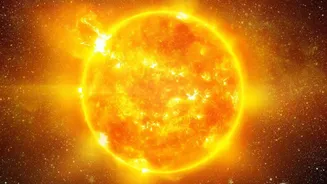
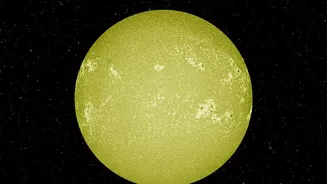
The sun operates on an approximately 11-year cycle, swinging from a quiet period (solar minimum) to a turbulent one (solar maximum). This cycle is tracked by the number of sunspots on its surface. During solar maximum, the sun's magnetic fields become
highly unstable, leading to a dramatic increase in solar flares and coronal mass ejections (CMEs). The current cycle, Solar Cycle 25, began in December 2019 and reached its predicted peak in late 2024, with heightened activity expected to continue through 2026. These powerful solar events are the origin of what we call space weather.
What Is Space Weather?
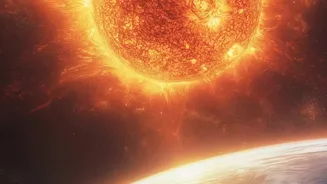
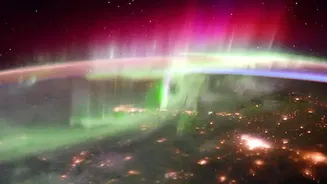
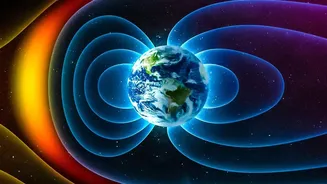
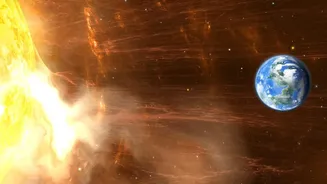
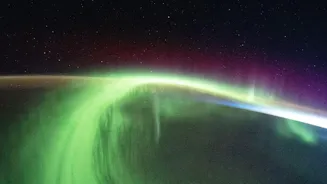
Space weather refers to the changing conditions in space caused by the sun's activity. Unlike weather on Earth, it doesn't involve wind or rain. Instead, it’s about massive bursts of energy, radiation, and charged particles hurtling through space. The two main culprits are solar flares and CMEs. A solar flare is an intense burst of radiation, while a CME is a giant cloud of solar plasma and magnetic fields flung from the sun. When Earth is in the path of these events, they interact with our planet's protective magnetic field (the magnetosphere) and upper atmosphere, causing significant disturbances.
Satellites in the Firing Line
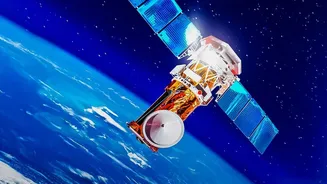
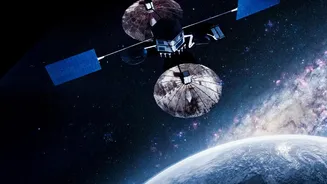
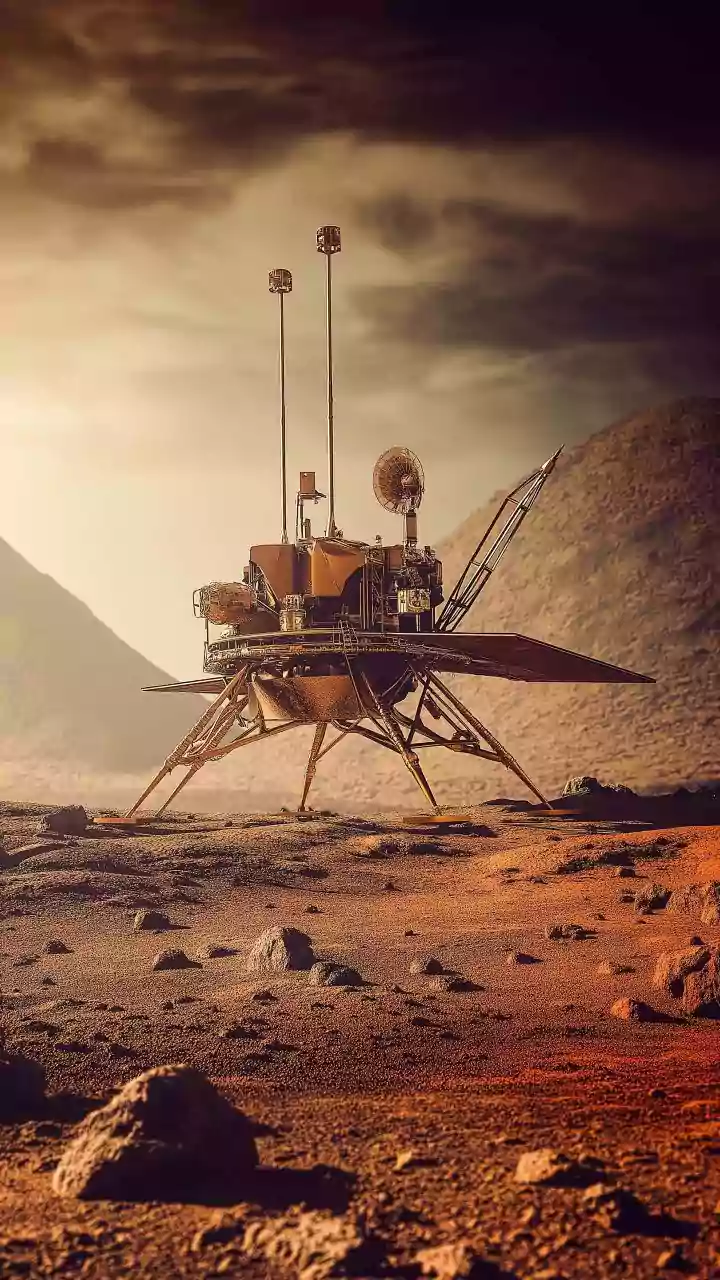
Modern life is built on a network of satellites that are highly vulnerable to space weather. High-energy particles from solar storms can damage sensitive satellite electronics, cause phantom commands, or degrade solar panels, shortening a satellite's operational life. Furthermore, solar events heat and expand Earth's upper atmosphere. This increases atmospheric drag on satellites in low-Earth orbit, causing them to slow down and lose altitude, potentially requiring course corrections to avoid falling out of orbit. For a world reliant on satellites for everything from financial transactions to weather forecasting, this poses a significant risk.
Disrupting GPS and Radio Signals
Space weather directly impacts communication and navigation systems. GPS signals must travel through the ionosphere, a layer of Earth's atmosphere. During a solar storm, this layer becomes energised and disturbed, which can delay, degrade, or even block these signals. This can reduce GPS accuracy from a few metres to complete signal loss, affecting aviation, shipping, and even app-based taxi services. High-frequency (HF) radio communications, used by airlines and emergency services, are also vulnerable. Solar flares can cause immediate radio blackouts on the sunlit side of the Earth by altering the ionosphere's ability to reflect radio waves.
Can It Affect Us on the Ground?
While Earth’s atmosphere protects us from harmful radiation, severe geomagnetic storms can have ground-level effects. These storms can induce powerful electrical currents in long conductors like power lines and pipelines. These geomagnetically induced currents can overload power grids, causing transformers to overheat and leading to widespread blackouts, as famously occurred in Quebec in 1989. Though rare, the potential for disruption to our critical infrastructure is a major reason why space agencies and governments closely monitor the sun's activity.