



What Exactly Is El Niño?
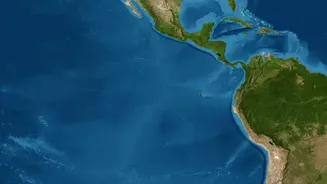
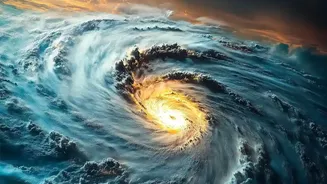
El Niño, which means 'the little boy' in Spanish, is a natural phenomenon marked by the unusual warming of sea surface temperatures in the central and eastern equatorial Pacific Ocean. Under normal conditions, strong trade winds blow from east to west,
pushing warm surface water towards Asia and allowing colder water to rise near the coast of South America. During an El Niño event, these trade winds weaken or even reverse. This allows the vast pool of warm water to shift eastward, away from Asia and towards the Americas. This change might seem distant, but it sets off a chain reaction, altering large-scale atmospheric circulation patterns that influence weather across the globe, including the all-important Indian monsoon.
The Monsoon Connection: Weaker Rains and Drought Risk
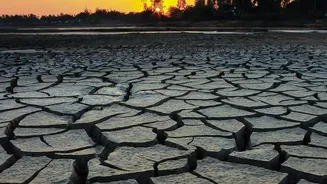
For India, El Niño is a major cause for concern because it is historically linked to weaker southwest monsoon rainfall. The monsoon, which delivers about 70-75% of the country's annual rainfall, is crucial for our economy. The warming of the Pacific Ocean during an El Niño disrupts the atmospheric engine that pulls moisture-laden winds towards the Indian subcontinent. This can lead to a reduction in overall rainfall, prolonged dry spells, or a delayed onset of the monsoon. However, the connection isn't a simple one-to-one relationship. Not every El Niño year results in a drought. Other factors, like the Indian Ocean Dipole (IOD)—a similar phenomenon in the Indian Ocean—can sometimes counteract El Niño's drying effect. But the risk remains significant; of the 13 droughts India has faced since 1950, 10 occurred during El Niño years.
Impact on the Fields: A Threat to Crops and Food Prices
With nearly half of India's farmland dependent on rain, a weak monsoon can have devastating consequences for agriculture. The Kharif sowing season, which includes crucial crops like rice, pulses, sugarcane, and cotton, is timed to coincide with the monsoon's arrival. Insufficient or erratic rainfall can lead to delayed sowing and lower crop yields, directly impacting farmers' incomes and rural demand. This, in turn, can ripple through the entire economy, leading to a spike in food prices for consumers as the supply of essential commodities dwindles. Vegetables, cereals, and pulses can all become more expensive. The regions most vulnerable are typically those with less irrigation cover, such as central and northwestern India.
Cities Under Stress: Water Scarcity and Intense Heat
The impact of El Niño isn't confined to rural areas. A deficient monsoon means less water to replenish our reservoirs and recharge groundwater, which are the primary sources of water for most Indian cities. This can lead to severe water shortages, forcing municipal authorities to impose cuts and residents to rely on expensive water tankers. Beyond water scarcity, El Niño years are often associated with higher-than-normal temperatures and more intense heatwaves. This combination of heat and water stress puts immense pressure on urban infrastructure, from public health systems dealing with heat-related illnesses to power grids struggling to keep up with the increased demand for air conditioning.
What About La Niña? The Other Side of the Coin
El Niño is one half of a larger cycle known as the El Niño-Southern Oscillation (ENSO). Its counterpart is La Niña, or 'the little girl'. La Niña is essentially the opposite of El Niño, characterized by cooler-than-average sea surface temperatures in the same region of the Pacific Ocean. For India, La Niña events typically have the opposite effect: they are often associated with stronger monsoons and above-average rainfall. While this can be beneficial for agriculture and water security, it also carries the risk of heavy rainfall and flooding in some areas. Understanding both phases of the cycle is key to forecasting and preparing for the wide range of weather patterns they can bring.