


A New View of the Lunar Poles
For decades, scientists have theorized that the Moon's poles harbor water ice, hidden in permanently shadowed regions (PSRs) where sunlight never reaches. These craters are among the coldest places in our solar system, cold enough to trap water ice for
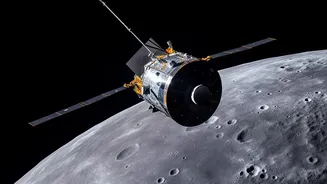
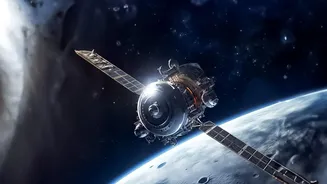
billions of years. While previous missions, including India's Chandrayaan series and NASA's Lunar Reconnaissance Orbiter, confirmed the presence of hydrogen and water molecules, the latest findings provide unprecedented detail. Data from instruments like the Chandrayaan-2 orbiter's radar has allowed scientists to peer beneath the surface, identifying specific craters that show strong evidence of subsurface ice deposits. This moves us beyond simply knowing water is there to having a clearer idea of where to find it and in what concentration.
Why Water Is the Gold of Space
On Earth, water is ubiquitous. In space, it is arguably the most valuable resource. Beyond the obvious need for drinking water and growing food for astronauts, water (H2O) is a cosmic multitool. Through a process called electrolysis, it can be split into its constituent elements: hydrogen and oxygen. This provides breathable air for habitats and, crucially, the two key components of rocket propellant. Launching a single litre of water from Earth into orbit is incredibly expensive. The ability to source it directly on the Moon would fundamentally change the economics of space travel, making long-term lunar bases and missions to Mars significantly more affordable and sustainable.
The Lunar Refuelling Station
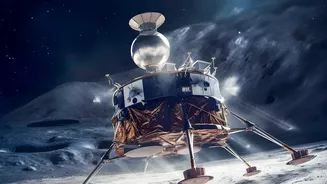
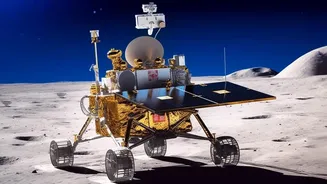
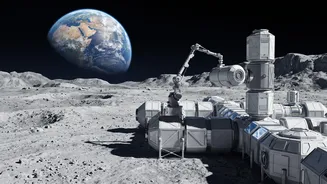
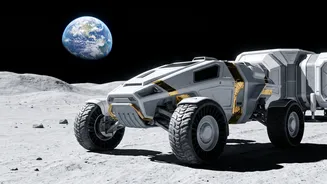
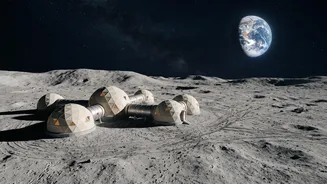
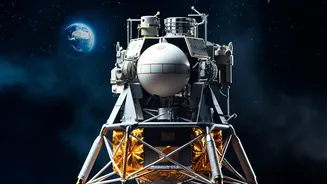
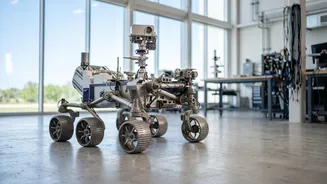
The concept of a lunar refuelling station is the most exciting implication of these new ice maps. Imagine a spacecraft launching from Earth with just enough fuel to reach the Moon. Once there, it could refill its tanks with locally produced hydrogen and oxygen before embarking on a journey to Mars or other deep-space destinations. This would make the Moon a critical logistical hub, a launchpad for the rest of the solar system. Both national agencies like NASA and China's CNSA, as well as private companies like Blue Origin, are planning missions centered around the lunar south pole precisely because of this potential. These new maps are essential for planning future robotic and human missions, including rovers like NASA's revived VIPER, which are designed to drill into the surface and directly analyze the ice.
From Prospecting to Production
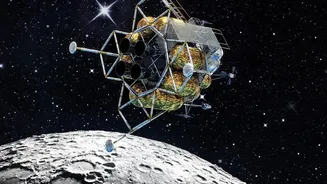
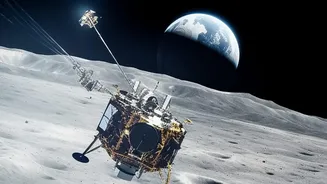
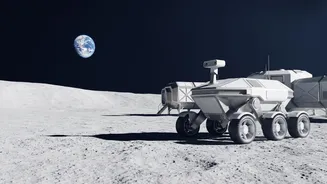
Having a map is one thing; starting a mining operation is another. The challenges ahead are immense. The permanently shadowed craters are not only dark but also mind-bogglingly cold, with temperatures dipping to around -240°C. Any mining equipment will need to be incredibly robust, capable of operating in a vacuum, withstanding abrasive lunar dust, and powering itself in near-total darkness. Missions slated for the late 2020s, like China's Chang'e-7 and Japan's joint mission with India, aim to tackle these challenges head-on. They will deploy rovers and even small "hopping" probes to get a ground-truth assessment of the ice deposits, determining their purity, depth, and accessibility. This prospecting phase is the necessary next step before any large-scale extraction can be considered.