




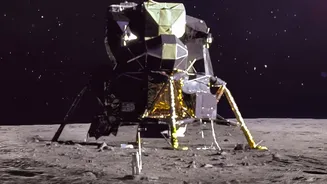
A Deeper Partnership on the Moon
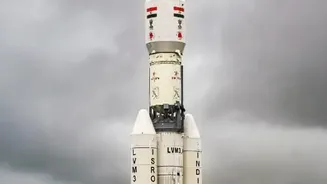
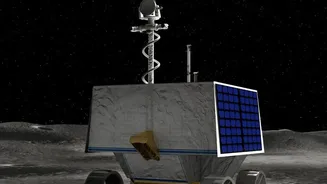
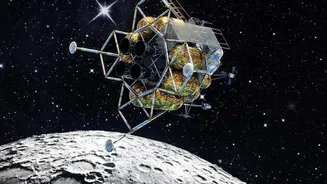
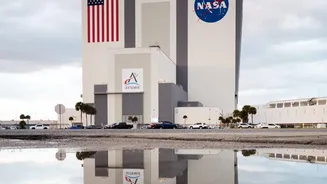
In a significant development this month, NASA has formally invited ISRO to participate in its ambitious Moon base program. This invitation was extended during the recent India-US Civil Space Joint Working Group meeting in Bengaluru, building on India’s
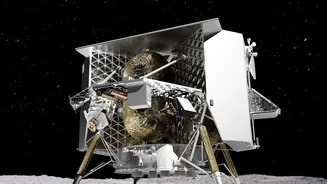
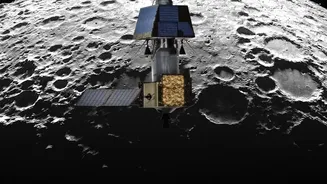
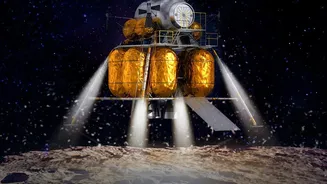
decision to sign the Artemis Accords in 2023. The Artemis program’s goal is to establish a permanent human presence near the lunar south pole, much like a research station in Antarctica. For India, which has its own goals of landing an astronaut on the Moon by 2040 and building the Bharatiya Antariksh Station, this is a landmark opportunity. Joining the Moon base project could give India access to cutting-edge technology, deep space operational experience, and a central role in shaping humanity's future on the Moon. While the specific details of ISRO's role are still being discussed, the invitation underscores India's rising stature as a critical and cost-effective partner in space exploration.
NISAR: The Indo-US Eye in the Sky Delivers
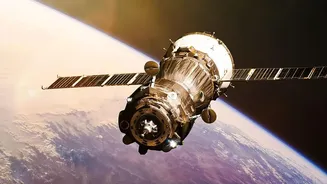
The NASA-ISRO Synthetic Aperture Radar (NISAR) mission, a shining example of Indo-US collaboration, is now delivering remarkable data. Launched in July 2025, the satellite recently began releasing its first calibrated data products. This Earth-observing satellite, the first to use dual L-band and S-band radar frequencies, is mapping our planet in unprecedented detail. The data is crucial for India, with applications in agricultural monitoring, disaster management for floods and landslides, and tracking climate change impacts like melting Himalayan glaciers. ISRO has already made S-band data available through its Bhoonidhi portal, while NASA is distributing L-band data, ensuring that scientists and policymakers worldwide have free and open access to this vital information. NISAR represents a new era of joint missions tackling global challenges.
The Search for Martian Life: A Challenging Road Ahead
NASA's Mars Sample Return (MSR) mission, a long-planned project to bring Martian rocks collected by the Perseverance rover back to Earth, has faced significant hurdles. Earlier this year, the ambitious program was effectively cancelled by the US Congress due to major budget overruns and timeline slips. However, this doesn't mean the dream is dead. NASA is now re-evaluating the mission, looking for more innovative and cost-effective architectures from industry partners. For India, whose Mangalyaan mission successfully entered Mars orbit, the MSR saga is an important lesson in the immense complexity and cost of interplanetary sample return. Meanwhile, other nations are moving forward; Japan's JAXA is launching a mission in October 2026 to collect samples from Mars's moon, Phobos, with a planned return in 2031. The global quest to find evidence of life on Mars continues, but the path has become more varied.
Webb Telescope's Discoveries and India's Contribution
The James Webb Space Telescope (JWST) continues to revolutionise our understanding of the early universe. Recent discoveries include the potential identification of a new type of object called a "black hole star," which may help explain the mystery of the 'little red dots' observed in the distant cosmos. Indian scientists are playing a direct role in this era of discovery. Using JWST data, Indian astronomers recently identified 'Alaknanda,' a surprisingly well-formed spiral galaxy that existed when the universe was just 1.5 billion years old. This discovery challenges previous theories that early galaxies were mostly chaotic and irregular. It highlights how Indian researchers are leveraging global scientific instruments to make world-class contributions, pushing the boundaries of human knowledge from right here in India.