






A Shift in Conservation Strategy
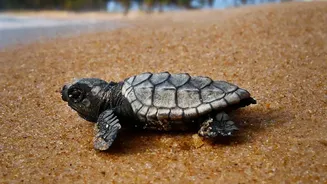
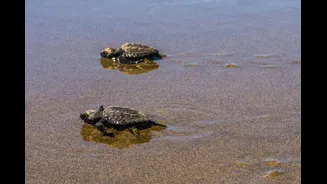
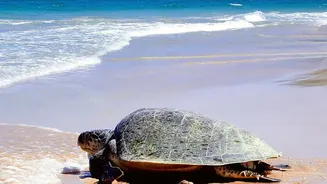
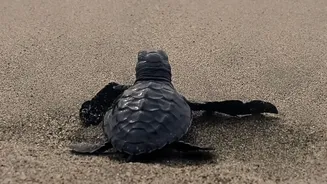
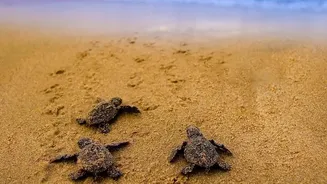
The Goa Forest Department has put forward a significant proposal to enhance protections for the endangered Olive Ridley sea turtles that nest along its shores. In a letter to the department of environment and climate change, it has recommended that 24
beaches be officially designated as turtle nesting sites under the Coastal Regulation Zone (CRZ) Notification, 2019. This move signals a shift away from the historically contentious idea of outright beach bans, which often created friction with local communities. Instead, the proposal focuses on regulation and co-management, acknowledging that conservation is as much a social and economic negotiation as it is an ecological one. This approach aims to balance the protection of a Schedule I species with the livelihoods of thousands who depend on beach tourism.
Expanding the Protected Zones
Currently, four beaches—Morjim and Mandrem in North Goa, and Agonda and Galgibag in South Goa—are formally recognised as Olive Ridley nesting sites under the 2011 CRZ Notification. The new proposal dramatically expands this list. The ten nominated beaches in North Goa include popular tourist hubs like Baga, Calangute, and Vagator, alongside the existing sites. In the south, fourteen beaches have been named, including Palolem, Cavelossim, and Cola. This expansion is partly driven by concerns over a recent decline in nesting numbers. The 2026 season saw fewer nests and eggs compared to the strong seasons of 2024 and 2025, prompting a more proactive and widespread conservation effort. If accepted, these beaches will be classified as CRZ-I, the most ecologically sensitive category, requiring a detailed environmental management plan.
Why Regulation Over a Hard Ban?
The move towards regulation is a pragmatic recognition of Goa's socio-economic landscape. A complete ban on activities would devastate the local tourism industry, affecting everyone from shack owners to fishermen and transport providers. Stakeholders from the tourism sector have already voiced concerns, seeking clarity on what the new rules will entail. The proposed framework aims to replace conflict with collaboration. By regulating activities rather than prohibiting them, the government hopes to make partners out of local communities. This model has seen success in the past, with shack owners adopting eco-friendly practices like dimming lights and reducing noise during nesting season. The goal is a sustainable path where locals remain allies in conservation, not casualties of it.
What the New Rules Could Mean
If the proposal is adopted, visitors and businesses on these 24 beaches can expect tighter controls, especially during the nesting season from November to April. Drawing from existing regulations at Morjim and Mandrem, these are likely to include restrictions on artificial lighting and loud music after sunset. Beach shacks may have specific operational hours, likely being required to close by 11 p.m., with music stopping even earlier. The placement of beach beds and other structures, particularly in the inter-tidal zone where turtles crawl ashore, would also be strictly managed to prevent obstruction. The underlying principle is to keep the beaches dark and quiet at night, which is critical for guiding female turtles to nest and for ensuring hatchlings can find their way to the sea.
The Road Ahead for Goa's Beaches
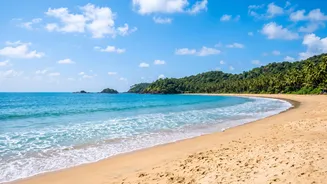
The proposal is currently with the Department of Environment and Climate Change for consideration. Its submission has sparked immediate discussion among local stakeholders, including the Shack Owners Welfare Society and fishing associations, who are demanding to be part of the decision-making process. They argue that while turtle protection is essential, the regulations must be practical and clearly defined to avoid ambiguity and economic hardship. The success of this ambitious conservation plan will hinge on the government's ability to create a clear, enforceable, and collaborative framework. It represents a critical test for sustainable tourism in Goa, seeking to prove that the state's golden sands are big enough for both tourists and turtles.