

Demystifying 'Salt Silicon' Tech
First, let's clear up the terminology. The headline's 'Salt Silicon' points to an exciting new frontier in battery chemistry, primarily revolving around sodium-ion technology. Unlike the dominant lithium-ion batteries that power most EVs and smartphones
today, sodium-ion (Na-ion) batteries use sodium as their key chemical component. Sodium is the 'salt' part of the equation, being abundantly available in common salt. The 'silicon' aspect refers to using silicon in the battery's anode—the part the ions move into when charging. While silicon can boost performance, the core innovation challenging the status quo is the shift from expensive lithium to cheap, plentiful sodium. Several Indian companies, like Indi Energy and GODI, are already developing this technology, aiming to create a truly homegrown battery solution.
The All-Important Cost Advantage
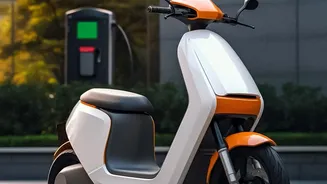
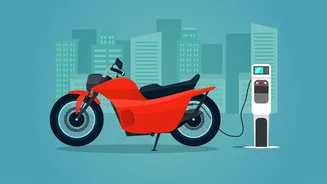
The primary appeal of sodium-ion technology is its potential for a significantly lower price point. Lithium is a relatively rare element, with mining and processing concentrated in a few countries, leading to volatile prices and supply chain vulnerabilities. Sodium, by contrast, is the sixth most abundant element on Earth, easily and cheaply sourced from seawater or salt flats. This fundamental material difference could drastically cut battery manufacturing costs by an estimated 30% or more compared to their lithium counterparts. While current, small-scale production means Na-ion batteries can sometimes cost more than mature lithium-iron-phosphate (LFP) batteries, the long-term potential for savings is immense once manufacturing scales up. This cost reduction is the key that could unlock truly affordable electric scooters and motorcycles for the Indian market.
Performance, Safety, and Trade-Offs
Of course, cost isn't everything. For a battery to be viable, it must perform. Historically, sodium-ion's biggest drawback was its lower energy density, meaning a heavier, larger battery was needed to provide the same range as a lithium-ion one. However, recent advancements are closing this gap. The world's largest battery maker, CATL, has developed a Na-ion battery with an energy density of 160Wh/kg, which is rapidly approaching that of standard LFP batteries. Furthermore, sodium-ion batteries offer significant advantages in safety and durability. They are less prone to the thermal runaway (catching fire) that can affect some lithium chemistries and perform exceptionally well in extreme temperatures, retaining over 90% of their capacity in cold weather, a known weakness for lithium-ion.
A Game-Changer for India's EV Dream
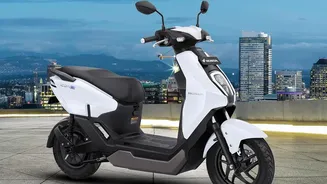
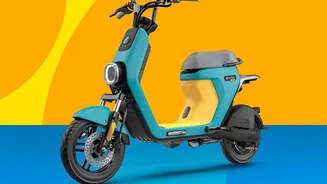
For India, the implications of this technology are profound. Widespread adoption of sodium-ion batteries would reduce the country's heavy reliance on imported lithium-ion cells and raw materials, strengthening economic self-sufficiency under the 'Make in India' initiative. An Indian startup, Indi Energy, is pioneering this by using agricultural waste like rice stubble to create the hard carbon needed for Na-ion anodes, turning a pollution problem into a valuable resource. With two-wheelers forming the backbone of Indian urban transport, a cheaper, safer, and locally produced battery could accelerate the transition to electric mobility on a massive scale, clearing the air in congested cities and making personal electric transport accessible to millions more citizens.