


Meet the Super-Earths
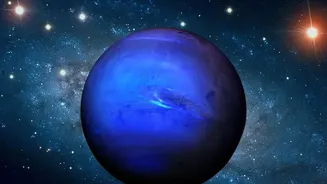
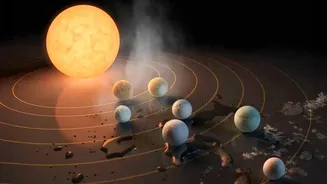
Before we dive into the latest findings, let's get acquainted with our subjects. "Super-Earths" are a class of exoplanet more massive than Earth but lighter than ice giants like Neptune. Curiously, while they are the most common type of planet discovered
in our galaxy, our own solar system doesn't have one. This makes them objects of intense scientific curiosity. Are they rocky like Earth, gaseous like Neptune, or something entirely new? Understanding their composition is a critical first step in determining their potential for hosting life, and for that, scientists need to look at their atmospheres.
How Webb Reads Alien Skies
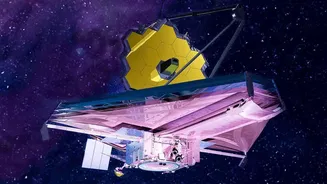
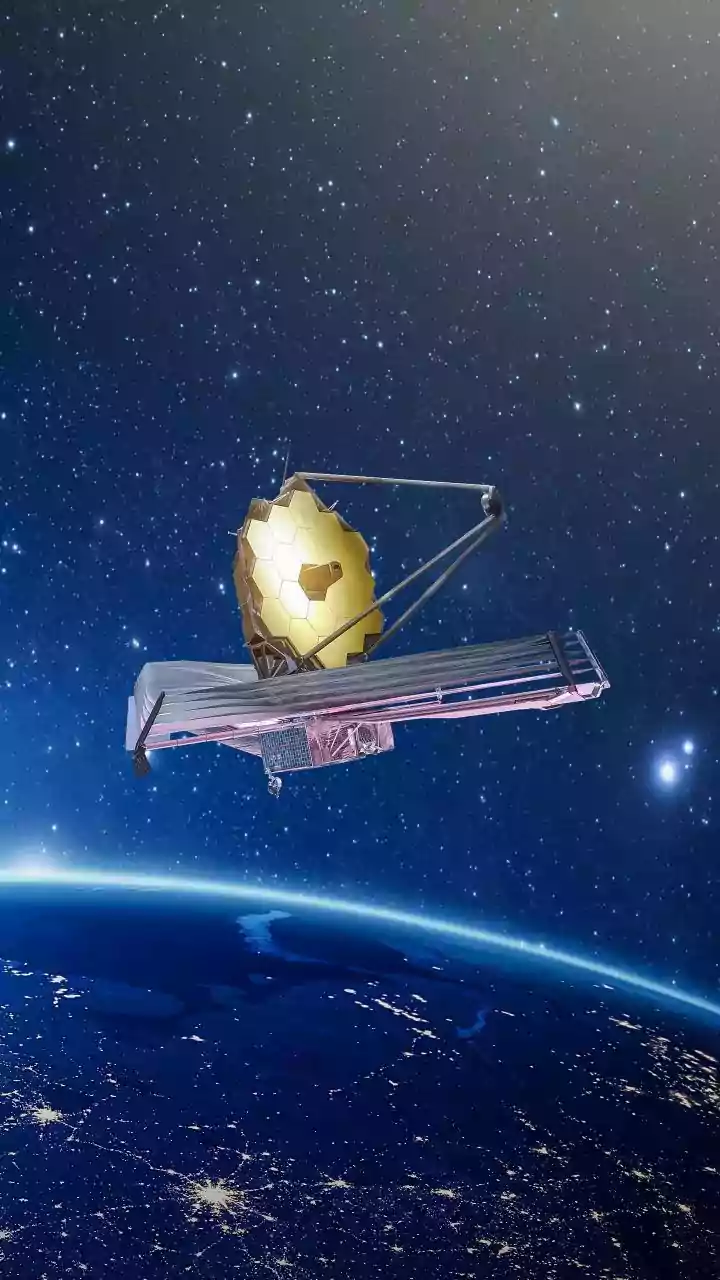
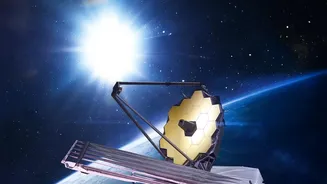
The JWST is a master at exoplanet forensics. Its primary technique involves something called transmission spectroscopy. When a planet passes in front of its host star, a tiny fraction of the starlight filters through the planet's atmosphere. Different gas molecules absorb specific wavelengths of light, leaving a unique chemical fingerprint. By analysing this light, JWST can deduce the composition of that alien air. It's an incredibly delicate process. Scientists must account for confounding factors, such as dark spots on the host star's surface, which can sometimes mimic the very signals they are searching for, including that of water vapour. This makes every confirmed detection a significant achievement.
The Steamy Case of GJ 1214 b
One of the most intriguing recent subjects is a "mini-Neptune" called GJ 1214 b. For years, this world was a mystery, shrouded in a thick layer of haze that no telescope could penetrate. But Webb’s powerful infrared vision changed that. By observing the planet's heat as it orbited its star, scientists found evidence that its atmosphere likely contains water vapour. While the planet is far too hot to support liquid oceans, its atmosphere could be steamy and water-rich. The discovery was a breakthrough, offering the first clear look into the atmosphere of this common but enigmatic class of planet and showing that even hazy worlds can't hide their secrets from Webb.
A Magma World’s Atmosphere
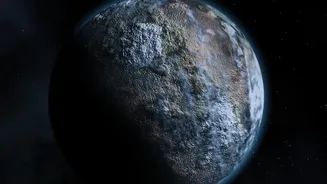
Not all Super-Earths are potentially watery. Take 55 Cancri e, a blisteringly hot rocky world orbiting so close to its star that its surface is likely a molten ocean of magma. It would seem an unlikely place to find an atmosphere. Yet, Webb delivered the best evidence to date for a substantial atmosphere surrounding a rocky exoplanet outside our solar system. Instead of water, the data suggests an atmosphere rich in carbon monoxide or carbon dioxide, likely replenished by gases bubbling out of the magma ocean itself. This finding is crucial because it proves that even under the most extreme radiation and heat, a rocky planet can sustain a secondary atmosphere, expanding the range of worlds scientists can study.
The Puzzle of K2-18 b
Perhaps the most compelling and complex case is K2-18 b, a planet nearly nine times the mass of Earth that orbits within its star’s habitable zone—the region where liquid water could potentially exist. Early observations hinted at water vapour. However, more detailed scans with JWST revealed an atmosphere containing methane and carbon dioxide, but a surprising lack of water vapour in its upper layers. This doesn't mean the planet is dry. One leading theory suggests K2-18 b could be a "Hycean" planet—a world with a liquid water ocean hiding beneath a hydrogen-rich atmosphere. The water vapour might be trapped in the lower, warmer layers, a phenomenon known as a "cold trap," preventing its detection higher up.
Vapour Is Not an Ocean
These discoveries mark a pivotal moment in astronomy, but it's essential to manage expectations. Detecting water vapour in an atmosphere is a monumental step, but it is not the same as finding a blue-green world teeming with life. Water is a fundamental building block, but habitability requires much more: the right temperature, the right atmospheric pressure, and protection from deadly stellar radiation. What Webb's scans provide are the first crucial pieces of this complex puzzle. They help scientists distinguish barren rocks from worlds that possess the raw ingredients for life, allowing them to focus future observations on the most promising candidates in our cosmic neighbourhood.