



Why August is a Great Month for Saturn
Throughout August, Saturn is steadily getting brighter and better positioned for viewing. This is because it is heading towards its 'opposition' in early October. Opposition is an astronomical event that occurs when Earth passes directly between the Sun
and an outer planet like Saturn. From our perspective, Saturn is opposite the Sun, meaning it rises in the east around sunset and remains visible all night long, reaching its highest point around midnight. This alignment also means Saturn is near its closest point to Earth for the year, making it appear larger and more brilliant in our sky. While the official opposition is in October, August is when the show really gets going, with the planet becoming an excellent evening target.
The Return of the Rings
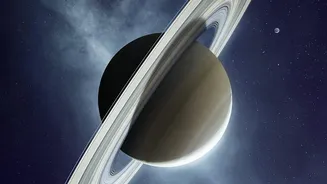
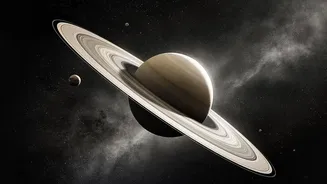
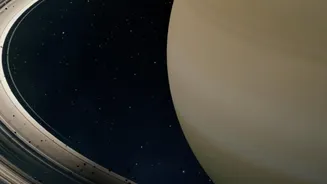
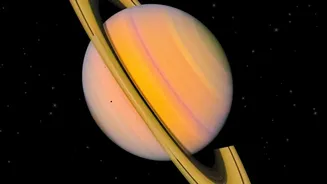
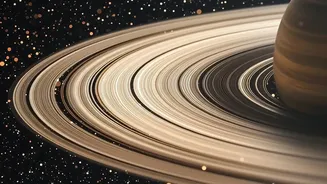
One of the most exciting aspects of viewing Saturn in 2026 is the favourable tilt of its iconic rings. In 2025, the rings were tilted edge-on towards Earth, making them nearly impossible to see. But now, they are once again opening up to our line of sight. In August 2026, the rings will be tilted at an angle that makes them clearly visible as a separate structure from the planet itself, even in a small telescope. This increasing tilt offers the best views of Saturn we have had in years, making it a particularly special time to look up.
How to Find Saturn
Finding Saturn in the vast night sky is easier than you might think. To the naked eye, it will appear as a bright, steady, yellowish-white 'star' that does not twinkle. During August, you can find it rising in the east in the mid-evening, in the constellation Pisces. On the night of August 30-31, the Moon will pass close to Saturn, making for a beautiful pairing and acting as a perfect guide to locate the planet. Stargazing apps on your smartphone can also be an invaluable tool, providing a real-time map of the sky and pointing you directly to Saturn’s location.
What You Can Expect to See
The level of detail you can see depends on your equipment. With just your naked eye, Saturn will look like a bright star. A good pair of binoculars might reveal that the 'star' is not a perfect point of light but slightly elongated or oval. To truly witness the magic, you will need a telescope. Even a small telescope with a magnification of around 50x will clearly show the rings as distinct from the planet. A larger telescope can reveal more stunning details, such as the Cassini Division—a dark gap between the main A and B rings. You might also spot some of Saturn's brightest moons, especially Titan, which can appear as a tiny star-like point of light near the planet.
Tips for Indian Sky-Gazers
For observers in India, the biggest challenge in August is often the monsoon. Cloudy skies can frustrate viewing attempts, so it is important to be patient and take advantage of any clear spells. Check the weather forecast diligently. The second major hurdle, especially in cities, is light pollution. To get the best view, try to find a location away from bright city lights, like a park, a rooftop, or the outskirts of town. Let your eyes adjust to the darkness for about 20-30 minutes; this will significantly improve your ability to see fainter objects. For those in regions with clearer skies, such as high-altitude areas like Ladakh or rain-shadow regions like parts of Rajasthan, the viewing conditions will be significantly better.