






A New Neighbour in Our Galaxy
Astronomers have confirmed the existence of a new exoplanet named GJ 3378b, located a mere 25 light-years from Earth. While that sounds distant, it's practically next door in the vast expanse of the Milky Way galaxy, which stretches about 100,000 light-years across.
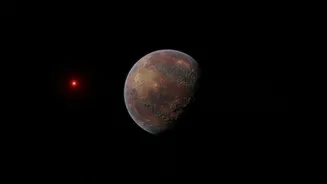
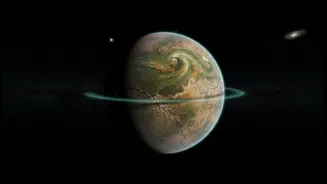
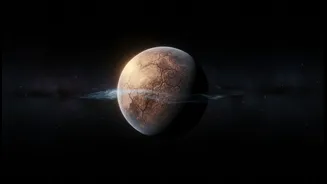
The planet was found orbiting a red dwarf, the most common type of star in our galaxy. Discovered by a team from the University of California, Irvine, this world falls into a fascinating category of planets known as "super-Earths." These are worlds larger and more massive than our own but smaller than ice giants like Neptune. GJ 3378b is estimated to be about twice the size of Earth with about 2.3 times its mass, making it a prime example of this common but mysterious class of planet.
The Promise of the 'Goldilocks Zone'
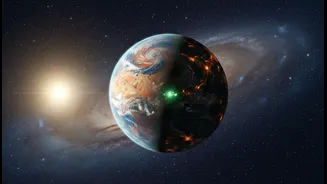
One of the most tantalizing details about GJ 3378b is its location within its star's habitable zone. Often called the "Goldilocks zone," this is the orbital region where conditions are just right—not too hot and not too cold—for liquid water to potentially exist on a planet's surface. The planet receives about 90% of the radiation from its star that Earth gets from the sun, placing it in a promising spot for potential habitability. However, orbiting a red dwarf complicates things. These smaller, cooler stars can be violently active, especially in their youth, blasting nearby planets with intense radiation that could strip away their atmospheres. Scientists note that GJ 3378b sits right on the edge of a theoretical 'cosmic shoreline,' the boundary where a planet might just have enough gravity to hang onto its atmosphere against the stellar wind.
Beyond Habitability: A Perfect Laboratory
The real excitement around GJ 3378b isn't just the potential for water; it's the potential for study. The biggest unanswered question about the planet is whether it has an atmosphere at all. Answering this is a crucial step before any search for life can even begin. This is where the business and technology of modern astronomy come into play. While current telescopes confirmed the planet's existence using radial-velocity measurements—detecting the star's wobble caused by the planet's gravity—they can't easily analyze its atmosphere. That's a job for more advanced observatories. The planet's proximity and size make it an ideal target for future telescopes like the planned Habitable Worlds Observatory, which aims to directly image rocky planets and analyze their atmospheres for biosignatures.
Why This Discovery Matters for Science
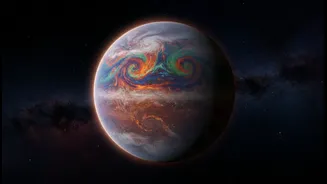
Discoveries like GJ 3378b are fundamental because they move exoplanet science from simply counting planets to actually understanding them. Each new super-Earth, especially one so close, serves as a natural laboratory. Studying these worlds helps scientists refine their theories on planet formation and evolution. Super-Earths are incredibly common, yet our own solar system doesn't have one, making them a major puzzle. By studying planets like GJ 3378b, astronomers can test models about how planetary atmospheres form, how they're affected by their parent stars, and what separates a rocky world from a small gas giant. It's less about finding Earth 2.0 right now and more about building the instruction manual for how to find it later. Every detail learned from GJ 3378b will sharpen the search and bring us closer to answering the ultimate question.