



A New Era of Cosmic Meteorology
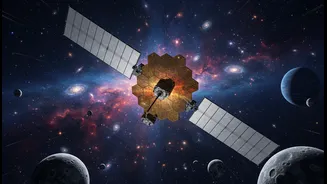
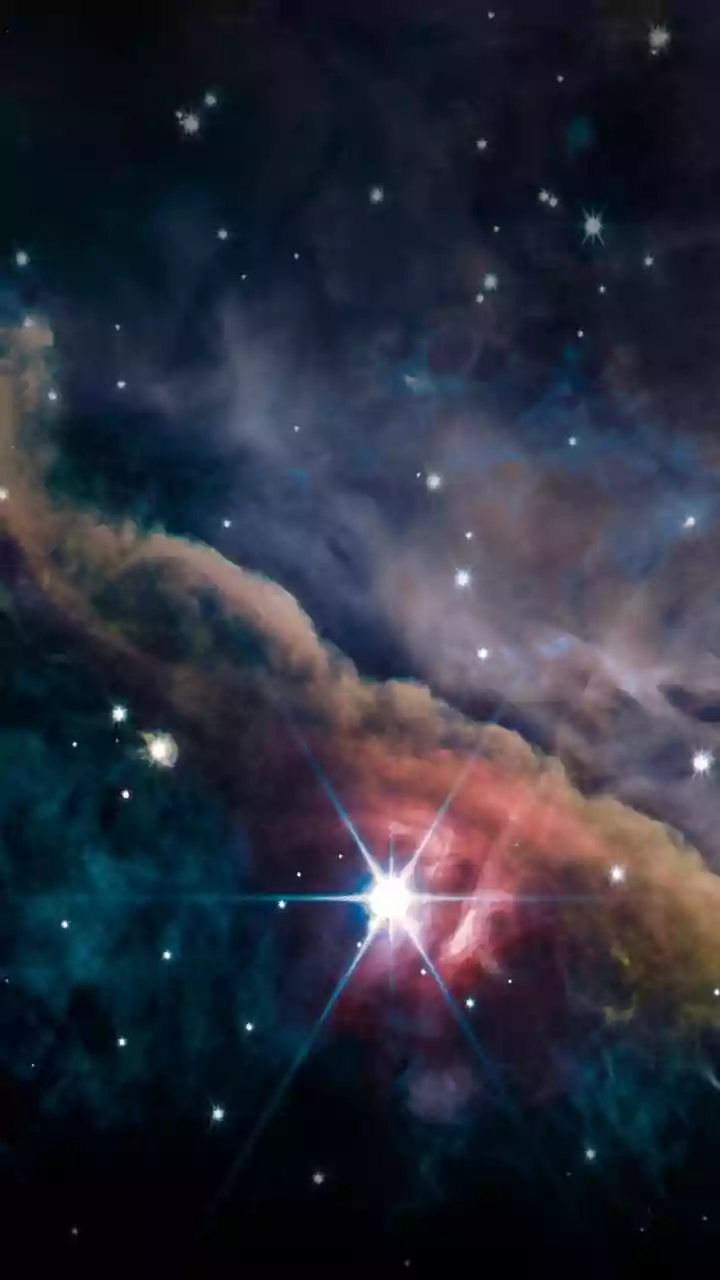
Before the James Webb Space Telescope (JWST), studying planets outside our solar system—known as exoplanets—was a bit like trying to read a book from a kilometre away. We knew they were there, but the details were blurry. Now, with its unprecedented infrared
sensitivity, Webb is acting as a cosmic meteorologist. By using a technique called transit spectroscopy, astronomers can analyse the light from a star as it filters through an exoplanet's atmosphere. Different chemicals absorb specific colours of light, leaving behind a unique barcode that Webb can read. This allows scientists to identify molecules like water, methane, and carbon dioxide from light-years away, forming the basis of the first-ever detailed alien weather forecasts.
The Forecast Calls for Sandy Clouds
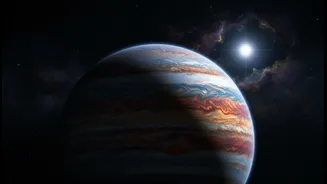
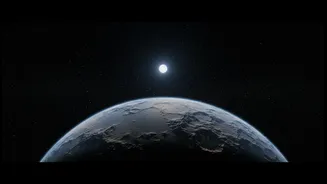
One of the most dramatic examples of Webb's capabilities comes from its observations of worlds like WASP-94A b and VHS 1256 b. On WASP-94A b, a 'hot Jupiter' nearly 700 light-years away, Webb detected a daily weather cycle that is truly alien. The planet is tidally locked, meaning one side always faces its star. On the 'morning' side, where the atmosphere moves from the cold of permanent night toward the star's heat, the telescope found clouds made of minerals like silicates—essentially, fine grains of sand. As powerful winds whip these sandy clouds across to the scorching 'evening' side, they evaporate in the intense heat, leading to clear skies before the cycle begins again. This isn't just a static chemical inventory; it's a dynamic, planet-wide weather system made of rock.
Reading the Signs of a Turbulent Sky
So how does a telescope tell the difference between a planet's morning and evening from hundreds of light-years away? The key is observing the planet as it crosses in front of its star. As the planet begins its transit, Webb sees the light passing through the atmosphere on its 'morning' limb. As the transit ends, it sees the light passing through the 'evening' limb. On planets like WASP-121b, Webb found these two regions are dramatically different. The evening side is hotter than expected, suggesting fierce winds are carrying heat from the dayside. Webb even saw water molecules being torn apart by the extreme heat, a clear sign of intense atmospheric chemistry at work. By separating these different slices of the atmosphere, Webb turns a distant point of light into a weather map.
From Lava Worlds to Salty Skies
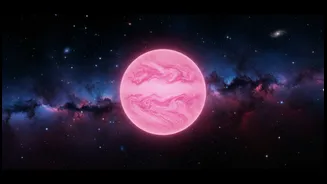
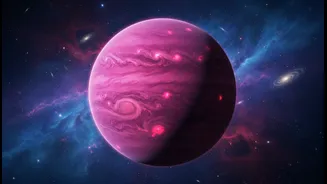
The weather drama isn't limited to sandy clouds. Webb has peered into the atmosphere of 55 Cancri e, a hellish super-Earth so close to its star that its surface is likely molten lava. Data suggests an atmosphere rich in carbon monoxide and carbon dioxide, possibly being constantly replenished by outgassing from its magma ocean. Elsewhere, on a famously faint world known as the 'Pink Planet' (GJ 504 b), Webb solved a long-standing mystery by detecting clouds made of salt. These discoveries confirm that clouds on other worlds are not always made of water ice like on Earth. They can be composed of quartz, salt, or other minerals, painting a picture of planetary environments far more diverse and extreme than we ever imagined.
More Than Just an Alien Weather Report
While forecasting rain made of liquid gems or clouds of hot sand is fascinating, the science goes much deeper. Studying these extreme atmospheres helps scientists test and refine their models of how planets form and evolve. When observations don't match predictions—like when Webb found the first evidence of photochemistry (light-driven chemical reactions) on an exoplanet—it forces a fundamental rethink of planetary science. Each new atmospheric profile, whether it contains methane, water, or silicate clouds, adds another piece to the puzzle of our universe. It helps us understand the building blocks of other solar systems and, ultimately, places our own world in a richer cosmic context.