


A Junkyard Orbiting at 28,000 KPH
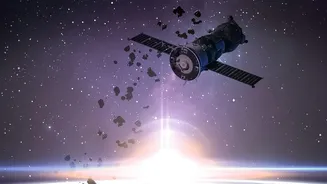
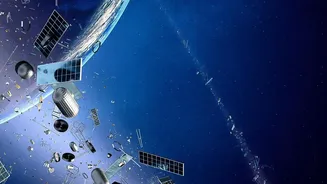
Since 1957, humanity has been launching objects into space, but we have been less diligent about cleaning up. The result is a massive field of space debris. The European Space Agency (ESA) estimates there are around 900,000 objects larger than a centimeter
orbiting our planet. This junk ranges from entire defunct satellites the size of a car to tiny flecks of paint. While small pieces might sound harmless, their incredible speed of over 28,000 kilometers per hour turns them into hyper-velocity projectiles. This orbital clutter poses a significant threat to active satellites essential for communication, navigation, and weather monitoring, as well as to future space missions and astronaut safety. The fear is a cascading chain reaction known as the Kessler syndrome, where collisions create more debris, leading to more collisions until low Earth orbit becomes unusable.
How Magnetic Tethers Work
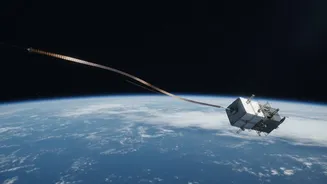
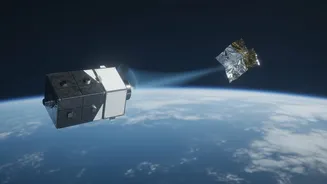
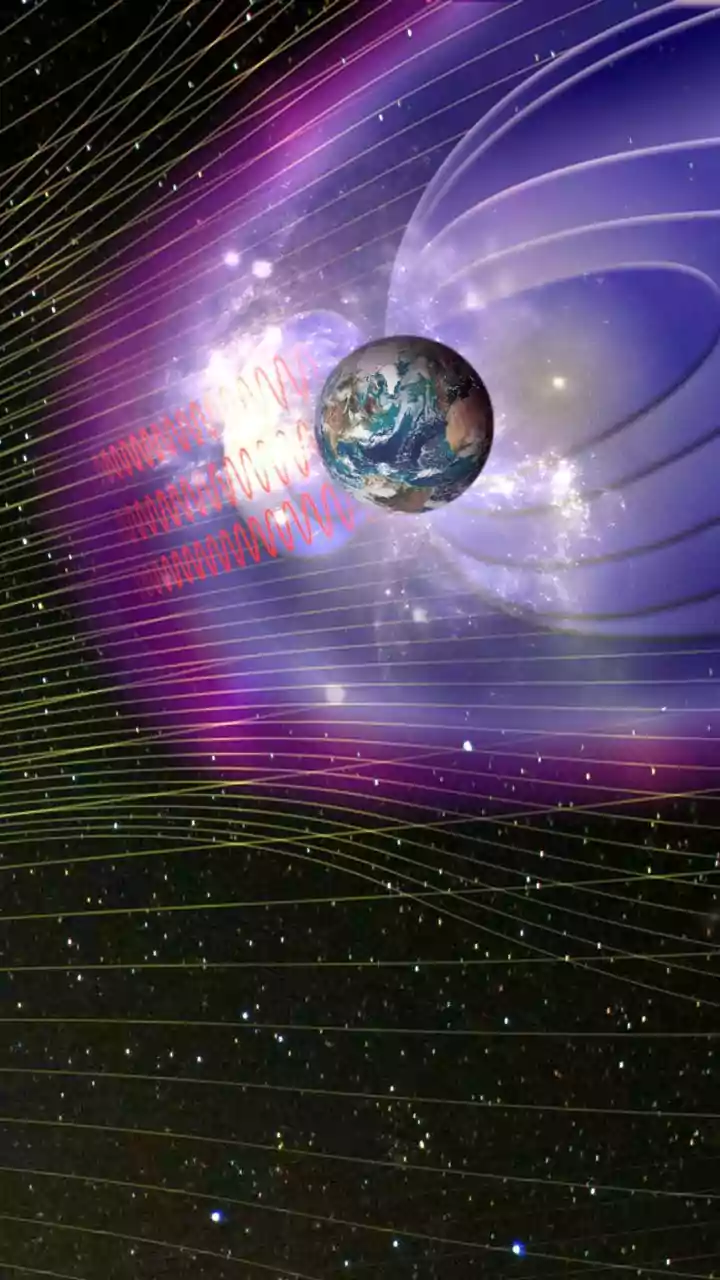
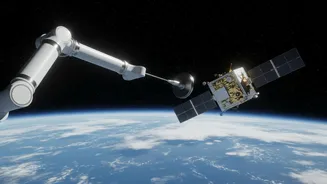
Several methods for capturing debris are being explored, including nets, harpoons, and robotic arms. Magnetic capture is another leading contender. One approach involves a 'chaser' satellite that uses powerful electromagnets to attract and secure debris that has magnetic components. The Japanese company Astroscale has been a pioneer in this area, demonstrating its ELSA-d mission which successfully used a magnetic system to capture a simulated piece of debris. A key advantage of this method is the ability to grapple a target from a safe distance, reducing the risk of collision during capture. Some concepts even propose using Earth's own magnetic field. Electrodynamic tethers, which are long conducting wires, can interact with the planet's magnetic field to generate drag, effectively acting as a brake to help a captured satellite deorbit and burn up safely in the atmosphere.
The Probe and Tether Approach
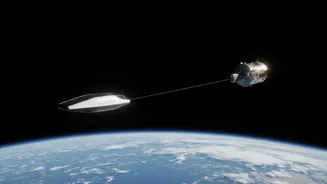
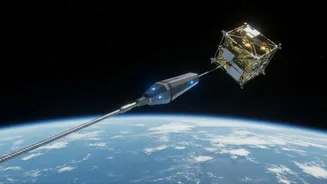
The idea of a magnetic tether probe combines these concepts into a single system. Researchers have been developing and testing systems where a chaser satellite launches a smaller, tethered probe towards a target. The probe uses magnetic forces to achieve a soft docking. Once attached, the main satellite can use the tether to control the captured object. This could involve either towing it to a lower orbit for reentry or moving it to a less congested 'graveyard' orbit. A key innovation in this field is the idea of making future satellites 'capture-ready' by equipping them with a standardized magnetic docking plate, which would make future cleanup operations far simpler and more reliable. Astroscale, for instance, plans to launch its ELSA-M servicer, which is designed to remove several satellites equipped with such docking plates in a single mission.
Challenges on the Final Frontier
Removing space junk isn't easy. The objects are not cooperative; they are often tumbling uncontrollably, which makes capturing them with any method a complex robotic challenge. Furthermore, there are significant legal and political hurdles. For instance, you cannot simply grab another country's satellite, even if it is inactive, without permission due to property rights. The economics are also daunting. Developing, launching, and operating these cleanup missions is expensive. However, many in the industry argue that the cost of inaction is far greater. A catastrophic collision could cripple vital satellite infrastructure, impacting everything from GPS services to global financial transactions, costing billions and taking years to recover.