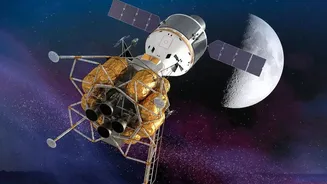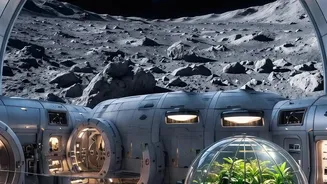



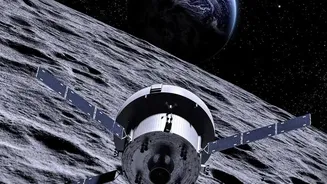
The dream of living on the Moon is closer than ever, with NASA planning a permanent base. But before astronauts can move in, scientists must solve a deadly problem: the lunar surface is incredibly hostile. The key to survival may lie underground.
The Hazards of an Airless World
Establishing
a long-term presence on the Moon isn't as simple as pitching a tent. The lunar surface is one of the most dangerous environments imaginable for humans. Without a protective atmosphere, temperatures swing wildly from a scorching 120°C in sunlight to a frigid -130°C in the dark. But the cold is only half the problem. The Moon is constantly bombarded with cosmic radiation and solar flares, exposing any surface dwellers to radiation levels about 200 times higher than on Earth. This exposure can damage DNA and significantly increase health risks for astronauts. On top of that, the surface is covered in a fine, abrasive dust called regolith, which can damage equipment and pose health hazards if inhaled. Any permanent habitat must shield its inhabitants from all these threats.
An Elegant Solution: Lunar Lava Tubes
Instead of building heavily shielded habitats from scratch on the surface—a costly and complex process—scientists are increasingly looking at a more elegant solution: moving into pre-existing shelters. Billions of years ago, the Moon was volcanically active. Rivers of lava carved out tunnels beneath the surface, which have since drained to become hollow voids known as lava tubes. Evidence from orbiters like NASA's LRO has revealed pits on the surface that may be 'skylights'—collapsed sections of these ancient tubes. These subterranean caverns could be massive, potentially hundreds of meters wide, and are shielded by over 40 meters of solid rock. This natural rock ceiling would offer near-perfect protection from radiation, micrometeoroid impacts, and the extreme temperature swings, providing a stable environment for a lunar base.
The New Missions to Go Cave Hunting
To turn this theory into a viable plan, NASA needs to confirm these lava tubes exist and are accessible. In late 2026, the agency announced it had selected three new suites of scientific instruments to scout for a future 'Moon Base' through its PRISM program. One of these investigations, the Geophysical Instruments for Marius Lunar pit Investigation (GIMLI), is specifically designed to hunt for these underground shelters. The GIMLI payload will be deployed at the Marius Hills Pit, a promising skylight candidate, and will use instruments to scan beneath the surface. Its goal is to determine if the pit leads into a large, open lava tube, which would be a prime location for a future outpost.
Beyond Shelter: Science and Resources
Finding a lava tube isn't just about real estate; it's a scientific goldmine. These caves have been sealed off from the harsh surface environment for billions of years, making them pristine time capsules. They could contain clues about the Moon's volcanic history and geologic evolution. Furthermore, NASA is funding other investigations alongside GIMLI to prepare for long-term habitation. An instrument suite called the Distribution of Ice and Surface Characteristics Observatory (DISCO) will hunt for water ice hidden in micro-cold traps. Finding accessible water would be revolutionary, as it could be used for drinking, growing plants, and even being split into hydrogen and oxygen for rocket fuel. A third investigation, the Lunar Environment Monitoring Station – South Pole (LEMS-SP) will act as a long-term weather station, measuring seismic activity and micrometeoroid impacts to assess hazards for future hardware and crews.