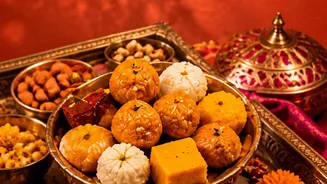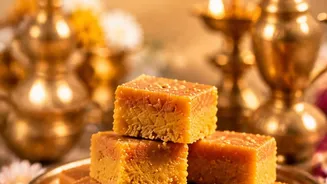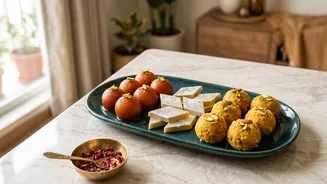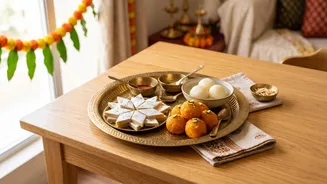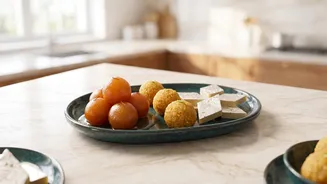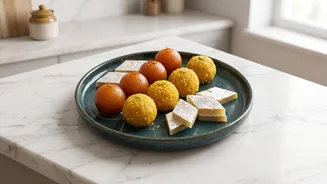

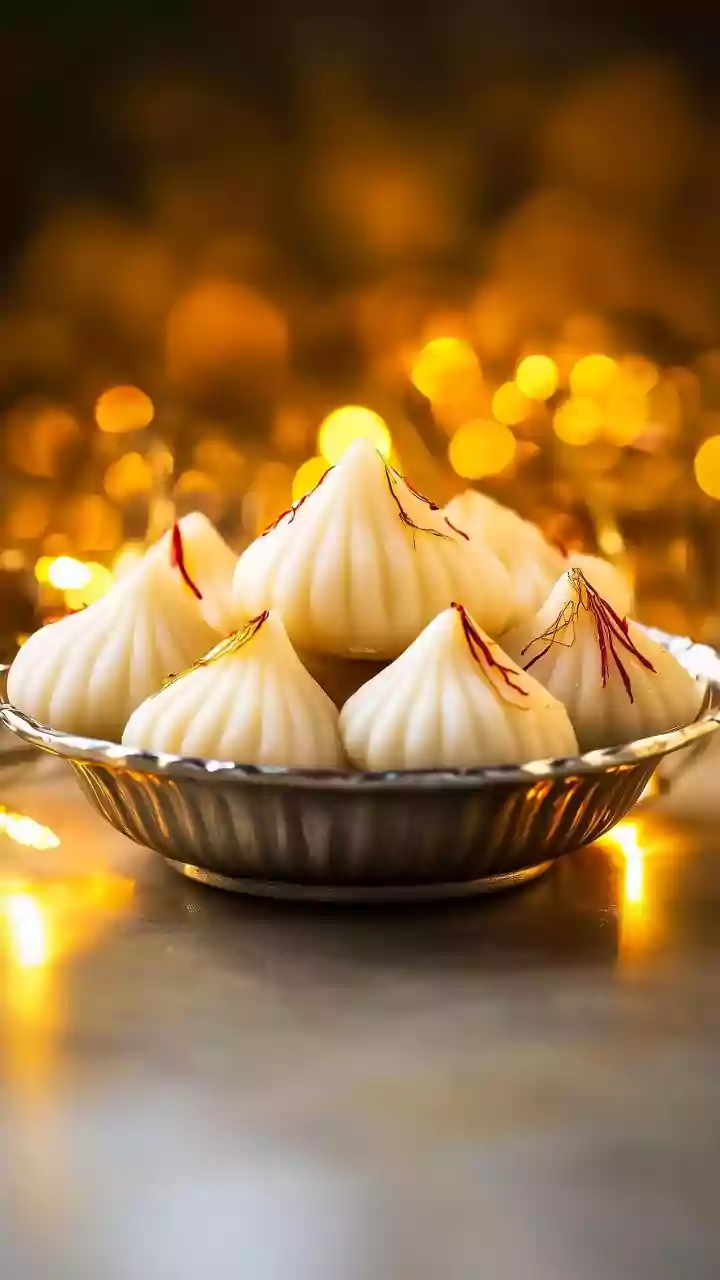
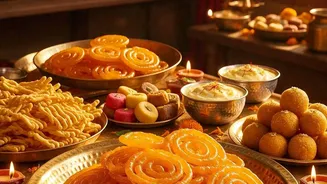
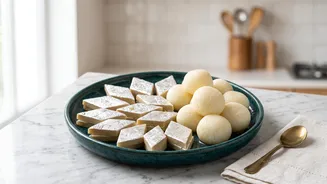
Diwali, the festival of lights, brings with it the joyous tradition of sharing and savouring delicious sweets. But the festive rush can also see a rise in adulterated mithai. These simple checks can help you ensure your treats are safe and pure.
The First Glance: Sensory Checks
Before
you even buy, use your senses. Freshly made sweets have a pleasant, natural aroma. If a sweet smells stale, oily, or has a chemical-like odour, it's best to avoid it. Look for unnaturally bright colours, as these can indicate the use of non-permitted synthetic dyes. Reputable sellers will often use milder, natural colouring. Also, check for any signs of fungus or a slimy texture, which are clear indicators that the sweet is old and unsafe to consume. A simple press test can also be revealing; fresh pedas or barfis made from pure khoya will have a soft, slightly grainy texture, not a pasty or rubbery one.
Test for Starch in Khoya or Mawa
Khoya, or mawa, is the base for many popular sweets like barfi and peda, and it is frequently adulterated with starch to increase its weight. Thankfully, there's a simple test for this, recommended by the Food Safety and Standards Authority of India (FSSAI). Take a small sample of the khoya or the sweet. Dissolve it in a cup of hot water and let it cool. Then, add a few drops of iodine solution (tincture iodine, available at most pharmacies). If the solution turns blue or black, it confirms the presence of starch. Pure khoya will not change colour.
Spotting Fake Silver Foil (Vark)
That shimmering silver layer on your kaju katli should be pure silver, but it is often replaced with cheaper, toxic aluminium foil. To check, gently scrape off a piece of the vark from the sweet and rub it between your thumb and forefinger. Real silver vark is extremely delicate and will disintegrate and disappear into your skin. If it rolls into a tiny, greasy grey ball or feels like a distinct particle, it's likely aluminium, which is harmful to ingest. Another test is to burn a small piece of the foil. Pure silver will burn away to leave a shiny white droplet, whereas aluminium will burn into black ash.
Check for Detergent and Other Additives
Synthetic milk, often containing detergent, urea, and other chemicals, is sometimes used to make adulterated sweets. A quick test can reveal its presence. Take a sample of the sweet or mawa and dissolve it in a container of warm water. Close the container and shake it vigorously. If a dense, frothy layer forms on the surface, similar to soap lather, it indicates the presence of detergent. Pure mawa will dissolve with little to no frothing. You can also taste a tiny bit of the khoya; if it tastes soapy or synthetic, it is definitely adulterated. Pure khoya has a mildly sweet, nutty flavour.
The Artificial Colour Bleed Test
Vibrantly coloured sweets, especially laddoos and certain barfis, might contain non-edible or low-quality synthetic dyes that can be harmful. To check for artificial colours, place a small piece of the sweet in a glass of lukewarm water. Let it sit for a few minutes. If it is pure, the sweet will slowly release its colour, or the water will remain clear. However, if it's made with artificial colouring agents, you will see streaks of colour bleed into the water almost immediately, indicating the use of inferior or non-permitted dyes.
Identifying Other Common Adulterants
Besides starch, sellers sometimes use other fillers like blotting paper, fine flour (maida), or even mashed potatoes to bulk up sweets. To check for these, take a small portion of a milk-based sweet and boil it in water. After it cools, add a few drops of iodine solution. As with the starch test, the presence of flour or potato will cause the mixture to turn blue. To check the authenticity of the khoya itself, you can try rubbing a little on your palm. If it is pure, it will feel a bit oily and leave a slight residue of ghee. If it feels dry, pasty, or sticky, it is likely adulterated.