



The Silence of a Dead Planet
Imagine a planet without life. Its atmosphere, left to its own devices for billions of years, will eventually settle into a predictable, stable state called chemical equilibrium. Think of it like a sealed jar of chemicals; after all the reactions have
run their course, the mixture becomes static and unchanging. The gases in a 'dead' planet's atmosphere do the same. High-energy molecules react with low-energy ones until everything finds its lowest possible energy state. Any gases that naturally react with each other, like oxygen and methane, will not be found coexisting in large amounts. This stable, quiet state is the baseline against which astronomers are searching for something more exciting.
Life as a Chemical Troublemaker
Life, in contrast, is fundamentally disruptive. Living organisms constantly take in energy—from a star, like plants do, or from chemical reactions—and use it to build complex molecules and release waste products. This constant activity churns the atmosphere, pumping it full of gases that shouldn't be there or that should have reacted away long ago. This creates a state of 'disequilibrium', a persistent chemical imbalance. On Earth, for example, life continuously produces vast quantities of oxygen through photosynthesis, while other life forms, like methanogens, produce methane. These two gases would normally react and destroy each other in the atmosphere over a relatively short time. The fact that they both exist in our atmosphere is a constant, screaming signal that something is actively replenishing them. That something is life.
The Tell-Tale Pairs
Scientists hunting for biosignatures—signs of life—are therefore on the lookout for specific combinations of gases that are chemically incompatible. The most famous pair is oxygen and methane. Detecting both in an exoplanet's atmosphere in significant quantities would be a tremendous finding. It would imply a massive, planet-wide source is constantly pumping at least one of them into the air to keep the balance from collapsing, with biology being the most plausible explanation. Another promising pair, especially for planets resembling early Earth before oxygen became abundant, is methane and carbon dioxide. Finding large amounts of both, especially without corresponding levels of carbon monoxide, would strongly suggest a biological source for the methane, as most non-biological processes would produce all three.
The Tools for the Hunt
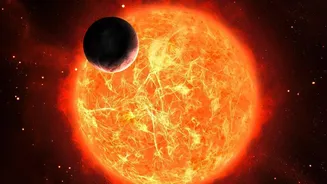
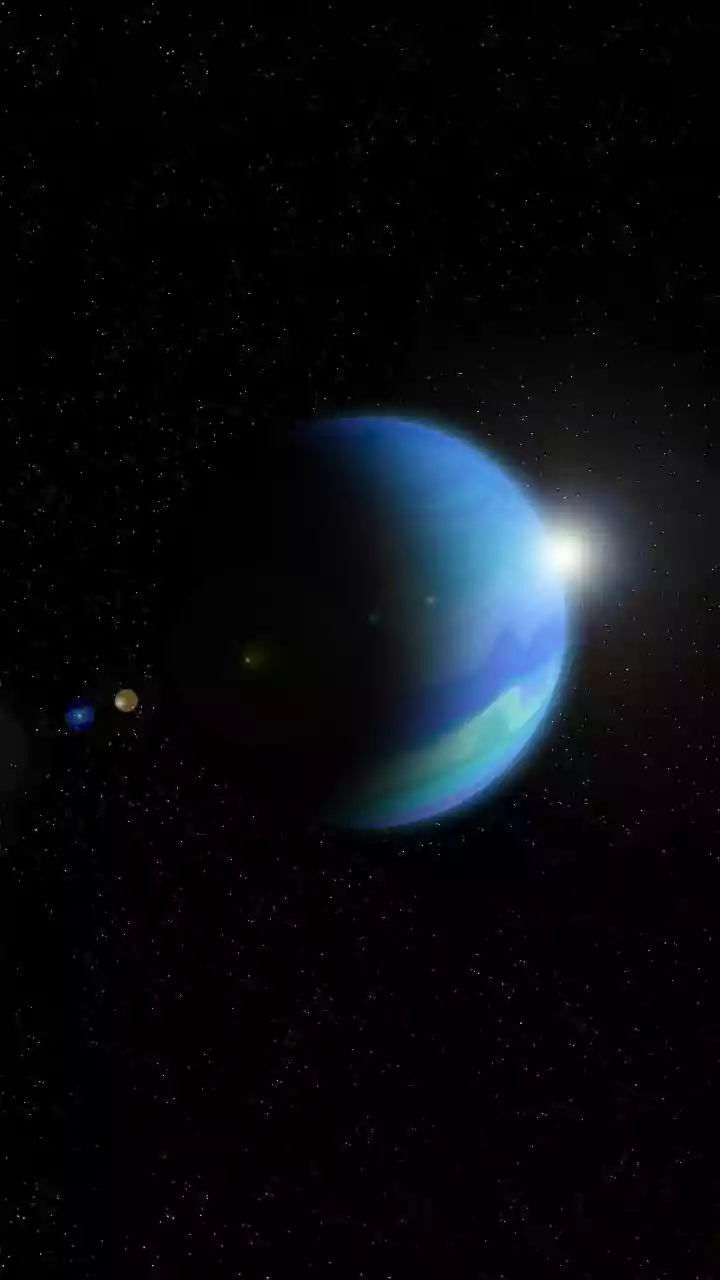
Detecting these subtle chemical imbalances from trillions of kilometres away is one of the greatest technical challenges in modern science. The primary tool for this global scientific effort is transmission spectroscopy. When an exoplanet passes in front of its star, a tiny fraction of the starlight filters through the planet's atmosphere. Telescopes like the James Webb Space Telescope (JWST) can analyse this light, looking for the characteristic spectral 'fingerprints' of different molecules absorbing the starlight. By carefully studying what's in an exoplanet's air, astronomers can determine if the mix of gases points toward a quiet, dead world or a dynamic, living one. While the JWST has already begun this work, providing unprecedented views into these distant atmospheres, confirming a true biosignature will require extensive observation and ruling out all non-biological explanations, like unusual volcanic activity or photochemical reactions.