




The Crisis That Sparked Change
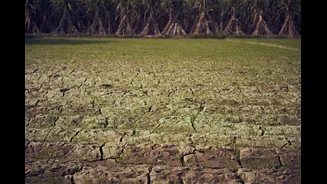
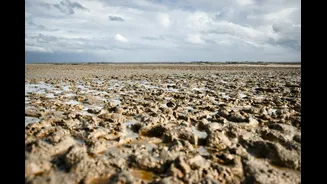
The memory of 2019 is etched into Chennai's collective consciousness. That year, the city’s four main reservoirs—Poondi, Cholavaram, Red Hills, and Chembarambakkam—shrank to less than 1% of their capacity. Water trains, desperate measures, and communities
rationing every drop became the norm. It was a stark reminder of the city's vulnerability, a crisis born from failed monsoons, rapid urbanization, and inadequate infrastructure. This event, however, served as a powerful catalyst. Since then, a multi-pronged strategy has been rolled out, focusing not just on conservation but on fundamentally increasing the city's capacity to capture, store, and create water.
Expanding and Diversifying Storage
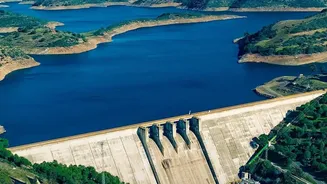
The core of the strategy has been to look beyond the original four reservoirs. The Water Resources Department has initiated a massive ₹14,000-crore plan to address future demand, which is projected to triple by 2050. This includes building new reservoirs, reviving over 1,150 tanks in suburban areas, and constructing hundreds of recharge structures to bolster groundwater. Projects include new reservoirs in places like Perumbakkam and along the Palar river basin, each expected to add significant storage capacity. This diversification is crucial; instead of relying on a few large sources, the city is creating a more distributed and resilient network of smaller, interconnected water bodies.
The Rise of Desalination
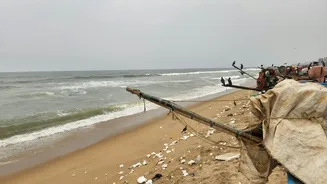
Perhaps the most significant shift has been the city's growing reliance on the sea. Chennai is aggressively expanding its desalination capacity, creating a water source independent of monsoon rains. The city already operates plants at Minjur and Nemmeli. A new, larger 150 MLD (million litres per day) plant became operational in early 2024. Furthermore, a massive 400 MLD plant at Perur is under construction and expected to be commissioned by the end of 2026, a project that will single-handedly supply water to over 2.2 million people. Once complete, these plants will more than double Chennai’s total desalination capacity, significantly reducing stress on its traditional reservoirs.
Smarter Distribution and Better Management
Having more water is only half the battle; getting it where it's needed is just as important. In October 2026, the foundation was laid for a ₹3,108-crore ring main pipeline system. This project, a first for an Indian city, will create a closed-loop network to ensure balanced pressure and equitable water distribution across all areas, allowing officials to reroute water during shortages or maintenance. This is complemented by efforts to upgrade existing infrastructure, such as doubling the capacity of the Chembarambakkam Water Treatment Plant and expanding the use of treated wastewater for industrial and commercial purposes to conserve potable water.
A More Secure, but Not Invincible, Future
So, what do these upgrades tell us? They show that Chennai is far better prepared than it was in 2019. Today, the city's reservoirs hold vastly more water than they did at the height of that crisis. On October 14, 2026, combined reservoir capacity was at about 34%, a level officials state is sufficient to prevent immediate shortages despite a below-average Southwest Monsoon. The city's multi-faceted approach—combining new reservoirs, large-scale desalination, smarter distribution, and rainwater harvesting—has built multiple layers of defence. However, this doesn't mean the city is invincible. Climate change promises more erratic monsoons, and rapid urban growth will continue to strain resources. The success of these massive infrastructure projects will ultimately depend on their continued maintenance and on a parallel commitment to water conservation from every citizen.