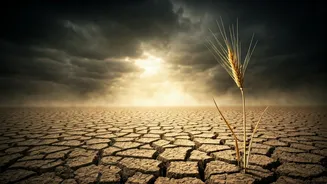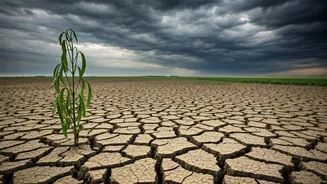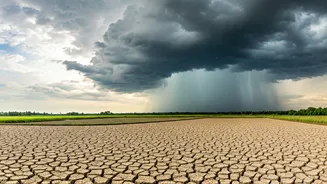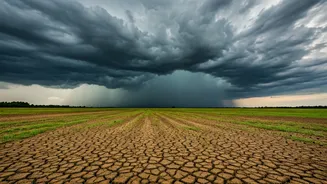





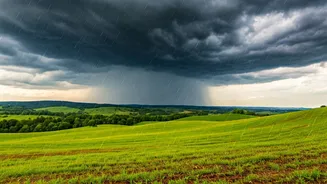



So, What Exactly Is This 'Dry Mode'?
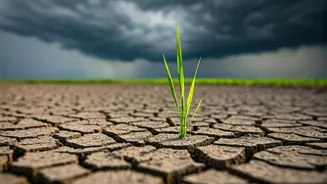
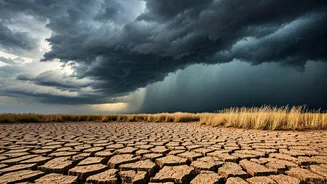
You may have noticed the shift. The promising rumbles and downpours of early June have given way to hot, sticky, and disappointingly dry days. This phenomenon has a name: a 'monsoon break'. It’s a period during the monsoon season when rainfall activity
significantly weakens or stops altogether over large parts of the country for several days, or even weeks. Although the monsoon officially arrived over Kerala around June 4th, its progress stalled significantly after mid-June. This has led to a major rainfall deficit across the country, with central India being particularly hard-hit. While northeastern regions might still be getting heavy rain, the monsoon heartland is currently experiencing a concerning dry spell.
The Science Behind the Silence
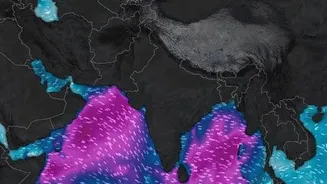
A monsoon break isn't just bad luck; it’s a complex interplay of large-scale atmospheric and oceanic factors. This year, it's a case of multiple systems failing at once. A primary cause is the shifting of the monsoon trough—a low-pressure belt that is the engine of monsoon rains—northwards towards the Himalayan foothills. When this happens, it stops raining over the plains. Additionally, factors like a weak Madden-Julian Oscillation (MJO), a rain-suppressing system that has been lingering over the Indian Ocean, have played a major role. There has also been a lack of low-pressure systems forming in the Bay of Bengal, which are crucial for pulling the monsoon deep into the mainland. Adding to this, hot, dry winds from the northwest have been pushing back against the moist monsoon currents.
Is a Monsoon Break Normal?
While this year's break feels particularly abrupt, these dry spells are a known feature of the Indian monsoon. The monsoon is not a continuous four-month-long downpour but a series of active and break periods. However, the intensity and timing of this break are concerning. June 2026 is on track to be one of the driest Junes in over a century, with a nationwide rainfall deficit of over 40%. While El Niño, the warming of the Pacific Ocean known to suppress Indian monsoons, has been declared, experts believe its full impact is yet to be felt and that the current situation is due to a rare pile-up of other unfavourable conditions. Historically, not all dry Junes have led to a drought-filled season, but it does put more pressure on the remaining months to make up the shortfall.
The Ripple Effect of No Rain
The timing of this dry spell is critical. For India’s agricultural sector, June is the crucial sowing season for kharif crops like rice, soybean, and pulses, which are heavily dependent on monsoon rains. A prolonged break can delay sowing, affect crop germination, and ultimately reduce yields, impacting food security and rural incomes. Beyond the farms, the lack of rain affects the refilling of reservoirs and the recharging of groundwater, which are vital for drinking water and hydropower generation throughout the year. And in the cities, a break in the rains means a return to soaring temperatures and uncomfortable humidity, putting a pause on the relief the monsoon usually brings.
When Will the Rain Return?
This is the million-rupee question on everyone's mind. According to the India Meteorological Department (IMD), conditions are becoming favourable for the monsoon to revive and advance further into northern and central India in the first week of July. While the deficit from June will take time to erase, the forecast offers a glimmer of hope that the 'dry mode' is temporary. However, the IMD's overall forecast for the season remains below-normal, largely due to the strengthening El Niño, which is expected to have a greater influence in July and August. For now, all eyes are on the skies, waiting for the monsoon to log back into the chat.